Imroatul Nasiyah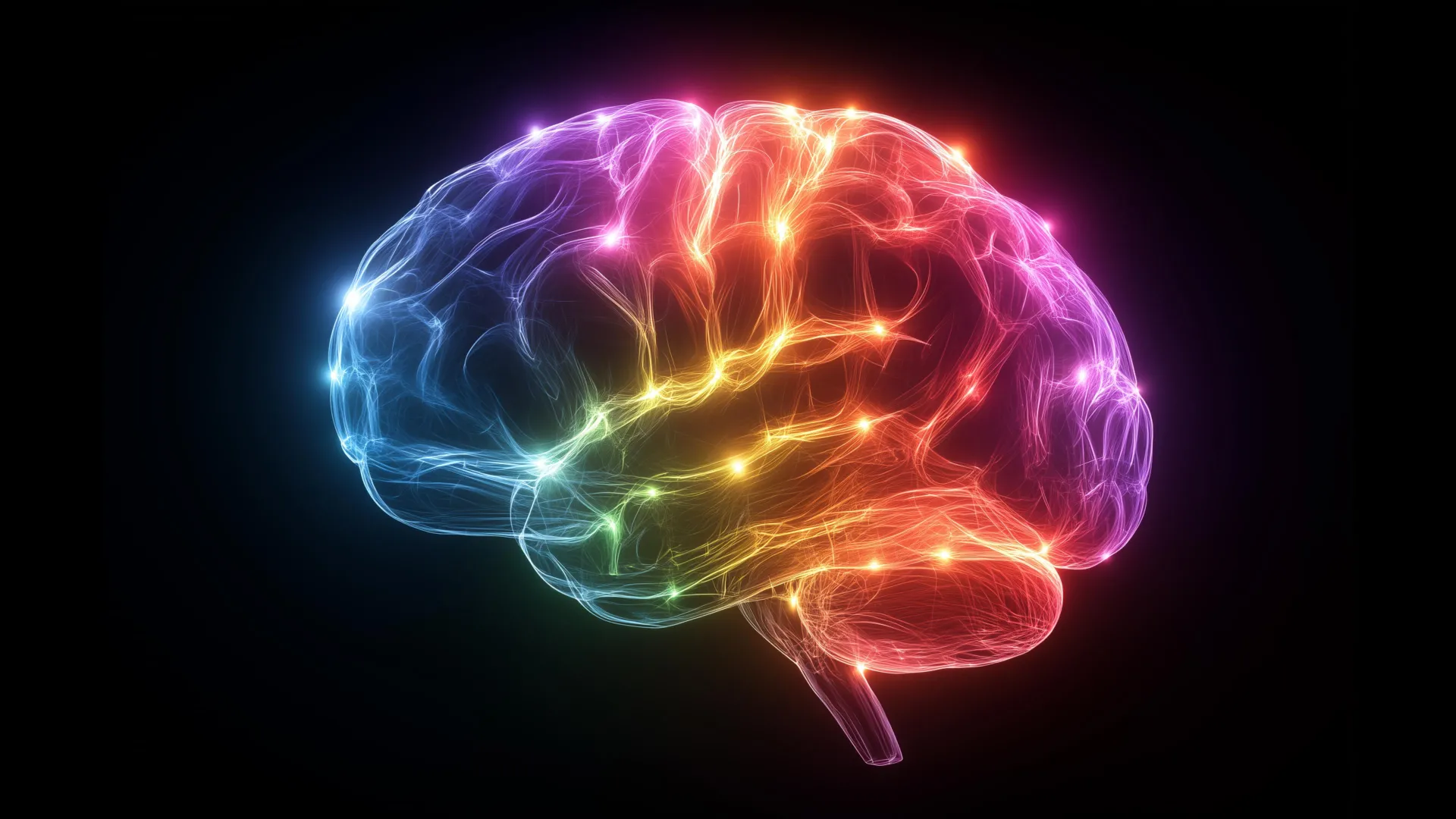
Researchers at Skoltech have unveiled a groundbreaking mathematical model that delves into the intricate workings of memory, yielding findings that could revolutionize robotics, artificial intelligence, and our fundamental understanding of the human mind. This sophisticated model, detailed in a recent publication in Scientific Reports, points towards an optimal number of sensory inputs for the brain to function at its peak efficiency, a number that tantalizingly suggests our familiar five senses might be insufficient. The implications are profound, suggesting a potential evolutionary trajectory for humans and offering critical insights for the design of more advanced intelligent systems.
Professor Nikolay Brilliantov of Skoltech AI, a co-author of the study, articulated the speculative yet compelling nature of their conclusions. "Our conclusion is of course highly speculative in application to human senses, although you never know: It could be that humans of the future would evolve a sense of radiation or magnetic field," he stated. "But in any case, our findings may be of practical importance for robotics and the theory of artificial intelligence. It appears that when each concept retained in memory is characterized in terms of seven features—as opposed to, say, five or eight—the number of distinct objects held in memory is maximized." This statement directly challenges the long-held anthropocentric view of sensory perception and opens up new avenues for scientific exploration.
The research team’s approach is rooted in a distinguished scientific tradition that dates back to the early 20th century, focusing on the fundamental units of memory known as "engrams." An engram, in this context, is conceptualized as a sparse network of neurons across various brain regions that synchronize their firing patterns. Each engram encapsulates a specific concept, meticulously defined by a constellation of features. For humans, these features are inherently tied to our sensory experiences. For instance, the concept of a banana is not merely a visual representation but a rich tapestry woven from its visual appearance, its distinct aroma, its unique taste, and a host of other sensory qualities. Within this theoretical framework, the concept of a banana transforms into a five-dimensional object residing within a vast mental landscape populated by all other stored memories.
The dynamic nature of engrams is a crucial aspect of the model. They are not static entities but evolve over time, becoming either sharper and more defined or diffuse and less distinct, contingent upon the frequency with which they are activated by external sensory stimuli. This continuous process of refinement and decay mirrors the fundamental mechanisms of learning and forgetting as we navigate and interact with our environment. The brain’s capacity to adapt and retain information is intrinsically linked to this ongoing modulation of engrams.
Professor Brilliantov further elaborated on the observed evolutionary trajectory of these memory traces: "We have mathematically demonstrated that the engrams in the conceptual space tend to evolve toward a steady state, which means that after some transient period, a ‘mature’ distribution of engrams emerges, which then persists in time." He continued, "As we consider the ultimate capacity of a conceptual space of a given number of dimensions, we somewhat surprisingly find that the number of distinct engrams stored in memory in the steady state is the greatest for a concept space of seven dimensions. Hence the seven senses claim." This mathematical elegance underscores the potential for an underlying universal principle governing memory capacity.
In simpler terms, the researchers propose that if we consider the objects in the external world as being characterized by a finite set of features that define the dimensions of a conceptual space, and if our objective is to maximize the number of distinct concepts that this space can accommodate, then the optimal dimension for this conceptual space—and by extension, the optimal number of senses—is seven. A greater capacity within this conceptual space directly translates to a more comprehensive and nuanced understanding of the world. This insight is not merely an academic curiosity; it suggests a biological imperative for a richer sensory input to achieve a more robust cognitive architecture.
A significant aspect of this discovery is its robustness. The researchers emphasize that this optimal number of seven dimensions is remarkably independent of the specific details of the model itself. Whether it’s the inherent properties of the conceptual space or the precise nature of the stimuli that provide sensory impressions, the number seven consistently emerges as a stable and persistent characteristic of memory engrams. However, the researchers acknowledge a crucial caveat: when multiple engrams of varying sizes are clustered around a common central point, they are considered to represent similar concepts and are therefore treated as a single entity when calculating the overall memory capacity. This refinement ensures that the model accounts for the brain’s efficient grouping of related information.
The enigma of memory, deeply intertwined with the profound phenomenon of consciousness, remains one of the most captivating frontiers in scientific inquiry. The advancement of theoretical models of memory, such as the one developed by the Skoltech team, is not only instrumental in unraveling the complexities of the human mind but also holds the key to recreating humanlike memory capabilities in artificial intelligence agents. This research opens the door to AI systems that can learn, remember, and process information with a depth and nuance previously confined to biological organisms.
The potential applications of this research are vast and far-reaching. In the realm of robotics, understanding the optimal sensory dimensionality could lead to the development of robots with enhanced environmental awareness and decision-making capabilities. Imagine robots that can perceive and interpret their surroundings with a level of detail and accuracy that surpasses current limitations, enabling them to perform complex tasks in dynamic and unpredictable environments. For artificial intelligence, this finding could pave the way for AI systems that exhibit a more profound understanding of concepts, leading to more sophisticated natural language processing, improved pattern recognition, and more intuitive human-computer interaction.
Furthermore, this research prompts a re-evaluation of our own sensory experiences. While we are acutely aware of our five primary senses—sight, hearing, smell, taste, and touch—many other animals possess senses that humans lack, such as electroreception in some aquatic creatures or magnetoreception in migratory birds. The Skoltech model suggests that these additional sensory modalities, or even entirely novel ones yet to be discovered or evolved, could significantly augment our cognitive capacity. It begs the question: what if our "five senses" are merely a subset of an optimal sensory array, and what if embracing or developing new sensory inputs could unlock new levels of intelligence and understanding?
The implications for neuroscience are equally profound. By providing a mathematical framework for understanding memory storage and retrieval, this model can guide experimental research, helping scientists identify neural correlates of these seven-dimensional concepts. It could also offer new perspectives on memory disorders and the development of targeted interventions. The journey to fully comprehend the human brain is long and arduous, but findings like these illuminate the path forward, suggesting that the intricate symphony of our senses might be orchestrated for a greater purpose—a richer, more expansive cognitive experience. The quest to understand memory is, in essence, a quest to understand ourselves, and this seven-sense hypothesis offers a compelling new chapter in that ongoing exploration.