Imroatul Nasiyah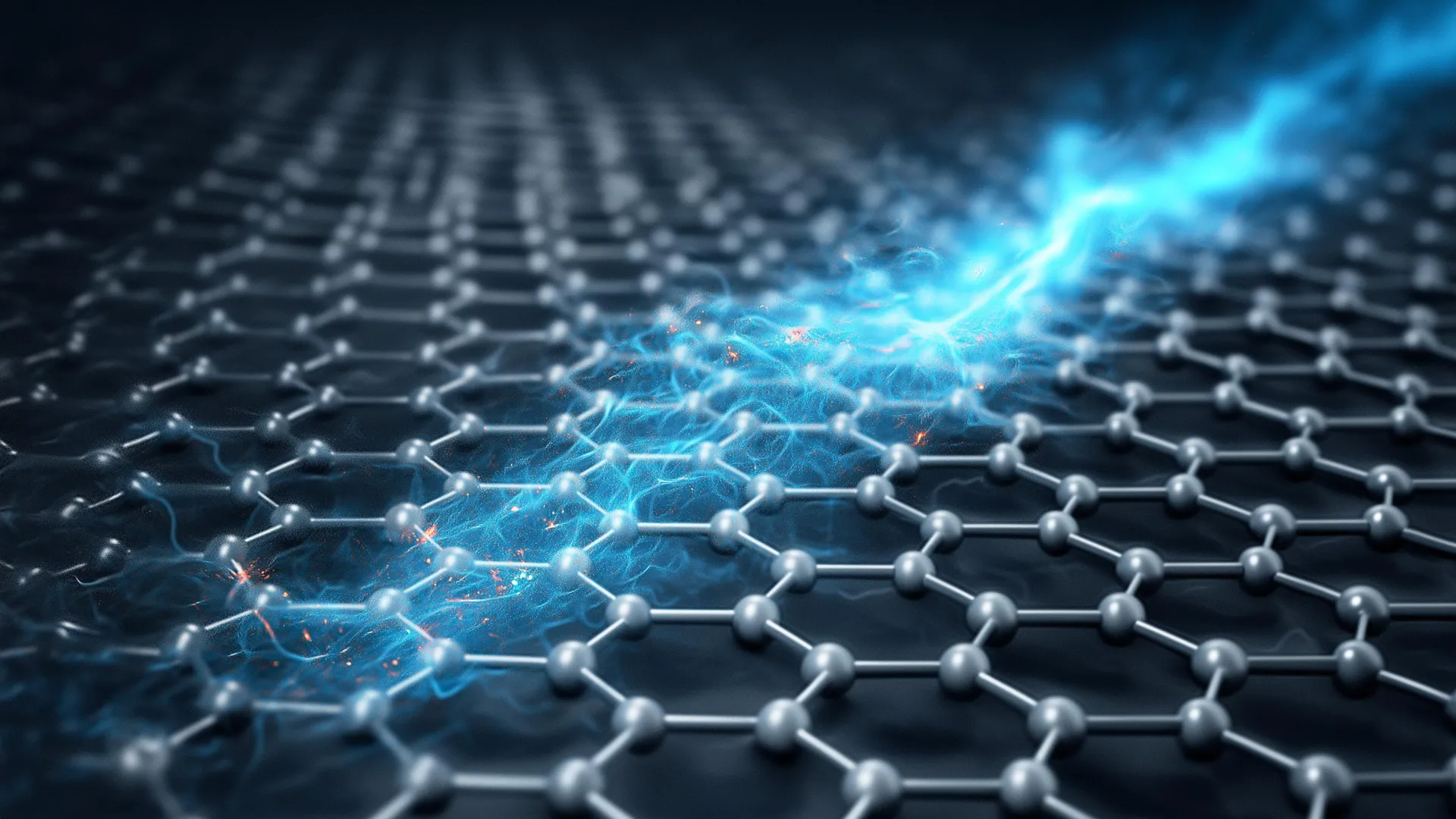
The core of this transformative finding lies in the direct observation of "Floquet effects" within graphene. Floquet engineering, a sophisticated technique that utilizes precisely timed pulses of light to dynamically alter a material’s intrinsic properties, has primarily been explored and demonstrated in insulators and semiconductors. The long-standing scientific question revolved around its applicability to metallic and semi-metallic quantum materials like graphene, where electron behavior is fundamentally different. This new research, published in the prestigious journal Nature Physics, definitively answers that question, confirming that graphene is indeed a fertile ground for Floquet engineering.
To achieve this monumental observation, the research team employed a cutting-edge technique known as femtosecond momentum microscopy. This advanced method allows scientists to capture and analyze extremely rapid changes in electronic behavior, essentially creating an ultra-high-speed camera for the quantum realm. The experimental setup involved illuminating meticulously prepared graphene samples with rapid, ultrashort bursts of light, akin to microscopic lightning strikes. Immediately following these light pulses, a precisely delayed secondary pulse was used to probe the resulting electronic responses. This allowed the researchers to meticulously track how the electrons within the graphene layer rearranged and altered their momentum in response to the light stimulus, all occurring on timescales measured in femtoseconds – quadrillionths of a second.
Dr. Marco Merboldt of the University of Göttingen, the study’s lead author, expressed the profound significance of their findings. "Our measurements clearly prove that ‘Floquet effects’ occur in the photoemission spectrum of graphene," he stated. "This makes it clear that Floquet engineering actually works in these systems – and the potential of this discovery is huge." The implications of this success are far-reaching. It demonstrates that Floquet engineering is not confined to a narrow range of materials but is effective across a broad spectrum of quantum materials. This significantly accelerates the scientific pursuit of tailoring quantum materials with specific, desired characteristics by using laser pulses to induce controlled changes within extremely short temporal intervals.
The ability to precisely tune the properties of materials with such exquisite control opens up a vista of possibilities for future technological advancements. Professor Marcel Reutzel, who co-led the project in Göttingen alongside Professor Stefan Mathias, elaborated on the transformative potential. "Our results open up new ways of controlling electronic states in quantum materials with light," he explained. "This could lead to technologies in which electrons are manipulated in a targeted and controlled manner." This precision control over electron behavior is the bedrock upon which next-generation electronic devices will be built. Imagine processors that can dynamically reconfigure their electrical properties on the fly, leading to unprecedented computational power and efficiency. Consider sensors that can adapt their sensitivity and selectivity in real-time to detect even the faintest signals, revolutionizing fields from medical diagnostics to environmental monitoring.
Furthermore, Professor Reutzel highlighted a particularly exciting avenue of investigation enabled by this discovery: the exploration of topological properties. Topological properties are a unique class of characteristics in quantum materials that are exceptionally robust and stable, even in the presence of imperfections or external disturbances. These properties are of immense interest for the development of fault-tolerant quantum computers, which are notoriously susceptible to decoherence. The ability to manipulate and potentially induce topological states in graphene using light could pave the way for more reliable and scalable quantum computing architectures. Beyond quantum computing, these stable topological states could also be leveraged to create entirely new classes of highly reliable and sensitive sensors, capable of detecting phenomena that are currently beyond our measurement capabilities.
The collaborative nature of this research, involving teams from multiple German institutions, underscores the power of interdisciplinary scientific endeavor. The project was generously supported by the German Research Foundation (DFG) through Göttingen University’s Collaborative Research Centre "Control of Energy Conversion at Atomic Scales." This funding was instrumental in providing the resources and infrastructure necessary for such complex and pioneering research.
The implications of this study extend beyond fundamental science, promising to revolutionize the very fabric of our digital world. The ability to control electronic states with light at the quantum level could lead to entirely new paradigms for data storage, processing, and transmission. Imagine content creation tools that can dynamically alter the physical properties of display materials to create truly immersive and interactive experiences. The development of light-controlled quantum materials could unlock the potential for ultra-fast optical computing, where information is processed using photons rather than electrons, leading to exponential increases in speed and efficiency. This could fundamentally change how we interact with digital information, blurring the lines between the physical and virtual realms.
Moreover, the enhanced understanding of Floquet effects in graphene could accelerate the development of more efficient energy harvesting and storage solutions. The precise control over electron behavior could lead to the creation of solar cells that are significantly more efficient at converting sunlight into electricity, or batteries that can charge and discharge at unprecedented speeds. The ability to manipulate quantum states could also lead to the development of novel thermoelectric materials, capable of converting waste heat into usable energy, further contributing to a more sustainable future.
In conclusion, the direct observation of Floquet effects in graphene represents a pivotal moment in materials science and quantum physics. It has not only settled a long-standing scientific debate but has also unlocked a treasure trove of potential applications. By demonstrating that light can be used to precisely engineer the quantum properties of this remarkable material, scientists have opened a new frontier in the quest for future electronics, advanced computing, and revolutionary digital content. The "miracle material" graphene, with its newly revealed hidden quantum power, is poised to transform our technological landscape in ways we are only just beginning to imagine. The journey from a single layer of carbon atoms to the realization of these futuristic technologies is now significantly closer, propelled by the profound insights gained from this groundbreaking research.