Imroatul Nasiyah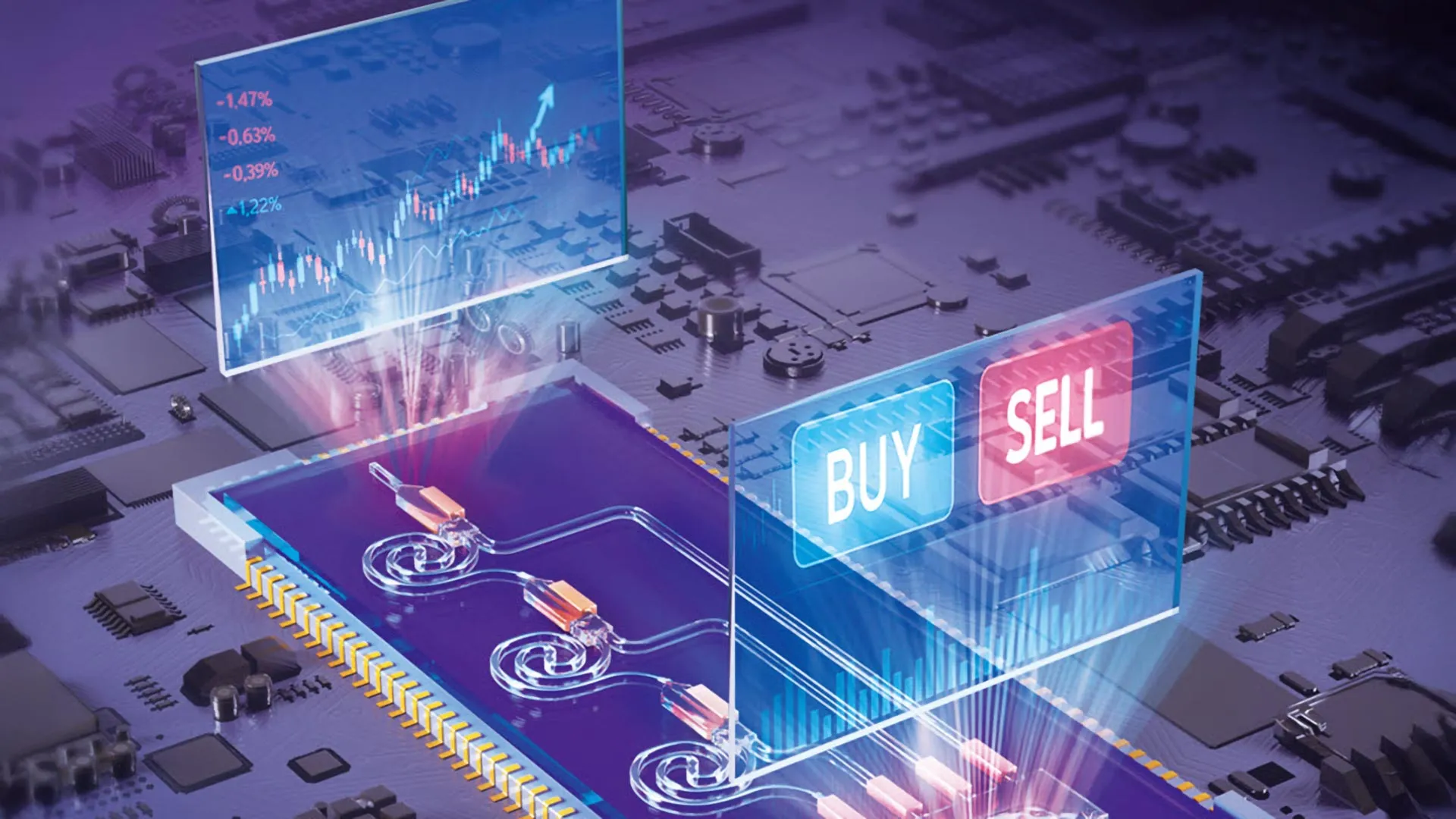
Turning to Light for Faster Computing: Embracing the Photonic Frontier
In the face of these electronic bottlenecks, researchers are actively turning to light as a transformative solution for accelerating computational processes. Optical computing, which leverages the principles of light to perform complex calculations instead of relying on electricity, offers a compelling pathway to achieve dramatic improvements in both speed and energy efficiency. Among the most promising avenues within optical computing is the utilization of optical diffraction operators. These are remarkably thin, plate-like structures engineered to execute mathematical operations as light waves traverse through them. The inherent parallelism of light allows these systems to process a multitude of signals concurrently, all while consuming significantly less energy than their electronic counterparts. However, a persistent challenge in this field has been the difficulty of maintaining the stable, coherent light that is indispensable for such computations, particularly when operating at speeds exceeding 10 GHz. The slightest phase fluctuation can introduce errors, rendering the results unreliable.
To surmount this formidable obstacle, a dedicated research team, spearheaded by Professor Hongwei Chen at Tsinghua University in China, has engineered a groundbreaking device. This innovative system, christened the Optical Feature Extraction Engine, or OFE2, represents a significant leap forward. Their pioneering work, meticulously documented and published in the esteemed journal Advanced Photonics Nexus, unveils a novel methodology for executing high-speed optical feature extraction. This development is particularly impactful as it is designed to be directly applicable to a diverse array of real-world applications that have previously been constrained by computational speed.
How OFE2 Prepares and Processes Data: An Integrated Approach to Optical Data Handling
A cornerstone of the OFE2‘s success lies in its ingeniously designed data preparation module. A primary hurdle in optical computing has always been the challenge of supplying fast, parallel optical signals to the core optical components without compromising phase stability. Traditional fiber-based systems, in their attempts to split and delay light signals, often introduce unwanted phase fluctuations that degrade computational accuracy. The Tsinghua team has elegantly resolved this issue through the development of a fully integrated, on-chip system. This sophisticated design incorporates precisely controlled adjustable power splitters and ultra-precise delay lines, all fabricated onto a single chip. This integrated architecture ensures that the delicate phase relationships of the light signals are preserved throughout the preparation process.
The innovative setup effectively converts serial data streams into multiple synchronized optical channels. Crucially, an integrated phase array is a key feature that imbues OFE2 with remarkable flexibility. This array allows the device to be easily reconfigured, adapting its computational operations for a wide spectrum of different tasks without the need for extensive hardware modifications. This adaptability is a significant advantage in the dynamic landscape of AI development.
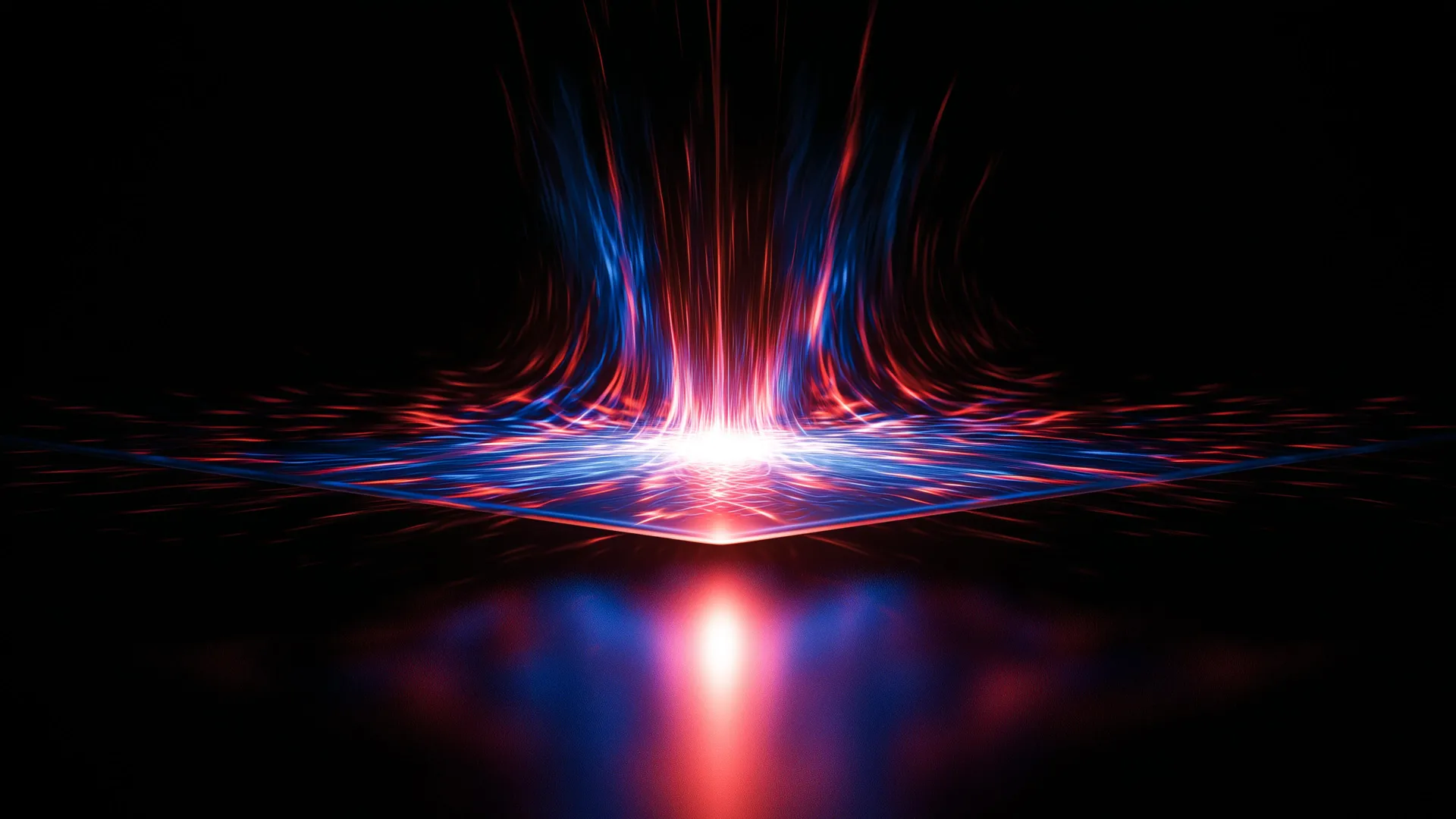
Once the optical signals have been meticulously prepared and synchronized, they are directed through a diffraction operator. This component is the heart of the feature extraction process. The underlying principle is analogous to a matrix-vector multiplication, a fundamental operation in linear algebra and a core component of many AI algorithms. In the OFE2, light waves interact in a controlled manner, producing focused "bright spots" at specific output locations on the detector. The precise positioning of these bright spots is governed by the phase of the input light. By finely tuning these input phases, the OFE2 can direct these focused light spots towards designated output ports. This capability enables the system to exquisitely capture even the most subtle variations and intricate patterns present in the input data over time, effectively extracting the essential features that would otherwise be lost in raw data streams.
Record-Breaking Optical Performance: Achieving Unprecedented Speeds and Accuracy
The performance metrics achieved by the OFE2 are nothing short of remarkable. Operating at an impressive clock speed of 12.5 GHz, the device executes a single matrix-vector multiplication in a staggeringly short 250.5 picoseconds. This represents the fastest known result for this specific type of optical computation, pushing the boundaries of what was previously thought possible. Professor Chen expressed profound confidence in the implications of their findings, stating, "We firmly believe this work provides a significant benchmark for advancing integrated optical diffraction computing to exceed a 10 GHz rate in real-world applications." This achievement is not merely a theoretical triumph; it has been rigorously validated through extensive testing across multiple application domains.
In the realm of image processing, the OFE2 demonstrated its prowess by successfully extracting edge features from visual data. This capability led to the generation of paired "relief and engraving" maps. These visually enhanced representations significantly improved image classification accuracy, proving particularly beneficial in tasks such as precisely identifying organs within CT scans. The research highlighted that systems incorporating OFE2 for optical preprocessing required substantially fewer electronic parameters compared to conventional AI models. This underscores the power of optical pre-processing in creating hybrid AI networks that are not only faster but also demonstrably more energy-efficient, a critical consideration for widespread AI deployment.
The research team also extended the application of OFE2 to the fast-paced world of digital trading. Here, the device was employed to process live market data in real time, generating profitable buy and sell actions. Following training with optimized trading strategies, the OFE2 demonstrated its ability to directly convert incoming price signals into decisive trading actions, consistently achieving profitable returns. The inherent speed of these calculations, occurring at the speed of light, means that traders can act on fleeting market opportunities with virtually no perceptible delay, a crucial advantage in high-frequency trading environments where milliseconds can mean the difference between profit and loss.
Lighting the Way Toward the Future of AI: A New Era of Real-Time, Low-Energy Intelligence
Collectively, these groundbreaking achievements herald a fundamental paradigm shift in the landscape of computing. By strategically migrating the most computationally intensive aspects of AI processing from power-hungry electronic chips to the inherently faster and more energy-efficient domain of photonic systems, technologies like OFE2 are poised to usher in a new era. This era will be characterized by AI that operates in real time, with drastically reduced energy consumption, making advanced AI capabilities more accessible and sustainable. Professor Chen articulated a compelling vision for the future, concluding, "The advancements presented in our study push integrated diffraction operators to a higher rate, providing support for compute-intensive services in areas such as image recognition, assisted healthcare, and digital finance. We look forward to collaborating with partners who have data-intensive computational needs." This statement not only underscores the transformative potential of their work but also extends a direct invitation for collaboration, signaling a proactive approach to bringing this revolutionary technology to market and addressing the most pressing computational challenges across various industries. The era of light-speed AI is no longer a distant dream but a tangible reality taking shape in laboratories around the world.