Imroatul Nasiyah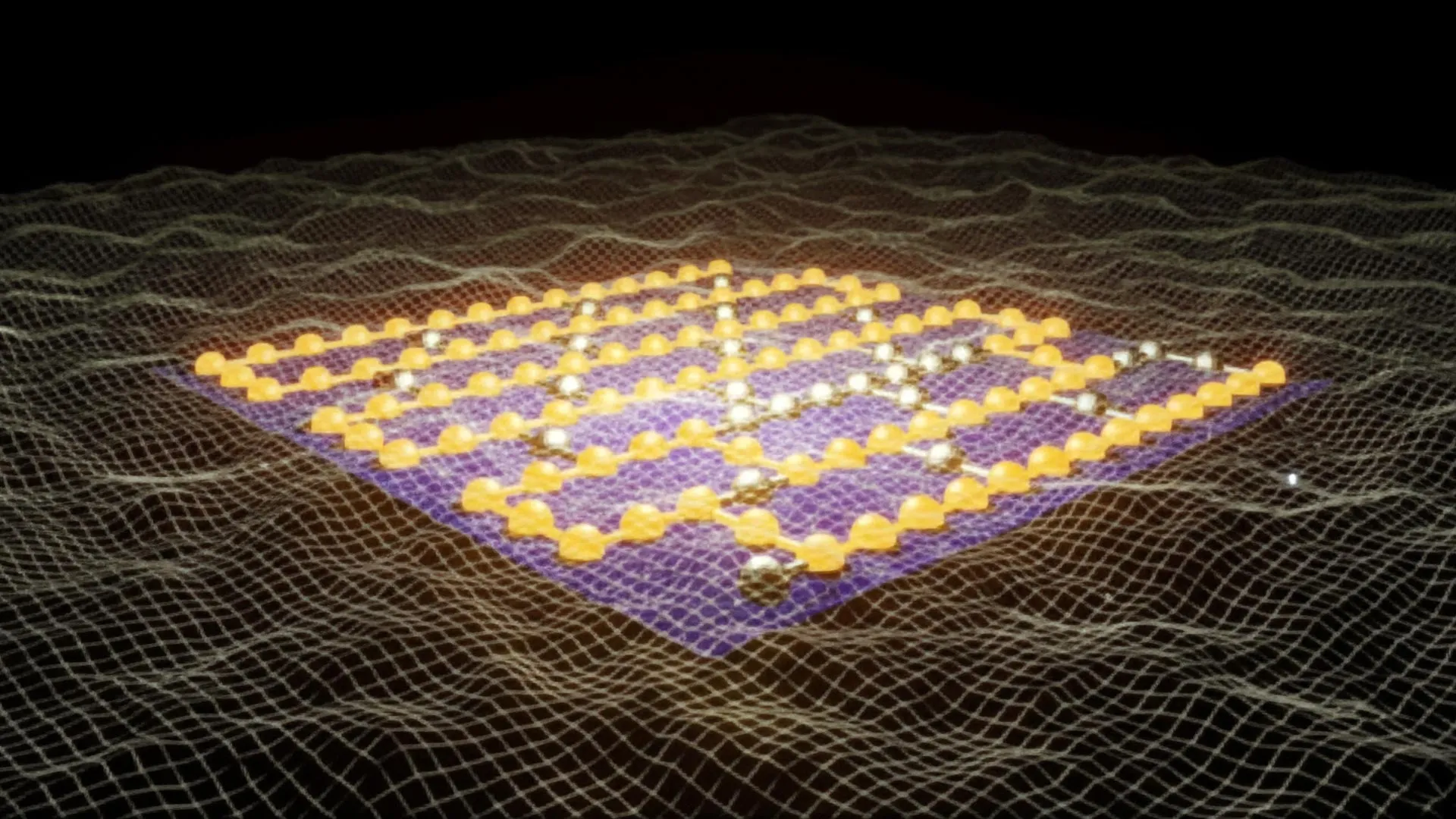
The research journey began with classical computers meticulously designing the requisite circuits for modest systems. Once these foundational designs were established, the team ingeniously leveraged the inherent scalability of these circuits to construct vastly larger simulations, directly implemented on a quantum computer. Utilizing the advanced quantum hardware provided by IBM, they successfully simulated critical aspects of nuclear physics, employing over 100 qubits in their computations. This monumental achievement is detailed in a recent publication, highlighting the collaborative efforts and the significant leap forward in computational physics.
The newly developed scalable quantum algorithms are heralding an era of simulations previously confined to theoretical speculation, now brought within tangible reach. This innovative approach is poised to revolutionize the modeling of the vacuum state preceding particle collisions, physical systems characterized by extreme densities, and the dynamics of hadron beams. Researchers are optimistic that future quantum simulations, built upon these sophisticated circuits, will decisively surpass the analytical power of classical computing. The implications of such simulations are profound, offering the potential to illuminate some of the most pressing unanswered questions in physics. These include the persistent mystery of the matter-antimatter imbalance, the enigmatic creation of heavy elements within the fiery hearts of supernovae, and the perplexing behavior of matter when subjected to ultra-high densities. Furthermore, the universality of these techniques suggests their applicability to modeling other challenging systems, such as exotic materials exhibiting peculiar quantum properties that defy conventional understanding.
Nuclear physicists, in a landmark endeavor, harnessed the power of IBM’s quantum computers to execute what is recognized as the most extensive digital quantum simulation ever accomplished. This success is partly attributable to their astute identification of underlying patterns within physical systems, encompassing symmetries and disparities in length scales. These insights were instrumental in their design of scalable circuits engineered to prepare quantum states exhibiting localized correlations. To demonstrate the efficacy of their groundbreaking algorithm, they successfully prepared the vacuum state and simulated hadrons within a simplified, one-dimensional framework of quantum electrodynamics, a cornerstone theory in particle physics. This specific demonstration provided a concrete validation of their scalable circuit preparation methods.
The validation process for the circuit components was a meticulous, multi-stage endeavor. Initially, the team rigorously tested these components on smaller systems using sophisticated classical computing tools. This initial phase was crucial for confirming that the quantum states generated by the circuits could be systematically refined and improved, ensuring their accuracy and reliability. Following this successful validation, the researchers expanded the complexity of the circuits to accommodate more than 100 qubits. These enhanced circuits were then deployed and executed on IBM’s cutting-edge quantum devices. The wealth of data meticulously collected from these extensive simulations allowed scientists to extract key properties of the vacuum state with remarkable precision, achieving percent-level accuracy.
Beyond characterizing the vacuum state, the team ingeniously employed the developed circuits to generate pulses of hadrons. They then proceeded to simulate the intricate evolution of these pulses over time, meticulously tracking their propagation. These significant advancements strongly indicate an impending future where quantum computers will be capable of undertaking comprehensive dynamical simulations of matter under extreme conditions, conditions that currently lie far beyond the analytical horizon of classical machines. This capability opens up entirely new avenues for scientific discovery and technological innovation.
This groundbreaking research was made possible through substantial support from various esteemed institutions. Key funding was provided by the Department of Energy (DOE) Office of Science, specifically through its Office of Nuclear Physics. Further crucial support came from the InQubator for Quantum Simulation (IQuS), an initiative dedicated to fostering quantum simulation research within the realm of nuclear science, operating under the Quantum Horizons: QIS Research and Innovation for Nuclear Science Initiative. The Quantum Science Center (QSC), a collaborative effort between the DOE and the University of Washington, and a designated National Quantum Information Science Research Center, also played a vital role in the project’s success. Additional, substantial computing resources were generously provided by the Oak Ridge Leadership Computing Facility, a premier DOE Office of Science User Facility renowned for its advanced computational capabilities. Furthermore, the Hyak supercomputer system at the University of Washington contributed significantly to the computational demands of this research. The team also expressed their gratitude for the invaluable use of IBM Quantum services, which were instrumental in the execution of this ambitious project. The confluence of these resources and expertise underscores the collaborative and resource-intensive nature of pushing the boundaries of quantum computing and its application to fundamental physics.