Imroatul Nasiyah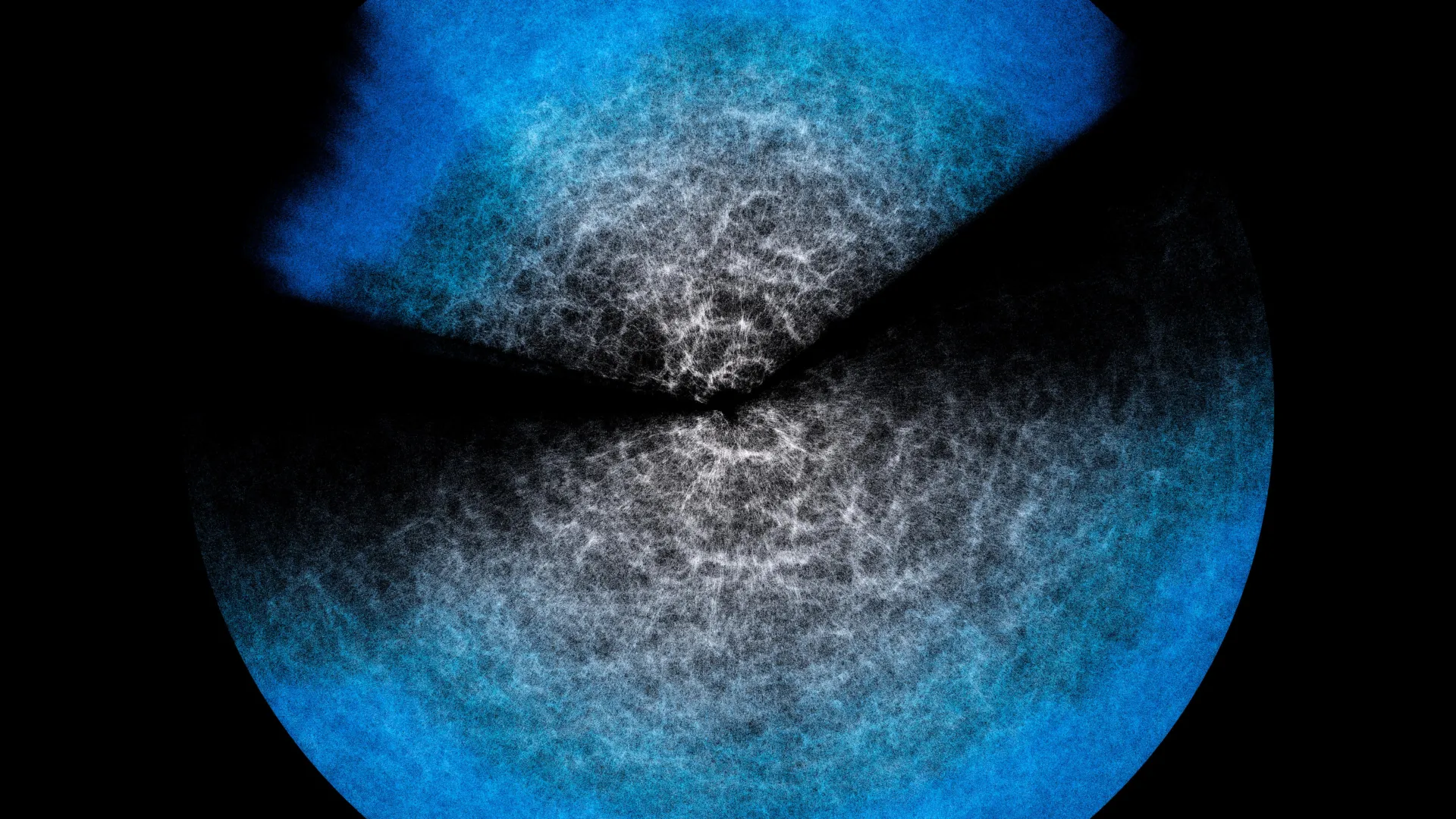
The universe, in its unfathomable immensity, presents a cosmic tapestry of unparalleled scale. Imagine a galaxy, a celestial metropolis teeming with billions of stars, appearing as a mere speck when juxtaposed against the vast expanse of the cosmos. This speck, along with countless others, coalesces into intricate galactic clusters, which in turn aggregate into even grander superclusters. These superclusters, like threads in a cosmic loom, weave together to form immense filaments, punctuated by vast, empty voids. This interconnected network, this colossal three-dimensional skeleton of our universe, is what astronomers strive to comprehend.
The sheer scale of this cosmic architecture can induce a sense of vertigo, leaving one to ponder how humanity can possibly grasp, or even "see," such an immense structure. The answer lies in a sophisticated interplay of scientific endeavor. Astronomers meticulously combine the fundamental laws of physics governing the universe with the wealth of data harvested by advanced astronomical instruments. This empirical data then serves as the bedrock for constructing theoretical models. One such powerful framework is the Effective Field Theory of Large-Scale Structure, or EFTofLSS. These models, when "fed" with observational data, are capable of statistically describing the intricate patterns of the "cosmic web" and enabling the estimation of its key parameters.
However, the very nature of these sophisticated models, such as EFTofLSS, necessitates substantial computational resources and considerable processing time. As the volume of astronomical datasets at our disposal continues to grow at an exponential rate, the imperative for more efficient analytical methods becomes increasingly pronounced. The challenge lies in finding ways to lighten the analytical burden without compromising the precision of our findings. This is where the concept of "emulators" emerges as a groundbreaking solution. Emulators are designed to "imitate" the response of complex physical models, but crucially, they operate at a significantly accelerated pace.
The inherent nature of employing such "shortcuts" inevitably raises questions about the potential loss of accuracy. To address this critical concern, an international consortium of researchers, comprising luminaries from institutions such as INAF (Italy), The University of Parma (Italy), and the University of Waterloo (Canada), has undertaken a comprehensive study. Their findings, published in the prestigious Journal of Cosmology and Astroparticle Physics (JCAP), meticulously evaluate an emulator named Effort.jl, which they themselves developed. The results are nothing short of remarkable: Effort.jl consistently demonstrates that it delivers essentially the same level of correctness as the complex model it emulates. In certain instances, it even reveals finer details that might be obscured or require extensive processing with the original model. Furthermore, its computational demands are drastically reduced, enabling it to execute tasks in mere minutes on a standard laptop, a stark contrast to the days or weeks previously required on a supercomputer.
Marco Bonici, a researcher at the University of Waterloo and the principal author of the study, eloquently illustrates the underlying principle with a relatable analogy. "Imagine wanting to study the contents of a glass of water at the level of its microscopic components, the individual atoms, or even smaller," he explains. "In theory, you can. But if we wanted to describe in detail what happens when the water moves, the explosive growth of the required calculations makes it practically impossible." He continues, "However, you can encode certain properties at the microscopic level and see their effect at the macroscopic level, namely the movement of the fluid in the glass. This is what an effective field theory does, that is, a model like EFTofLSS, where the water in my example is the Universe on very large scales and the microscopic components are small-scale physical processes."
The theoretical model, in essence, provides a statistical framework for understanding the structure that gives rise to the observed data. Astronomical observations are fed into the code, which then generates a "prediction" of the cosmic web’s configuration. However, as Bonici highlights, this process is both time-consuming and computationally intensive. Given the current deluge of astronomical data, and anticipating the even greater volumes expected from ongoing and upcoming surveys such as DESI (which has already begun releasing its initial datasets) and Euclid, performing this exhaustive analysis for every new piece of information is simply not practical.
"This is why we now turn to emulators like ours, which can drastically cut time and resources," Bonici emphasizes. An emulator, at its core, is designed to mimic the behavior of the original model. Its central component is often a sophisticated neural network. This neural network is trained to recognize and associate input parameters with the predictions that have already been computed by the more complex model. Once trained on a sufficiently diverse set of outputs from the original model, the neural network gains the ability to generalize, meaning it can accurately predict outcomes for parameter combinations it has not explicitly encountered during its training phase. It’s crucial to understand that the emulator does not "understand" the underlying physics in the same way a theoretical model does. Instead, it becomes exceptionally adept at recognizing and anticipating the responses of the theoretical model based on its learned associations.
The true innovation of Effort.jl lies in its approach to further optimizing the training phase. It ingeniously incorporates pre-existing knowledge about how predictions change when model parameters are subtly altered. Instead of forcing the neural network to "re-learn" these fundamental relationships, Effort.jl leverages them from the outset. Furthermore, Effort.jl employs the concept of gradients. Gradients quantify "how much and in which direction" predictions shift if a particular parameter is infinitesimally tweaked. This utilization of gradient information is another key factor that enables the emulator to learn from significantly fewer examples. This reduction in computational needs is precisely what allows Effort.jl to operate efficiently on smaller, more accessible computing platforms.
The effectiveness and reliability of any such tool are paramount, necessitating extensive validation. If an emulator, by its very nature, doesn’t "know" the physics in the same way as the original model, how can we be certain that its shortcut approach yields correct answers – that is, answers consistent with what the original model would produce? The recently published study directly addresses this crucial question. It provides compelling evidence that Effort.jl’s accuracy, when tested against both simulated data and actual observational data, aligns exceptionally well with the results obtained from the more computationally demanding EFTofLSS model.
"And in some cases," Bonici concludes with palpable enthusiasm, "where with the model you have to trim part of the analysis to speed things up, with Effort.jl we were able to include those missing pieces as well." This capability to retain and even enhance analytical completeness while dramatically reducing computational overhead is a testament to Effort.jl’s power. Consequently, Effort.jl emerges as an invaluable ally for astronomers and cosmologists tasked with analyzing the forthcoming data releases from pioneering experiments like DESI and Euclid. These upcoming datasets hold the promise of profoundly expanding our understanding of the universe’s large-scale structure, and Effort.jl is poised to play a pivotal role in unlocking their secrets.
The seminal study, titled "Effort.jl: a fast and differentiable emulator for the Effective Field Theory of the Large Scale Structure of the Universe," authored by Marco Bonici, Guido D’Amico, Julien Bel, and Carmelita Carbone, is readily accessible within the pages of the esteemed Journal of Cosmology and Astroparticle Physics (JCAP).