Imroatul Nasiyah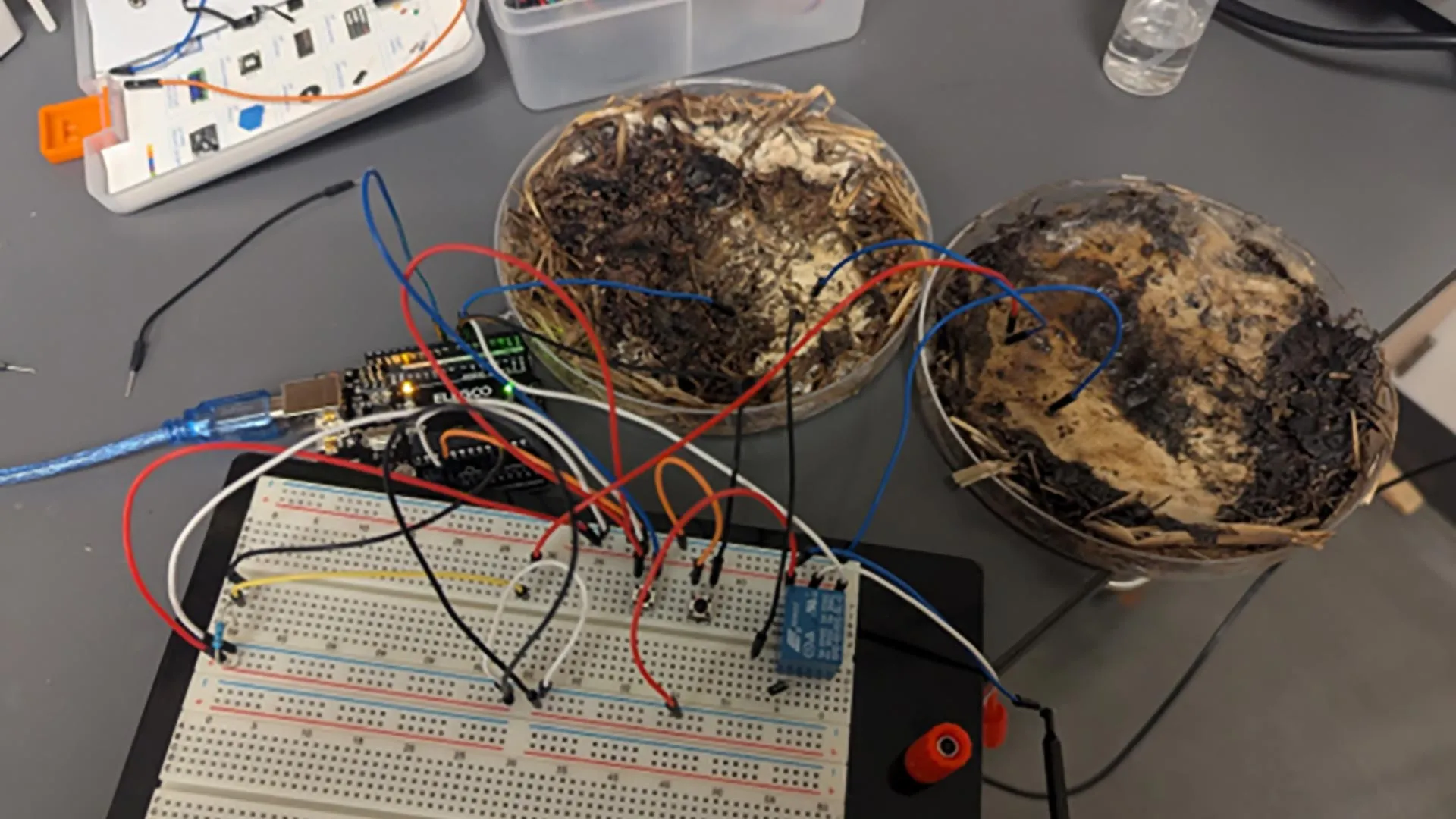
At the heart of this discovery lies the potential to transform mushrooms into "living memory devices." The Ohio State University team’s experiments have demonstrably shown that these fungi can replicate the memory-retaining capabilities of traditional semiconductor chips. This means that mushroom-based components can store information about their previous electrical states, a fundamental characteristic of memristors. Beyond just memory, this research hints at the possibility of creating a new generation of eco-friendly, brain-like computing tools that boast a significantly reduced production cost. John LaRocco, the lead author of the study and a research scientist in psychiatry at Ohio State’s College of Medicine, emphasized the profound implications of this development. "Being able to develop microchips that mimic actual neural activity means you don’t need a lot of power for standby or when the machine isn’t being used," he stated. "That’s something that can be a huge potential computational and economic advantage." This efficiency in power consumption, particularly in standby modes, addresses a critical bottleneck in current computing technology and offers substantial economic benefits.
The promise of fungal electronics extends far beyond mere novelty. While the concept of using fungi in electronic applications isn’t entirely new, LaRocco highlights that the current research is making these ideas increasingly practical for sustainable computing. A major advantage of fungal materials is their biodegradability and low production cost, which can significantly mitigate the growing problem of electronic waste. In stark contrast, conventional semiconductors often rely on rare minerals and demand substantial energy for both their manufacturing and operation. LaRocco elaborated on this, stating, "Mycelium as a computing substrate has been explored before in less intuitive setups, but our work tries to push one of these memristive systems to its limits." This suggests a focused effort to optimize and understand the full potential of fungal memristors.
The scientific rigor behind these claims is underpinned by meticulous experimental design. To ascertain the memory capabilities of mushrooms, the researchers cultivated samples of both shiitake and button mushrooms. Following their maturation, these specimens were carefully dehydrated to ensure preservation and then meticulously integrated into custom-designed electronic circuits. The experiments involved exposing these mushroom-based devices to precisely controlled electrical currents, varying in both voltage and frequency. "We would connect electrical wires and probes at different points on the mushrooms because distinct parts of it have different electrical properties," explained LaRocco. "Depending on the voltage and connectivity, we were seeing different performances." This highlights a nuanced understanding of how electrical signals interact with the intricate structure of the mushroom.
The results emanating from these carefully controlled tests were nothing short of surprising. Over a period of two months, the team observed that their mushroom-based memristor exhibited an impressive ability to switch between electrical states, achieving this feat up to 5,850 times per second with an accuracy rate of approximately 90%. While performance did show a decline at higher electrical frequencies, an unexpected and crucial observation was made: connecting multiple mushrooms together helped to restore and stabilize their performance. This phenomenon mirrors the way neural connections function in the human brain, where interconnectedness enhances overall stability and processing power. Qudsia Tahmina, a co-author of the study and an associate professor of electrical and computer engineering at Ohio State, underscored the ease with which mushrooms can be adapted for computing purposes. She also pointed to the societal imperative driving such innovations: "Society has become increasingly aware of the need to protect our environment and ensure that we preserve it for future generations. So that could be one of the driving factors behind new bio-friendly ideas like these."
The inherent flexibility and adaptability of mushrooms also suggest significant potential for scaling up fungal computing applications. Tahmina elaborated on these possibilities, envisioning larger mushroom systems being deployed in resource-intensive fields such as edge computing and advanced aerospace exploration. Conversely, smaller-scale fungal components could be instrumental in enhancing the performance of autonomous systems and wearable devices, integrating seamlessly into our daily lives. This versatility hints at a broad spectrum of applications, from industrial-scale computing to highly personalized technological solutions.
Looking towards the horizon, the future of fungal computing, while still in its nascent stages, is brimming with promise. The scientists are actively pursuing methods to refine cultivation techniques and miniaturize device sizes. The successful development of smaller, more efficient fungal components will be paramount in establishing them as a viable and competitive alternative to traditional microchips. LaRocco offered an optimistic outlook on the accessibility of this technology: "Everything you’d need to start exploring fungi and computing could be as small as a compost heap and some homemade electronics, or as big as a culturing factory with pre-made templates. All of them are viable with the resources we have in front of us now." This statement emphasizes the scalability and accessibility of fungal computing, suggesting that it can be explored and developed with a range of resource levels, from hobbyist experimentation to large-scale industrial production. The research team at Ohio State, including Ruben Petreaca, John Simonis, and Justin Hill, alongside support from the Honda Research Institute, is diligently working to transform these visionary ideas into tangible realities, ushering in an era of sustainable, bio-integrated computing.