Imroatul Nasiyah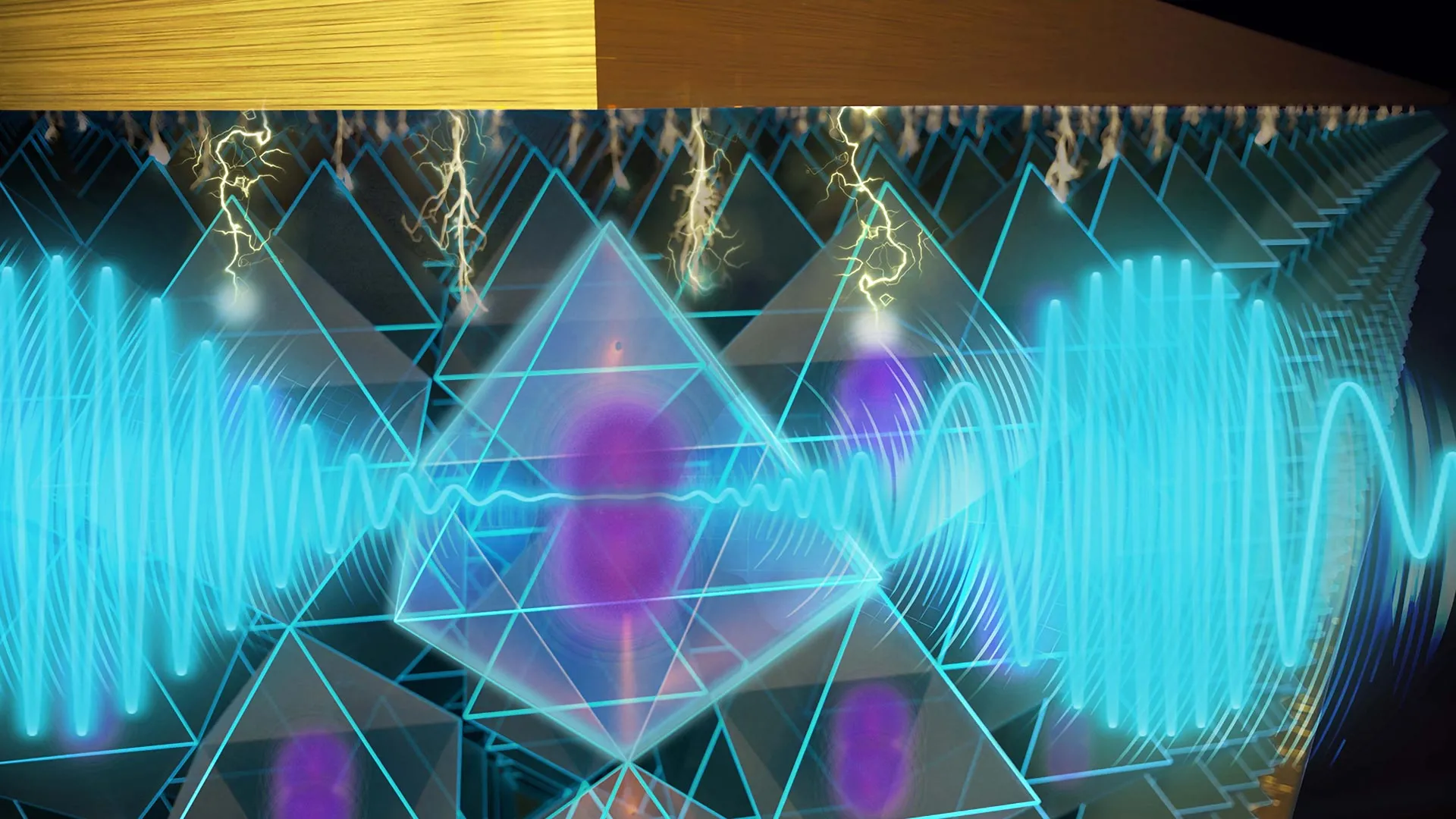
In a groundbreaking development that promises to accelerate the real-world application of quantum technologies, engineers at Stanford University have identified and optimized a readily available material, strontium titanate (STO), that not only maintains its optical and mechanical properties at cryogenic temperatures but actively enhances them. This discovery, published in the prestigious journal Science, marks a significant leap forward in overcoming the long-standing challenge of finding materials that can perform reliably in the extreme cold required by many advanced technologies, from ultra-powerful quantum computers to cutting-edge space exploration instruments. The research team’s findings suggest that STO could pave the way for a new generation of highly efficient, light-based and mechanical cryogenic devices, unlocking unprecedented capabilities in fields that are currently bottlenecked by material limitations.
The pursuit of advanced technologies such as superconductivity and quantum computing has transitioned from theoretical physics to tangible innovation, with the 2025 Nobel Prize in Physics acknowledging crucial breakthroughs in superconducting quantum circuits. However, a persistent hurdle has been the requirement for these technologies to operate at cryogenic temperatures, mere degrees above absolute zero. At these frigid conditions, most materials lose their defining characteristics, becoming brittle or inert. The Stanford team’s work with strontium titanate directly addresses this fundamental limitation, revealing a material that thrives in the cold, exhibiting amplified performance rather than degradation.
"Strontium titanate possesses electro-optic effects that are an astonishing 40 times stronger than those of the most commonly used electro-optic material today," explained Jelena Vuckovic, professor of electrical engineering at Stanford and senior author of the study. "Crucially, it maintains this exceptional performance at cryogenic temperatures. This is a game-changer for the development of quantum transducers and switches, which are currently significant bottlenecks in the advancement of quantum technologies." The ability of STO to enhance its capabilities in the cold means that the extreme conditions necessary for quantum phenomena can now be harnessed more effectively, rather than being a barrier to overcome.
The remarkable attributes of STO stem from its "non-linear" optical behavior. This means that when subjected to an electric field, its optical and mechanical properties undergo substantial and controllable shifts. This pronounced electro-optic effect allows scientists to manipulate light with an unparalleled degree of precision, altering its frequency, intensity, phase, and direction in ways that are impossible with other materials. This level of control is essential for building sophisticated quantum devices, where the manipulation of individual photons and quantum states is paramount. The versatility offered by STO’s non-linear optics could enable the design of entirely novel types of low-temperature devices that are currently beyond our reach.
Beyond its optical prowess, strontium titanate is also piezoelectric. This property allows it to physically expand and contract in response to applied electric fields. This electromechanical responsiveness is vital for developing new components that can translate electrical signals into precise mechanical movements, and vice versa, with high efficiency, especially in extreme cold environments. The researchers highlight that these capabilities are particularly valuable for applications in the vacuum of space, where precise control of instruments is critical, and for the cryogenic fuel systems of rockets, where material stability and responsiveness under extreme temperature gradients are essential.
"At low temperatures, strontium titanate is not only the most electrically tunable optical material we are aware of, but it also emerges as the most piezoelectrically tunable material," stated Christopher Anderson, a co-first author of the study and now a faculty member at the University of Illinois, Urbana-Champaign. This dual tunability – both optical and mechanical – makes STO an exceptionally versatile building block for a wide array of advanced technologies. The ability to fine-tune both light and mechanical properties with electric fields at cryogenic temperatures opens up a vast design space for engineers and scientists.
Perhaps one of the most surprising aspects of this discovery is that strontium titanate is not a novel, exotic material. It has been studied for decades and is both inexpensive and widely abundant. "STO is not particularly special; it’s neither rare nor expensive," remarked co-first author Giovanni Scuri, a postdoctoral scholar in Vuckovic’s lab. "In fact, it has often been used as a diamond substitute in jewelry or as a substrate for growing other, more valuable materials. Despite being a ‘textbook’ material, it performs exceptionally well in a cryogenic context." This accessibility and low cost significantly lower the barrier to entry for widespread adoption in advanced technologies.
The decision to investigate STO was not a random one. It was guided by a deep understanding of the fundamental characteristics that contribute to a material’s high tunability. "We understood the necessary ingredients for creating a highly tunable material. We discovered that these ingredients already existed in nature, and we simply employed them in a novel configuration," Anderson explained. "STO presented itself as the obvious choice. When we tested it, its performance not only met but exceeded our expectations perfectly." This approach underscores the power of fundamental scientific understanding in guiding practical innovation. Scuri further added that the theoretical framework developed by the team could be instrumental in identifying or enhancing other non-linear materials for diverse operating conditions, suggesting a broader impact beyond STO itself.
The experimental results at 5 Kelvin (-450°F) were nothing short of astonishing. STO’s non-linear optical response was found to be 20 times greater than that of lithium niobate, the current industry standard for non-linear optical materials. Furthermore, it was nearly triple the performance of barium titanate, which had previously held the record for cryogenic benchmark performance. This dramatic improvement in efficiency and capability at near absolute zero is a testament to STO’s unique suitability for quantum applications.
To further push the boundaries of STO’s performance, the researchers employed an ingenious technique: replacing a portion of the oxygen atoms within the crystal lattice with heavier isotopes. This subtle modification nudged the material closer to a state known as "quantum criticality," a condition where materials exhibit extreme sensitivity to external stimuli, leading to even greater tunability. "By introducing just two additional neutrons to precisely 33 percent of the oxygen atoms in the material, we observed an increase in tunability by a factor of four," Anderson revealed. "We meticulously tuned our composition to achieve the optimal performance." This isotopic engineering demonstrates a sophisticated approach to material optimization, unlocking even greater potential from an already remarkable substance.
The practical advantages of STO extend beyond its exceptional performance. The material can be synthesized, structurally modified, and fabricated at wafer scale using established semiconductor manufacturing equipment. This compatibility with existing industrial processes makes it an attractive candidate for next-generation quantum devices, such as laser-based switches that are crucial for controlling and transmitting quantum information. The ability to integrate STO into existing fabrication lines significantly accelerates the timeline for developing and deploying quantum technologies.
The significance of this research has been recognized by major players in the tech industry, with funding partially provided by Samsung Electronics and Google’s quantum computing division, both of whom are actively seeking advanced materials to bolster their quantum hardware development. The team’s immediate next step is to design and construct fully functional cryogenic devices that leverage the unique properties of STO.
"We essentially found this material on the shelf. We utilized it, and its performance was incredible. We understood the underlying reasons for its excellence. Then, as the ultimate affirmation, we realized we could improve it further – we added that ‘special sauce,’ and in doing so, created what we believe to be the world’s best material for these specific applications," Anderson concluded with evident enthusiasm. "It’s a truly remarkable story of discovery and optimization."
The research was further supported by grants from the Vannevar Bush Faculty Fellowship through the U.S. Department of Defense and the Department of Energy’s Q-NEXT program, highlighting the broad national interest in advancing quantum technologies. Collaborators on this pivotal study include Aaron Chan and Lu Li from the University of Michigan; Sungjun Eun, Alexander D. White, Geun Ho Ahn, Amir Safavi-Naeini, and Kasper Van Gasse from Stanford’s E. L. Ginzton Laboratory; and Christine Jilly from the Stanford Nano Shared Facilities, collectively contributing their expertise to this transformative breakthrough.