Imroatul Nasiyah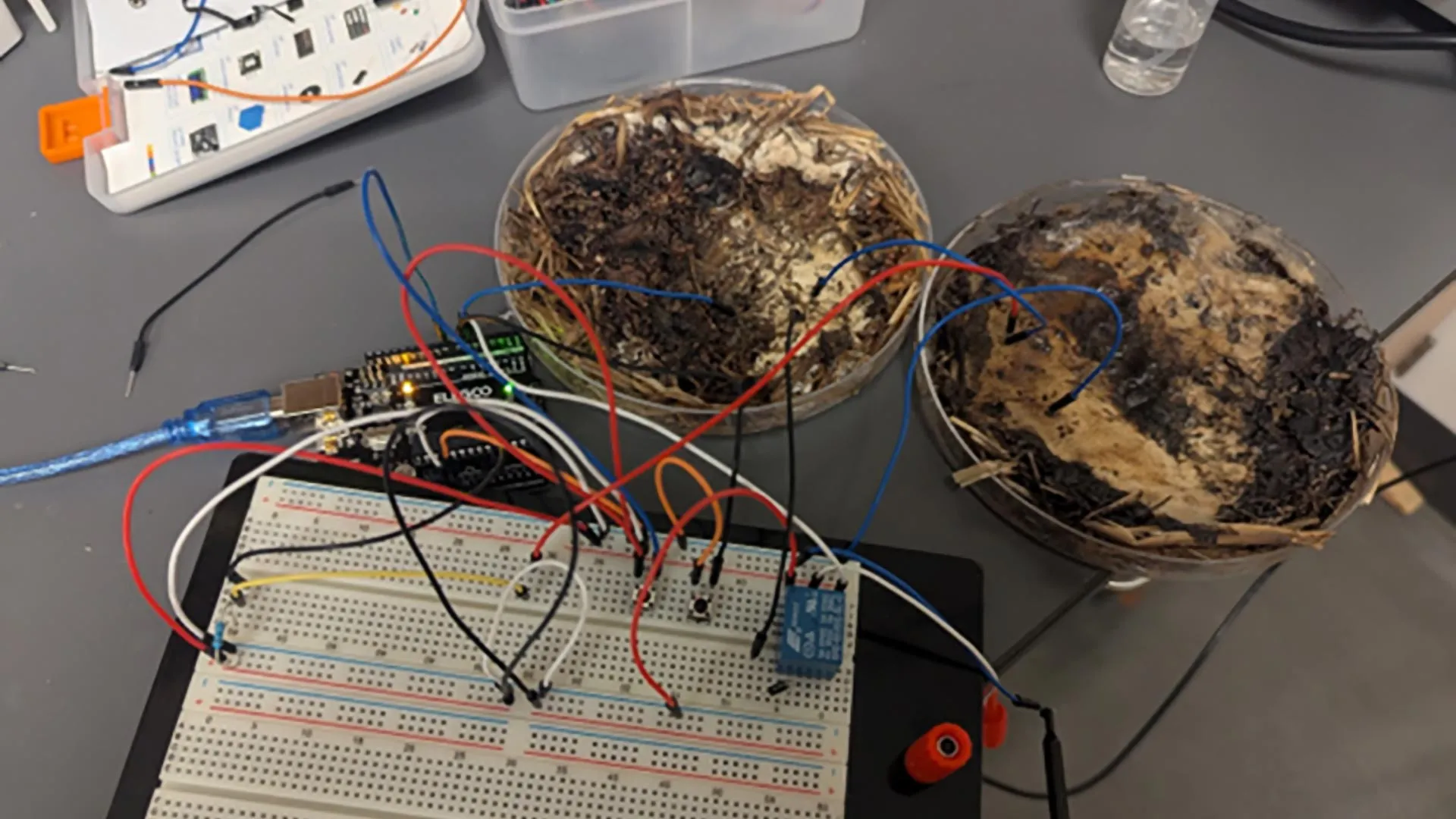
Mushrooms, often lauded for their resilience and a suite of peculiar biological traits, are proving to be exceptionally attractive candidates for the burgeoning field of bioelectronics. This interdisciplinary arena, where the principles of biology and cutting-edge technology converge, is dedicated to the design of innovative and sustainable materials poised to revolutionize future computing systems. The very qualities that allow fungi to thrive in diverse and challenging environments are now being harnessed to create a new generation of computational hardware.
The pivotal discovery by researchers at The Ohio State University centers on the ability to cultivate and guide edible fungi, such as the common shiitake mushroom, to act as organic memristors. These crucial components are the digital equivalent of memory cells, possessing the unique capacity to retain information about their previous electrical states. In essence, they remember what happened to them. This "memory" function is critical for the operation of all modern electronics, from the simplest calculator to the most powerful supercomputer.
Through rigorous experimentation, the research team demonstrated that these mushroom-based devices could remarkably replicate the memory behavior observed in conventional semiconductor chips. This opens the door to the creation of computing tools that are not only eco-friendly but also possess an almost brain-like ability to process and store information, all while being significantly less expensive to produce. The economic and environmental advantages of such a paradigm shift are immense.
John LaRocco, the lead author of the study and a research scientist in psychiatry at Ohio State’s College of Medicine, highlighted the profound impact of this discovery. "Being able to develop microchips that mimic actual neural activity means you don’t need a lot of power for standby or when the machine isn’t being used," he explained. "That’s something that can be a huge potential computational and economic advantage." The energy efficiency demonstrated by bio-inspired computing architectures, particularly those that mirror neural networks, is a significant bottleneck that current silicon-based technology struggles to overcome. The prospect of drastically reducing standby power consumption, a major contributor to energy waste in electronic devices, is a compelling driver for this research.
The concept of fungal electronics, while not entirely unprecedented, is steadily transitioning from theoretical curiosity to practical application, particularly within the context of sustainable computing. The inherent biodegradability and low production cost of fungal materials offer a potent solution to the escalating problem of electronic waste. Unlike traditional semiconductors, which often rely on rare earth minerals and demand substantial energy inputs for their manufacture and operation, fungal components present a far more environmentally benign alternative. This aligns with a growing global awareness of the urgent need to protect and preserve our planet for future generations.
LaRocco further elaborated on the foundational work, noting that "Mycelium as a computing substrate has been explored before in less intuitive setups, but our work tries to push one of these memristive systems to its limits." This indicates a deliberate effort to optimize and understand the fundamental capabilities of fungal materials in a computational context, moving beyond initial explorations to more robust and performant applications. The team’s findings, a testament to their dedication and innovative approach, were formally published in the esteemed journal PLOS One, making their discoveries accessible to the wider scientific community.
The experimental methodology employed by the researchers was both meticulous and ingenious. To assess the computational potential of mushrooms, samples of both shiitake and button mushrooms were carefully cultivated. Upon reaching maturity, these fungal specimens were dehydrated, a process that preserves their structure and electrical properties while rendering them more amenable to integration into electronic circuits. These prepared mushrooms were then meticulously attached to custom-designed electronic circuits. The core of the experiment involved exposing the mushrooms to precisely controlled electric currents, meticulously varying the voltage and frequency to observe their responses.
"We would connect electrical wires and probes at different points on the mushrooms because distinct parts of it have different electrical properties," LaRocco explained, detailing the nuanced approach to their experiments. "Depending on the voltage and connectivity, we were seeing different performances." This intricate connection strategy acknowledges the complex and heterogeneous electrical landscape within a fungal organism, allowing the researchers to probe its capabilities in a targeted manner.
The results of these two months of intensive testing were nothing short of surprising and highly promising. The research team discovered that their mushroom-based memristor could reliably switch between electrical states an astonishing 5,850 times per second, achieving an accuracy of approximately 90%. While performance did experience a decline at higher electrical frequencies, a crucial observation was made: connecting multiple mushrooms together proved instrumental in restoring stability. This emergent property, where the collective behavior of multiple fungal units enhances performance, strikingly mirrors the way neural connections in the human brain function, reinforcing the brain-like potential of these organic computing elements.
Qudsia Tahmina, a co-author of the study and an associate professor of electrical and computer engineering at Ohio State, emphasized the inherent adaptability of mushrooms for computing applications. "Society has become increasingly aware of the need to protect our environment and ensure that we preserve it for future generations," Tahmina stated. "So that could be one of the driving factors behind new bio-friendly ideas like these." Her perspective underscores the societal imperative driving innovation in sustainable technologies, positioning fungal computing as a timely and relevant solution.
Furthermore, Tahmina highlighted the inherent flexibility offered by mushrooms, suggesting a clear pathway for scaling up fungal computing systems. This scalability opens up a wide array of potential applications. For instance, larger-scale mushroom-based systems could find utility in edge computing, where processing is moved closer to the data source, and in the demanding environments of aerospace exploration. Conversely, smaller, more refined fungal components could be integrated into wearable devices and autonomous systems, enhancing their performance and efficiency.
Looking towards the horizon, the future of fungal computing, while still in its nascent stages, is brimming with promise. The primary objectives for future research include refining cultivation methods to achieve greater consistency and control, as well as miniaturizing device sizes to rival the compactness of traditional microchips. The successful development of smaller, more efficient fungal components will be the linchpin in establishing them as a viable and competitive alternative to current silicon-based microchips.
LaRocco offered an optimistic outlook on the accessibility of this technology, stating, "Everything you’d need to start exploring fungi and computing could be as small as a compost heap and some homemade electronics, or as big as a culturing factory with pre-made templates." This statement underscores the remarkable scalability of the research, suggesting that initial explorations can be undertaken with minimal resources, while large-scale industrial applications are also within reach with existing technological infrastructure. "All of them are viable with the resources we have in front of us now," he concluded, reinforcing the immediate potential of this transformative technology. The research team at Ohio State, including Ruben Petreaca, John Simonis, and Justin Hill, with support from the Honda Research Institute, has laid a foundational stone for a future where our digital world is deeply intertwined with the natural world.