Faris Adani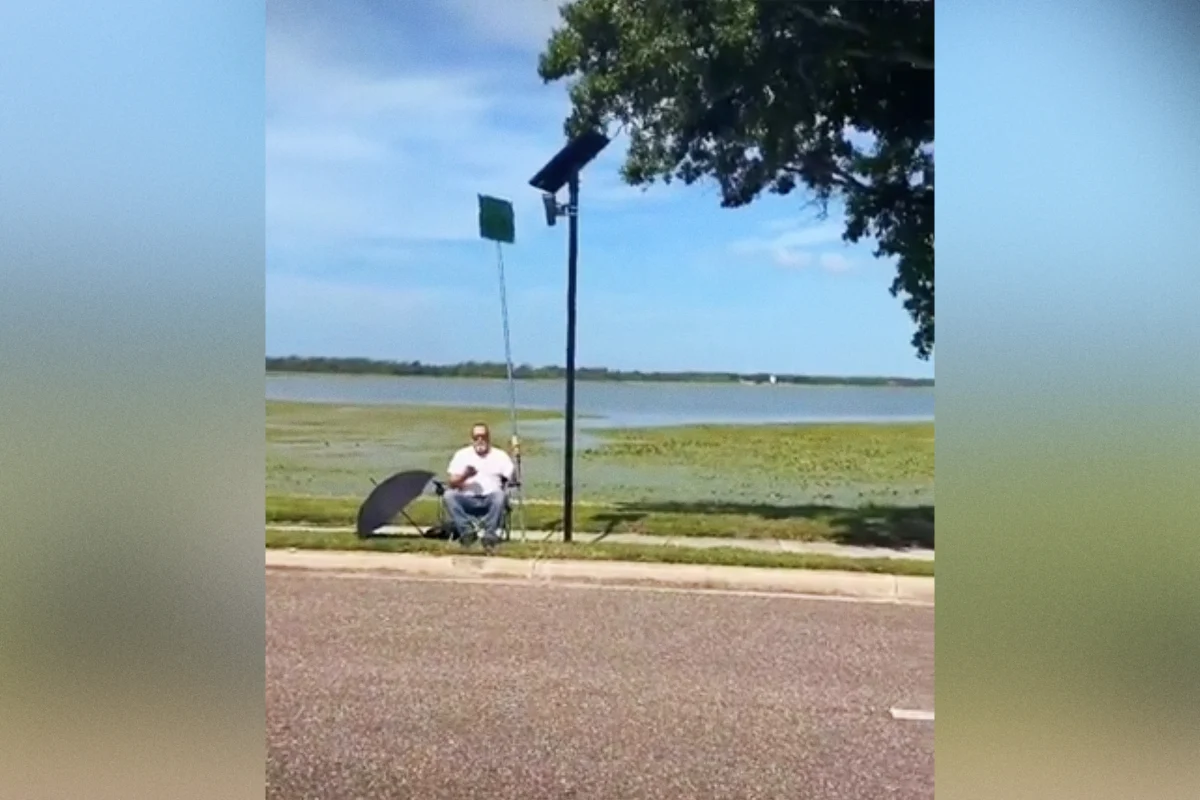
@harborhoney_ via Instagram (Screenshot via Reddit)
Sign up to see the future, today
Can’t-miss innovations from the bleeding edge of science and tech
There’s been plenty of buzz lately around vandalism of Flock Safety’s automatic license plate readers, which are AI-integrated surveillance cameras that index license plate data from passing vehicles indiscriminately and without a warrant. These devices, often mounted on poles in neighborhoods, commercial districts, and along roadways, are designed to capture high-resolution images of license plates, vehicle types, colors, and even unique identifying features, processing this information through artificial intelligence to create a searchable database of vehicle movements. While marketed as tools for enhancing public safety and solving crimes, their pervasive deployment and the collection of data on innocent citizens have ignited a fierce debate over privacy rights, civil liberties, and the commercialization of public surveillance.
The public backlash against Flock Safety’s expanding network has manifested in various forms, from organized lobbying efforts to spontaneous acts of defiance. Countless vigilantes have taken to the roadways armed with trash bags, spray paint, laser pointers, and even power drills to render the surveillance poles useless. These acts of vandalism, often driven by frustration over perceived government overreach and corporate profiteering from personal data, have resulted in arrests, criminal charges, and ongoing investigations by police departments across the country. The motivations are clear: to physically blind the watchful eyes of the state and private entities, preventing them from recording and cataloging the movements of everyday citizens without explicit consent or judicial oversight. However, such direct confrontation carries significant legal risks, often leading to charges of property damage or obstruction.
But what if there was another way to block Flock cameras that didn’t involve damaging public property? What if one could protest the pervasive surveillance without crossing the line into criminal activity? Turns out they’ll come after you for that, too, highlighting the contested nature of even non-destructive forms of resistance in the face of widespread surveillance infrastructure. The battle over digital privacy and the right to anonymity in public spaces is increasingly being fought on the physical streets, with innovative tactics emerging from concerned citizens.
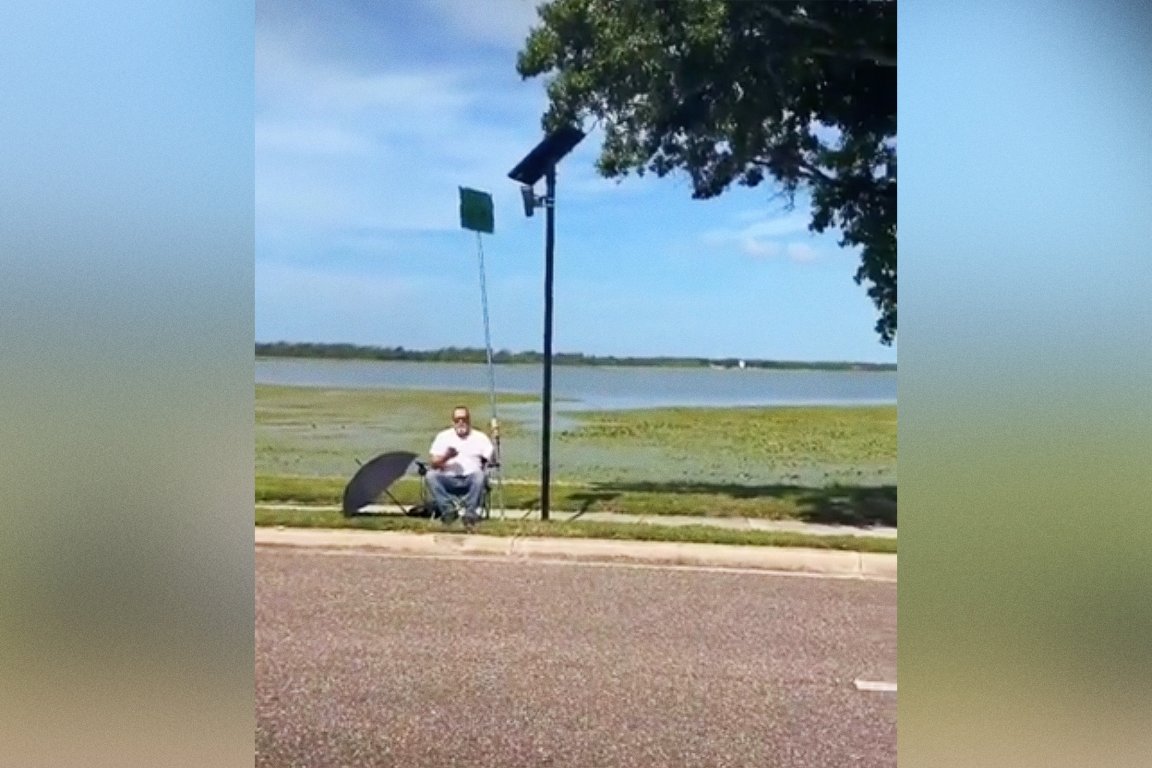
Enter Carl Gunn, a 77-year-old Florida man from St. Petersburg, who decided to take matters into his own hands and block a Flock camera in his neighborhood. His method is as unorthodox as it is visually striking: he doesn’t destroy anything, but simply uses a 12-foot pool skimmer with a sign ingeniously taped to the end. The sign, boldly proclaiming “DOWN WITH FLOCK CAMERAS,â€, is extended high enough to perfectly obscure the camera’s lens, effectively rendering it blind without causing any permanent damage. This creative approach transforms the act of protest from mere vandalism into a performance of civil disobedience, drawing attention through its sheer audacity and humor.
Footage of this one-man protest, which quickly went viral, shows Gunn lounging comfortably in a camping chair, his comically long sign held steady in one hand, and an umbrella providing shade from the relentless Florida sun in the other. His serene demeanor, juxtaposed with the audacious act of disabling a high-tech surveillance device, makes for a powerful image. Speaking to the weekly paper Creative Loafing Tampa Bay, the protestor justified his action by articulating a deep-seated concern about the commercial motivations behind the surveillance infrastructure. “The Flock company, they’re doing this for profit,†Gunn stated, cutting straight to the heart of many privacy advocates’ objections. He further elaborated on the fundamental principles of data ownership and public space: “They don’t own the air. We didn’t give them permission to do it on us. If they want to do it for profit, I want my paycheck.†These powerful statements encapsulate the sentiment that individuals should have a say in how their data, even seemingly innocuous location data, is collected, used, and profited from by private corporations.
The 77-year-old has staged at least two such protests so far, CL reports, targeting different Flock cameras within St. Petersburg. During one of these peaceful, yet highly visible, demonstrations, two St. Petersburg squad cars rolled up on him. This police presence immediately escalated the situation, transforming a quiet, individual act of protest into a public spectacle. The scene prompted a community member, Tyler Knight, a St. Petersburg local, to stop and film the encounter, amplifying its reach and impact. Knight, witnessing the officers confronting Gunn, shouted words of solidarity and defiance, captured on his now-viral Instagram reel. “Yo, what’s your name? I’ll come bail you out!†Knight exclaimed, offering support and highlighting the perception of police resources being deployed to protect a private company’s surveillance equipment. “You got the boys out protecting it [the ALPR],†he added, underscoring the perceived alignment of law enforcement with corporate interests over citizen privacy. Before driving off, Knight delivered a final, scathing indictment of the situation: “F**k the Flock cameras, and f**k you for not looking out for us.†This public outburst reflects a growing frustration within communities regarding the unchecked expansion of surveillance technology and the perceived lack of accountability from both private companies and public institutions.
Though the video caption accompanying Knight’s reel claims Gunn was arrested over the incident, a subsequent search revealed no report with his name appearing in the Pinellas County Clerk of the Circuit Court’s case record database. This absence of an official arrest record suggests a few possibilities: either the police opted not to press charges, recognizing the non-destructive nature of the protest and the potential for negative public relations, or the incident was resolved without formal legal action. Regardless, the public perception of an arrest, even if unconfirmed, further fuels the narrative of overreach and suppression of dissent, highlighting the delicate balance between maintaining public order and protecting freedom of expression.
Of course, any discussion of Flock overreach has to include the police officers themselves and the symbiotic relationship they share with the company. While Flock may be a front-runner for most hated tech company of the 2020s among privacy advocates, its dragnet of surveillance would be impossible if it weren’t for a massive coalition of police departments and private landowners fueling the company’s rise. Police departments are often the primary clients, leasing or purchasing Flock cameras and gaining unfettered access to the vast network of data. Private entities, such as Homeowners Associations (HOAs) and businesses, also install Flock cameras, contributing to the ever-expanding surveillance grid, often with the stated goal of improving neighborhood security, yet inadvertently creating a comprehensive tracking system for all who pass through.
Wherever Flock controversies bubble to the surface, police come out of the woodwork as the company’s most ardent defenders, consistently citing their effectiveness in solving crimes and apprehending suspects. However, this defense often overlooks or downplays the significant privacy implications and the potential for misuse. And because police departments have complete and largely unsupervised access to the Flock network — which now spans nearly 100,000 cameras across the country, creating a national web of interconnected surveillance — cops are also the most likely to abuse the company’s ALPRs. The temptation to use such powerful tracking tools for personal reasons or unauthorized investigations has proven to be a significant vulnerability.
The evidence of such abuse is alarmingly widespread. In the state of Georgia alone, 17 officers have been caught using Flock in order to stalk and harass people, access information on ex-partners, or pursue personal vendettas, demonstrating a systemic failure in oversight and accountability. Further abuses have been recorded everywhere from big cities like Los Angeles, where concerns over false positives and data accuracy led to a reassessment of contracts, and Milwaukee, where officers faced charges for improper use, to small towns in South Carolina and Illinois, where chiefs of police and other high-ranking officials have been implicated in misconduct related to the surveillance technology. These incidents underscore a critical flaw: the very tools designed to enhance public safety can, in the wrong hands, become instruments of privacy invasion and abuse, eroding public trust in law enforcement and the technology itself.
Whether a 12-foot pole, wielded by a determined senior citizen, will be enough to stop those abuses nationwide is doubtful. The sheer scale of Flock’s network and the entrenched interests supporting it present an immense challenge. However, Carl Gunn’s act of defiance sends a message that’s impossible to miss: individuals are increasingly unwilling to accept ubiquitous surveillance without question. His protest is a powerful symbol of resistance, highlighting the creative ways citizens are pushing back against the expansion of digital surveillance and asserting their right to privacy in an increasingly monitored world. It demonstrates that even without resorting to destruction, a single individual can effectively challenge the perceived authority of surveillance systems and ignite a conversation about the future of privacy and autonomy.
More on Flock: So Many People Are Smashing Flock’s Cameras That It’s Disguising Them Inside Other Objects