Faris Adani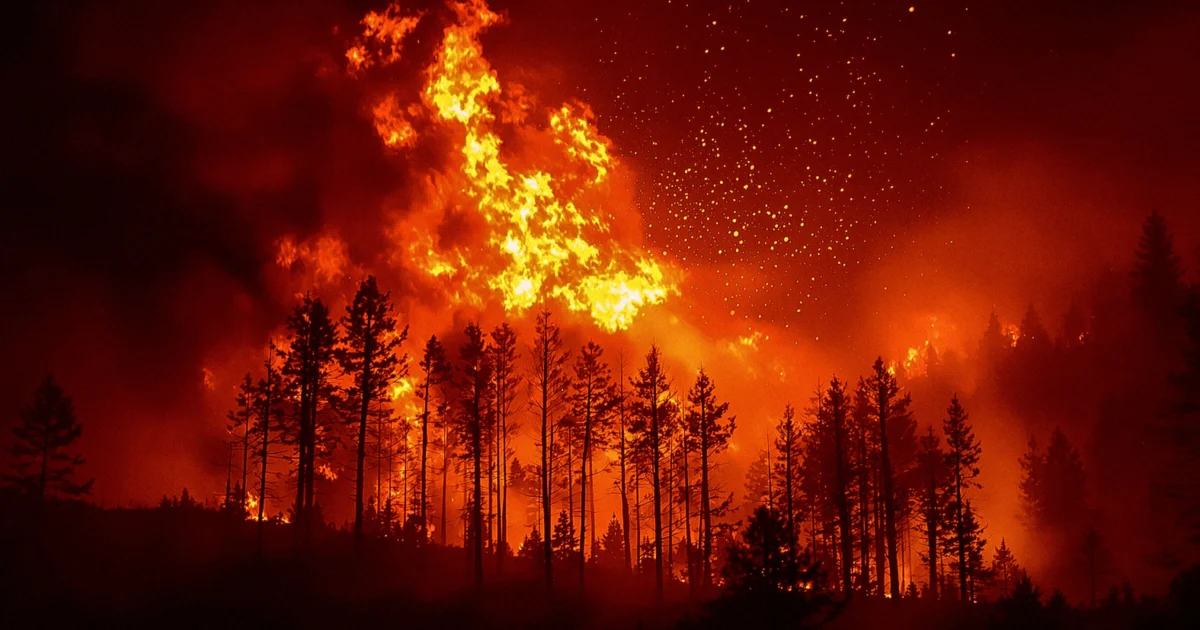
The international community, through the United Nations Environment Programme (UNEP), has issued a stark and sobering admission: the world has definitively failed to prevent global warming from exceeding the critical 1.5 degrees Celsius threshold above pre-industrial levels. This concession marks a seismic shift in global climate strategy, moving from an ambition to avoid this dangerous benchmark to an urgent, grim new reality focused on "limiting overshoot" – minimizing the duration and magnitude of warming beyond 1.5°C. The recent UNEP report, ominously titled "Limiting Overshoot," arrives amidst a backdrop of escalating climate disasters and the hottest summer on record, serving as a desperate call to action to prevent an even more catastrophic future.
For decades, the 1.5°C target has stood as the scientific community’s red line, a crucial guardrail identified by the Intergovernmental Panel on Climate Change (IPCC) and enshrined in the Paris Agreement. Crossing this threshold, scientists have warned, dramatically increases the risk of triggering irreversible climate tipping points. These are critical thresholds in Earth’s systems, beyond which a small perturbation can lead to large, often abrupt, and self-accelerating changes. The UN’s own climate explainers have long highlighted the terrifying consequences associated with 1.5°C, including the potential breakdown of major ocean circulation systems, the abrupt thawing of vast stretches of boreal permafrost, and the catastrophic collapse of tropical coral reef systems.
The breakdown of ocean circulation systems, such as the Atlantic Meridional Overturning Circulation (AMOC), could lead to dramatic shifts in weather patterns globally, potentially plunging parts of Europe into much colder conditions while exacerbating heatwaves elsewhere. The thawing of permafrost, a vast carbon sink, would release colossal amounts of stored methane and carbon dioxide into the atmosphere, creating a powerful positive feedback loop that accelerates warming further and makes mitigation efforts exponentially harder. Coral reef systems, often called the "rainforests of the sea," support a quarter of all marine species and protect coastlines; their collapse would devastate marine biodiversity, impact fisheries, and leave coastal communities vulnerable to storms and erosion. These are not distant hypothetical scenarios but increasingly probable outcomes that humanity now faces.
The new UNEP paper unequivocally states that even under the most optimistic scenarios, where all current climate commitments and policies are fully implemented, global warming is still projected to reach a minimum of 1.8 degrees Celsius. This "best-case" is already significantly above the 1.5°C limit that scientists deemed relatively "safe." More alarmingly, if the world continues on its current trajectory, the report warns of a distinct possibility of hitting a staggering 2.6 degrees Celsius by the year 2100. Such a scenario would unleash unprecedented levels of human suffering, ecological collapse, and economic devastation, making large parts of the planet uninhabitable and fundamentally altering life as we know it.
This grim prognosis is not abstract; it is already manifesting in real-time. The summer preceding the report’s release was officially the hottest on record, marked by brutal heatwaves across North America, Europe, and Asia, devastating wildfires in Canada and Greece, unprecedented flooding in Libya and China, and widespread droughts impacting food security. The current global average temperature, hovering around 1.4 degrees Celsius above pre-industrial levels, is already causing severe impacts that stretch the resilience of societies and ecosystems. The difference between 1.4°C and 1.5°C, or even 1.8°C, represents not just a numerical increment but a qualitative leap in the intensity and frequency of extreme weather events, the rate of sea-level rise, and the irreversible loss of biodiversity.
The concept of "limiting overshoot" therefore represents a profound shift in climate strategy. It acknowledges that the goal of preventing 1.5°C warming has slipped from our grasp. The new objective is to ensure that any exceedance of this critical threshold is as brief as possible and as shallow as possible, with the ultimate aim of bringing temperatures back down to 1.5°C or lower by the latter half of the century. This necessitates not only aggressive cuts to emissions but also the deployment of technologies and natural solutions for carbon dioxide removal (CDR) on an unprecedented scale – a concept that was once considered a last resort but is now framed as an unavoidable necessity.
Achieving this recalibrated goal depends on "achieving sustained net-negative CO2 emissions at a global scale in the second half of this century, and potentially further reductions of non-CO2 emissions." This demands a complete overhaul of global energy systems, industrial processes, and land use practices. Sustained net-negative CO2 emissions mean that humanity must remove more carbon dioxide from the atmosphere than it emits. This will require a multi-pronged approach:
- Rapid Decarbonization: Accelerating the transition away from fossil fuels to renewable energy sources like solar, wind, and geothermal power at an unprecedented pace. This includes electrifying transportation, heating, and industrial processes.
- Energy Efficiency: Drastically improving energy efficiency in all sectors, from buildings to manufacturing, to reduce overall energy demand.
- Carbon Dioxide Removal (CDR) Technologies: Investing heavily in and deploying technologies such as direct air capture (DAC) and bioenergy with carbon capture and storage (BECCS). DAC directly sucks CO2 out of the ambient air, while BECCS involves growing biomass, burning it for energy, and then capturing and storing the resulting emissions. These technologies are currently expensive and energy-intensive, requiring significant innovation and scale-up.
- Nature-Based Solutions: Protecting and restoring natural carbon sinks, such as forests, wetlands, and oceans. Reforestation, afforestation, improved agricultural practices (e.g., regenerative agriculture), and coastal habitat restoration can significantly enhance natural carbon sequestration.
- Reduction of Non-CO2 Emissions: Addressing other powerful greenhouse gases like methane (CH4) and nitrous oxide (N2O). Methane, a potent but shorter-lived greenhouse gas, largely comes from fossil fuel production, agriculture (livestock, rice paddies), and waste. Reducing methane emissions through leakage prevention in the oil and gas industry, dietary changes, and improved waste management can have a rapid and significant impact on near-term warming. Nitrous oxide, primarily from agricultural fertilizers, also requires targeted mitigation.
The urgency of the situation cannot be overstated. The report authors emphasize, "Decisions taken this decade will determine whether viable options remain to gradually reverse warming back to 1.5 degrees Celsius." This decade, the 2020s, is the make-or-break period. Procrastination or insufficient action now will lock in higher temperatures and more severe impacts for generations to come, potentially pushing the planet past irreversible tipping points that render any future efforts moot.
Inger Andersen, Executive Director of the UN Environment Programme, speaking to CBC News, underscored the nuanced but resolute message: "Let’s be very clear, 1.5 target is still the goal. But now we need to approach it differently from above." This statement encapsulates the recalibrated hope – not giving up on 1.5°C entirely, but acknowledging the current reality and focusing on minimizing the damage. "Every tenth of a degree we avoid still means less damage," Andersen stressed. This means that even if 1.5°C is surpassed, every effort to limit the peak temperature and reduce the duration of overshoot will save lives, preserve ecosystems, and mitigate suffering. It is a desperate plea for relentless action, even in the face of daunting odds.
The UN’s concession is a clarion call for unprecedented global cooperation, a dramatic acceleration of policy implementation, and a profound shift in societal priorities. It demands a level of commitment and sacrifice from governments, corporations, and individuals worldwide that has, thus far, been elusive. The future of humanity and the planet hinges on whether the world can respond to this stark warning with the urgency and scale required, not to prevent a crisis that has already begun, but to prevent it from spiraling into an irreversible environmental catastrophe. The time for debate is over; the era of emergency action is now.