Faris Adani
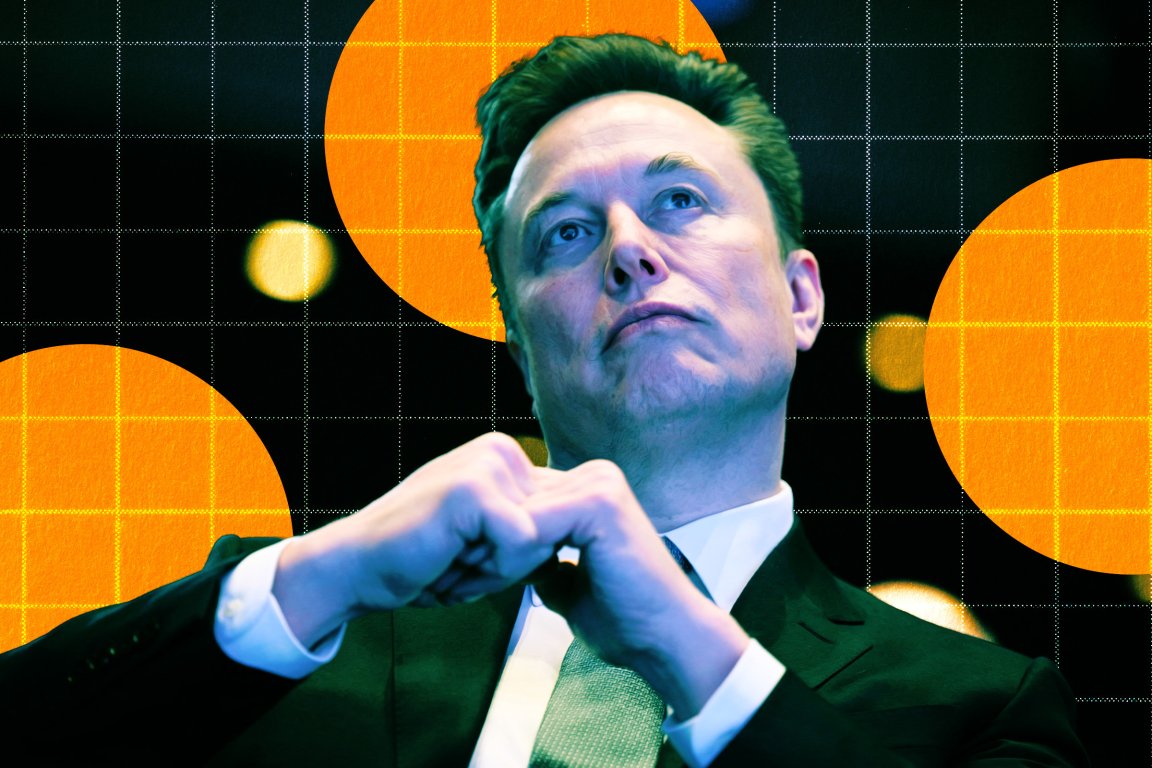
Illustration by Tag Hartman-Simkins / Futurism. Source: Brendan Smialowski / AFP via Getty Images
Sign up to see the future, today
Can’t-miss innovations from the bleeding edge of science and tech
There’s a $10 Billion Problem With Elon Musk’s New Chip Factory. Elon Musk, the serial entrepreneur behind Tesla, SpaceX, and xAI, has once again captured headlines with an announcement that is both breathtakingly ambitious and financially perplexing: the proposed construction of “Terafab,” a colossal semiconductor manufacturing facility. Unveiled during what was described as a “painfully awkward conference” over the weekend, this joint venture aims to produce the advanced chips essential for the future of artificial intelligence, autonomous vehicles, and space exploration. However, initial financial projections by Musk, ranging from $20 to $25 billion, are already clashing with more realistic industry estimates that place the cost significantly higher, raising serious questions about the project’s feasibility and Tesla’s capacity to fund such an undertaking.
The vision for Terafab is nothing short of monumental. Musk envisions a facility that would dwarf existing manufacturing plants, including Tesla’s massive Giga Texas, potentially becoming one of the largest buildings on Earth. Its primary purpose would be to produce cutting-edge semiconductors, the lifeblood of the modern technological era, and particularly crucial for the advanced AI systems xAI is developing, the sophisticated autonomous driving capabilities Tesla requires, and the complex avionics and satellite systems integral to SpaceX’s operations. The very name “Terafab” suggests an unprecedented scale of production, aiming for throughput measured in terabytes of data processing capacity, indicative of the sheer volume and complexity of chips required by Musk’s interconnected enterprises. The strategic rationale for such a venture is clear: vertical integration. By bringing chip manufacturing in-house, Musk’s companies could gain greater control over their supply chain, customize chips precisely to their needs, and reduce reliance on external suppliers, mitigating the risks of global chip shortages that have plagued industries worldwide.
However, the path to realizing this vision is paved with astronomical costs. Musk’s initial estimate of $20 to $25 billion is already a staggering sum, placing Terafab among the most expensive structures ever conceived. To put this into perspective, at the lower end of $20 billion, it would tie with Turkey’s Akkuyu Nuclear Plant as the sixth most expensive building globally. The Akkuyu plant, a complex energy infrastructure project, highlights the immense capital required for such large-scale industrial endeavors. At the upper end of Musk’s estimate, $25 billion would put Terafab on par with the International Thermonuclear Experimental Reactor (ITER) in the south of France. ITER, a multinational research facility designed to prove the feasibility of fusion power, has been under construction since 2013, suffering from extensive delays and significant cost overruns, currently projected to be the world’s largest fusion reactor if it ever fully opens. The parallels with ITER, a project defined by its ambitious scope and protracted development, serve as a stark warning for any undertaking of Terafab’s proposed magnitude.
Yet, even these eye-watering figures might be dramatically understated. Industry analysts, particularly from firms like Morgan Stanley, suggest that the true cost for a chip factory of Terafab’s envisioned scale and sophistication could easily exceed Musk’s early estimates by another $20 billion, pushing the total into the $35 to $45 billion range. This substantial discrepancy represents a “problem” of at least $10 billion, if not more, between Musk’s highest projection and a more realistic financial assessment. Such a colossal investment would require unprecedented capital expenditure, far eclipsing Tesla’s planned 2026 capital expenditures. The implications for Tesla’s balance sheet are profound. Financing a project of this scale could necessitate significant debt, equity dilution, or a redirection of funds from other critical projects, potentially straining the company’s financial health and investor confidence. The complexities of building a state-of-the-art semiconductor fabrication plant extend far beyond mere construction. It involves securing incredibly specialized machinery, such as EUV lithography tools costing hundreds of millions each, establishing ultra-clean environments (cleanrooms) that are more pristine than surgical operating theaters, attracting a highly specialized workforce, and investing continuously in research and development to stay at the cutting edge of chip technology. These are costs that typically escalate well beyond initial forecasts.
Adding to the skepticism is Musk’s personal track record and his relative inexperience in the highly specialized semiconductor manufacturing industry. Unlike established chip industry leaders such as TSMC’s C.C. Wei or Intel’s Pat Gelsinger, Musk has no direct experience leading a chip company. While he has demonstrated an uncanny ability to learn and disrupt various industries, the semiconductor sector operates on incredibly tight margins, requires decades of specialized expertise, and involves capital intensity that few other industries can match. Moreover, Musk has a well-documented history of “flubbing” hardware ventures in their early days, often underestimating the complexities and timelines involved. The “production hell” surrounding the Tesla Model 3, which saw manufacturing take place in a tent as the company struggled to scale, serves as a poignant reminder of the challenges of ramping up complex hardware production. Similarly, the early failures of the Falcon 1 rocket, though ultimately overcome by SpaceX’s iterative approach, highlight the initial hurdles in launching new hardware initiatives. Even more recent projects, such as the Optimus humanoid robot, have been met with mixed reactions, with initial hype often outpacing practical capabilities. These instances collectively suggest that while Musk eventually achieves his ambitious goals, the journey is often fraught with significant delays, cost overruns, and unexpected complications.
Despite these formidable financial and logistical hurdles, Musk remains resolute. “We either build the Terafab or we don’t have the chips, and we need the chips, so we build the Terafab,” he declared during his announcement, adding a somewhat resigned “So… yeah.” This “no choice” argument underscores the critical importance of advanced semiconductors in the current global technological landscape. The global chip shortage of recent years, exacerbated by geopolitical tensions and the escalating AI arms race, has demonstrated the vulnerability of relying solely on external chip manufacturers. Nations worldwide are now actively investing in domestic chip production through initiatives like the US CHIPS Act and the EU Chip Act, recognizing semiconductors as a matter of national and economic security. For Musk’s empire, custom-designed, high-performance chips are not merely an advantage but a necessity for maintaining a competitive edge in AI development, pushing the boundaries of autonomous technology, and enabling ambitious space missions. Vertical integration, in this context, becomes a strategic imperative to control destiny rather than being at the mercy of global supply chains and geopolitical shifts.
In conclusion, Elon Musk’s Terafab represents a characteristic blend of audacious vision and potential financial peril. The need for advanced chips for his diverse portfolio of companies is undeniable, especially in an era defined by the rapid acceleration of AI and the strategic importance of semiconductor independence. The prospect of one of the world’s largest and most expensive buildings dedicated to chip manufacturing is certainly inspiring. However, the enormous disparity between Musk’s initial cost estimates and more realistic industry figures, coupled with his historical challenges in scaling complex hardware ventures, casts a long shadow of skepticism over the project’s immediate future. Whether Terafab ultimately materializes as a groundbreaking facility or becomes another casualty of “Elon Time” and financial reality remains to be seen. The coming years will reveal if Musk can once again defy the odds and secure the necessary resources to bridge this multi-billion-dollar gap, transforming a bold declaration into a tangible industrial marvel.