
 Imroatul Nasiyah
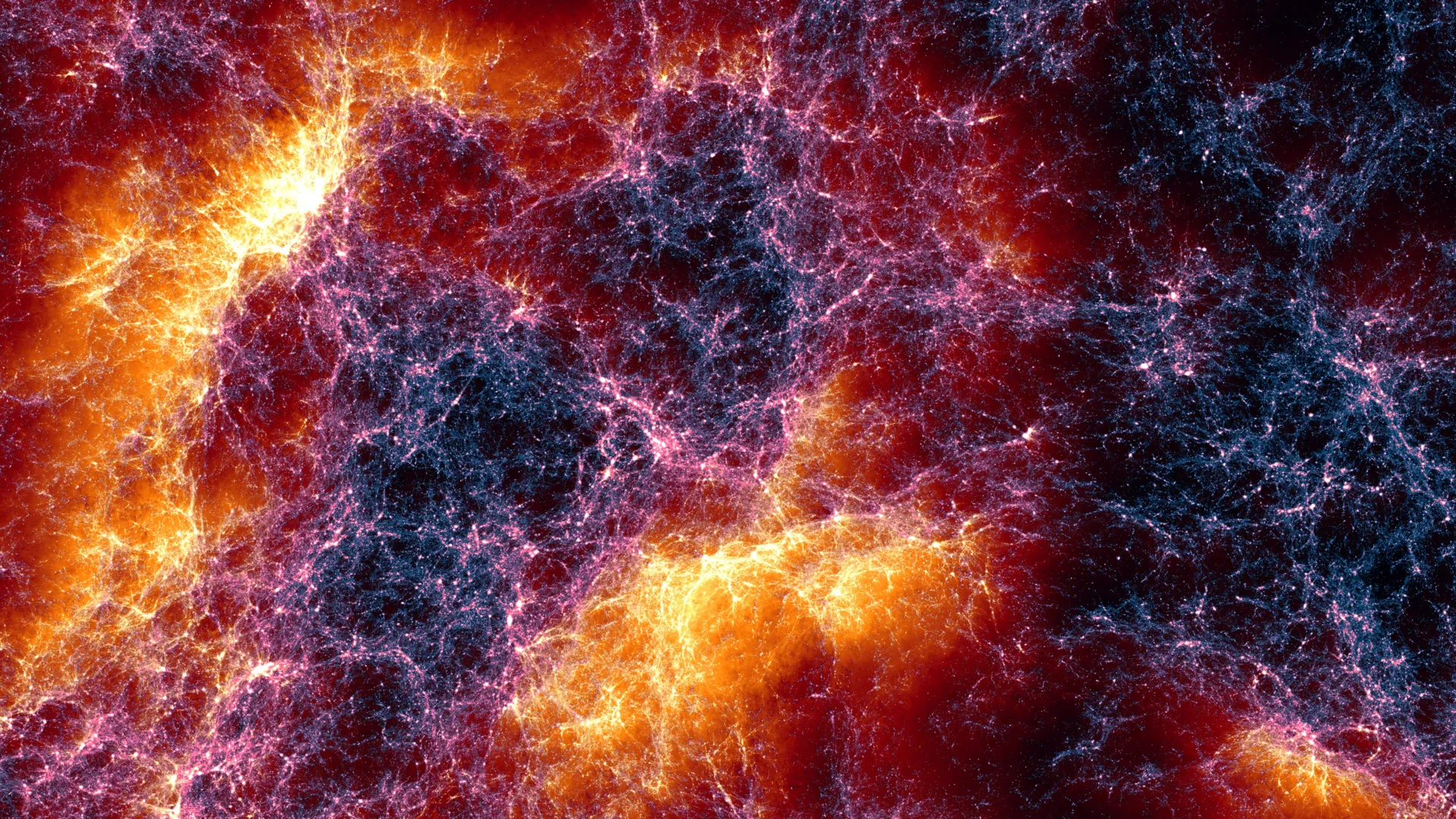
Smithsonian scientists, at the forefront of cosmological research, have achieved a monumental feat by constructing "Lumina," one of the most extensive and intricately detailed simulations of the early universe ever conceived. This groundbreaking virtual cosmos offers an unprecedented lens through which to explore the universe’s formative stages, a period spanning the initial 2 billion years following the Big Bang. Developed by researchers at the Center for Astrophysics | Harvard & Smithsonian, Lumina is poised to revolutionize how astronomers interpret and contextualize observations from the most advanced astronomical instruments of our time, including the James Webb Space Telescope (JWST) and the upcoming Nancy Grace Roman Space Telescope. The research, meticulously detailed in the prestigious journal Monthly Notices of the Royal Astronomical Society, reconstructs this pivotal epoch by modeling the complex interplay between ordinary matter, the enigmatic dark matter, and the pervasive radiation that shaped the nascent cosmos. By rigorously comparing Lumina’s sophisticated predictions with real-world data gathered by JWST, Roman, and a host of other powerful telescopes, scientists are empowered to critically assess the validity of existing cosmological theories and, crucially, to pinpoint observations that might challenge our fundamental understanding of the universe’s governing laws. For centuries, astronomers have diligently charted the heavens, painstakingly constructing theoretical frameworks to explain the genesis of stars, the intricate dance of galaxies, and the formation of all cosmic structures. The advent of modern supercomputing has now propelled these theoretical concepts into the realm of tangible, dynamic simulations capable of forecasting the universe’s behavior with remarkable fidelity. When the observational evidence aligns seamlessly with these simulated predictions, it significantly bolsters our confidence in the current cosmological paradigm. Conversely, any unexpected discrepancies serve as potent indicators of physical processes that remain beyond our current grasp, beckoning further investigation.
"With the advent of the JWST, the early universe has truly blossomed into an exhilarating new frontier in astrophysics," enthused lead author Oliver Zier, an ITC Fellow at the Center for Astrophysics | Harvard & Smithsonian. "To truly comprehend the awe-inspiring vistas revealed by this telescope, it is imperative that we translate our theoretical constructs into detailed, predictive models. After several years of dedicated effort, marked by both triumphs and setbacks, the moment of witnessing these simulation results and observing our predictions manifest visually is profoundly rewarding."
Recreating the Universe’s First 2 Billion Years: A Deeper Dive into Lumina’s Capabilities
At its core, Lumina stands as the most ambitious cosmological radiation hydrodynamics simulation ever undertaken. In essence, it leverages the immense power of supercomputers to meticulously calculate the intricate reciprocal influences between gas, dark matter, and light as the young universe underwent its formative evolution. By meticulously tracking these interactions across the first 2 billion years subsequent to the Big Bang, researchers are afforded the unique opportunity to scrutinize the very processes that led to the formation of the earliest galaxies and to understand how their burgeoning activity subsequently influenced the colossal clouds of gas that enshrouded them.
A key distinguishing feature of Lumina is the sheer scale of its virtual cosmos. The simulation models a volume of space exceeding 100 times the extent of comparable projects that preceded it. Its digital universe unfolds within a cube measuring approximately 1.5 billion light-years on each side, offering a panoramic view of cosmic evolution on a scale that directly mirrors the vast cosmic structures accessible to the observational capabilities of today’s most advanced telescopes. This expansive scope is critical for capturing the large-scale dynamics of the universe while simultaneously resolving the finer details of galaxy formation.
Furthermore, Lumina represents a significant leap forward in its sophisticated treatment of helium reionization. This crucial process, characterized by the energetic radiation stripping electrons from helium atoms, has, for the first time, been simulated in its entirety. The simulation meticulously tracks this transformation as it unfolds, while simultaneously accounting for its profound impact on the surrounding cosmic environment. This integrated approach empowers scientists to conduct in-depth investigations into the complex relationships between evolving galaxies, the pervasive radiation fields they generate, and the diffuse intergalactic gas that permeates the space between them.
"We consider ourselves exceptionally fortunate to be at the forefront of developing simulations like Lumina," remarked Aaron Smith, an assistant professor of physics at the University of Texas at Dallas and a co-author of the groundbreaking paper. "For the first time, we possess the capability to witness, in real-time, the transformation of both hydrogen and helium into their modern atomic forms across such an immense cosmic volume, all while maintaining the resolution necessary to discern individual galaxies and other luminous celestial objects that were the driving forces behind this monumental metamorphosis."
A Massive Supercomputer Fuels the Virtual Cosmos: The Power Behind Lumina
The ambitious undertaking of recreating such an expansive swathe of cosmic history necessitated the deployment of extraordinary computational resources. The research team harnessed the power of more than 15,000 graphics processing units (GPUs) housed within Frontier, recognized as one of the world’s most potent supercomputers, located at the prestigious Oak Ridge National Laboratory in Tennessee.
This unparalleled processing capability empowered the researchers to simulate an exceptionally large region of the early universe without compromising the granular detail essential for scrutinizing individual galaxies and other critical cosmic structures. Consequently, Lumina is capable of capturing the grand sweep of cosmic evolution while simultaneously tracking the nuanced processes involved in the formation of stars, the assembly of galaxies, and the growth of supermassive black holes.
Testing the Mysteries of the Early Universe: Lumina as a Cosmic Laboratory
Beyond its remarkable feat of recreating cosmic history, Lumina provides an indispensable new framework for delving into the intricate mechanisms that governed the universe’s development. The research team harbors ambitious plans to utilize Lumina to explore a multitude of fundamental questions, including the dynamic movement of gas between galaxies, the enduring influence of the cosmic microwave background radiation left over from the Big Bang, and the emergence of regions characterized by exceptionally high rates of star formation.
By juxtaposing the predictions generated by Lumina with the actual observational data procured by the James Webb Space Telescope, the Nancy Grace Roman Space Telescope, and a suite of other advanced instruments, scientists aspire to construct a more comprehensive and nuanced understanding of the universe’s earliest chapters. Any unexpected divergences between the simulated cosmos and its real-world counterpart hold the potential to yield invaluable insights, perhaps even illuminating areas where current cosmological theories require refinement or a fundamental reevaluation. Lumina is not merely a simulation; it is a powerful new tool for discovery, pushing the boundaries of our knowledge and charting a course towards a deeper comprehension of our cosmic origins.