anjir abdul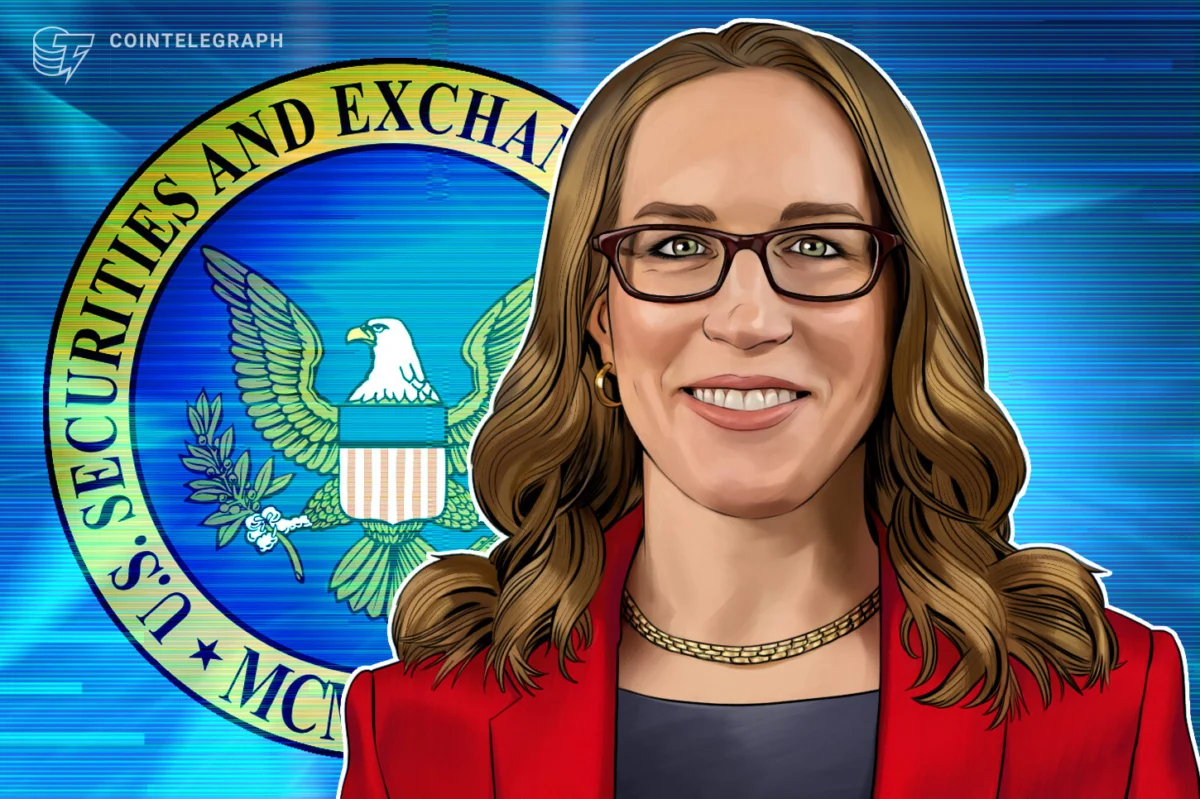
The United States Securities and Exchange Commission (SEC) is set to bid farewell to one of its most distinctive and influential members, Commissioner Hester Peirce, who has formally submitted her resignation, effective October 2. Her departure marks the end of an approximately eight-year tenure characterized by a steadfast advocacy for regulatory clarity, particularly within the nascent and often tumultuous digital assets space, earning her the moniker "Crypto Mom."
Commissioner Peirce’s resignation was made public through a copy of her resignation letter, which she posted on her X (formerly Twitter) account on Friday. In the letter, she expressed profound gratitude to the President for the "honor of her professional lifetime" in serving on the commission. She also conveyed confidence in the SEC’s current leadership, noting that she was leaving the agency under the "excellent leadership" of Chairman Paul Atkins and Commissioner Mark Uyeda. Both Atkins and Uyeda are Republicans, and with Peirce’s departure, they will constitute the remaining members of the commission, pending new appointments.
Peirce’s time at the SEC has been transformative, not least for her consistent and articulate calls for a more principles-based and less enforcement-driven approach to regulation. Her term officially expired in June 2025, but the agency’s rules permit commissioners to continue serving for up to 18 months beyond their term if a replacement has not yet been appointed. Her decision to step down, therefore, comes well within this permissible grace period, signaling a clear transition to the next chapter of her professional life.
Perhaps one of Peirce’s most significant contributions, especially in recent years, has been her role as the director of the agency’s Crypto Task Force, a position she assumed on February 4, 2025. This task force was specifically established to delve into the complex question of how existing securities laws should be applied to digital assets and the rapidly evolving landscape of decentralized systems. Under her guidance, the task force aimed to foster a deeper understanding of blockchain technology and its implications for financial markets, pushing for frameworks that could accommodate innovation while still safeguarding investors. Her leadership in this area underscored her belief that the crypto industry needed clear, forward-looking guidance rather than reactive enforcement actions.
The "Crypto Mom" nickname originated from her public stance, often divergent from the prevailing regulatory sentiment, that the crypto industry deserved a clear regulatory path. She consistently argued against "regulation by enforcement," a practice where the SEC primarily clarified its stance on digital assets through legal actions against companies rather than through explicit rulemaking. Peirce advocated for a "safe harbor" proposal that would allow blockchain projects to develop and decentralize without immediate fear of being classified as unregistered securities. This proposal, though never officially adopted, became a touchstone for industry advocates seeking clearer guidance and a more collaborative regulatory environment. Her perspective was that innovation should be nurtured, not stifled, by overly broad or ambiguous interpretations of existing laws.
Beyond her role on the Crypto Task Force, Peirce has been a vocal proponent of distinguishing between open-source code development and the issuance of securities. In June, Cointelegraph reported her significant remarks that merely publishing open-source code should not subject software developers to federal securities regulations. This position directly addresses a longstanding and contentious debate over developer liability in decentralized finance (DeFi), where the lines between contributing to technology and engaging in regulated financial activity can often be blurred. Her argument was rooted in the principle that foundational technological development should not be unduly burdened by securities laws, a sentiment that resonated deeply within the developer community and aligned with the SEC’s broader shift away from aggressive enforcement tactics under the current administration.
Indeed, the regulatory landscape at the SEC has undergone a substantial transformation since President Donald Trump took office in January 2025. The agency, under his administration, has notably altered its approach to crypto regulation and enforcement. This shift has included the dropping of several enforcement actions and investigations into various crypto companies, some of which had ties to Trump and his family. This pivot, as reported by Cointelegraph, represents a radical change from previous administrations, moving towards an approach that Chairman Paul Atkins has described as less reliant on "regulation by enforcement" and more focused on clear, proactive guidance. Peirce’s long-standing criticisms of the previous administration’s heavy-handed approach to crypto regulation now appear to be more aligned with the current SEC’s philosophy, making her departure, in some ways, a capstone to a period where her views gained greater traction.
Looking ahead, Peirce’s post-SEC plans are already taking shape. Cointelegraph reported in May that she intends to join the law school of Regent University in Virginia as an associate professor, beginning in November. This move will allow her to continue influencing future legal minds, particularly in areas where she has demonstrated profound expertise. At Regent University, Peirce is expected to bolster the law school’s academic focus in several critical areas, including federal litigation, securities regulation, and, notably, digital assets. Her practical experience and deep theoretical understanding of these complex fields will undoubtedly be invaluable to students and faculty alike, ensuring her legacy of thought leadership continues to evolve beyond the confines of government service.
The immediate future of the SEC’s composition remains somewhat uncertain. With Peirce’s departure, the commission will operate with only two members, both Republicans. This follows the departure of the agency’s previous Democratic commissioner, Caroline Crenshaw, who left in January, 18 months after her term ended. President Trump has yet to make any nominations to fill either of these vacant seats. The absence of a full five-member commission could have significant implications for the pace and direction of future regulatory initiatives, particularly those requiring a majority vote. A Republican-dominated commission, potentially for an extended period, suggests a continued emphasis on principles-based regulation and a potentially more lenient approach to the digital assets industry, aligning with the "Crypto Mom’s" long-held views.
The ongoing debate about whether digital assets constitute securities remains one of the most pressing issues for the industry. Peirce consistently argued for a nuanced understanding, recognizing the inherent differences between traditional financial instruments and the decentralized nature of many blockchain projects. Her calls for simpler disclosure rules for crypto assets, alongside her flagging of the burgeoning tokenization debate, highlighted her forward-thinking approach. She understood that a one-size-fits-all application of decades-old securities laws to cutting-edge technology was often counterproductive, stifling innovation without necessarily enhancing investor protection. Her departure will undoubtedly leave a void in this critical discussion, though her intellectual contributions will continue to inform future policy.
The global landscape of crypto regulation is also deeply affected by the stance taken by major financial regulators like the SEC. The US position often sets a precedent or at least heavily influences how other jurisdictions approach digital assets. Peirce’s advocacy for regulatory clarity, investor education, and a balanced approach resonated internationally. Her voice was a crucial counterpoint to more prohibitive or hesitant regulatory tendencies, and her absence will be felt by those who looked to the US for a progressive, yet prudent, path forward in digital finance.
In conclusion, Hester Peirce’s departure from the SEC marks the end of an impactful chapter for an official who became synonymous with clarity and advocacy for the digital assets industry. Her relentless pursuit of rules-based regulation, her "Crypto Mom" persona, and her instrumental role in the Crypto Task Force have left an indelible mark on the agency and the broader financial landscape. As she transitions to academia, her influence will undoubtedly continue, shaping the discourse on federal litigation, securities regulation, and the ever-evolving world of digital assets. While the SEC adapts to her absence and awaits new appointments, the legacy of her commitment to thoughtful, forward-looking regulation will continue to resonate, especially as the industry grapples with the intricate challenges of integrating innovative technology within established legal frameworks. Cointelegraph remains committed to independent, transparent journalism, producing this article in accordance with its Editorial Policy to provide accurate and timely information, encouraging readers to verify information independently.