Faris Adani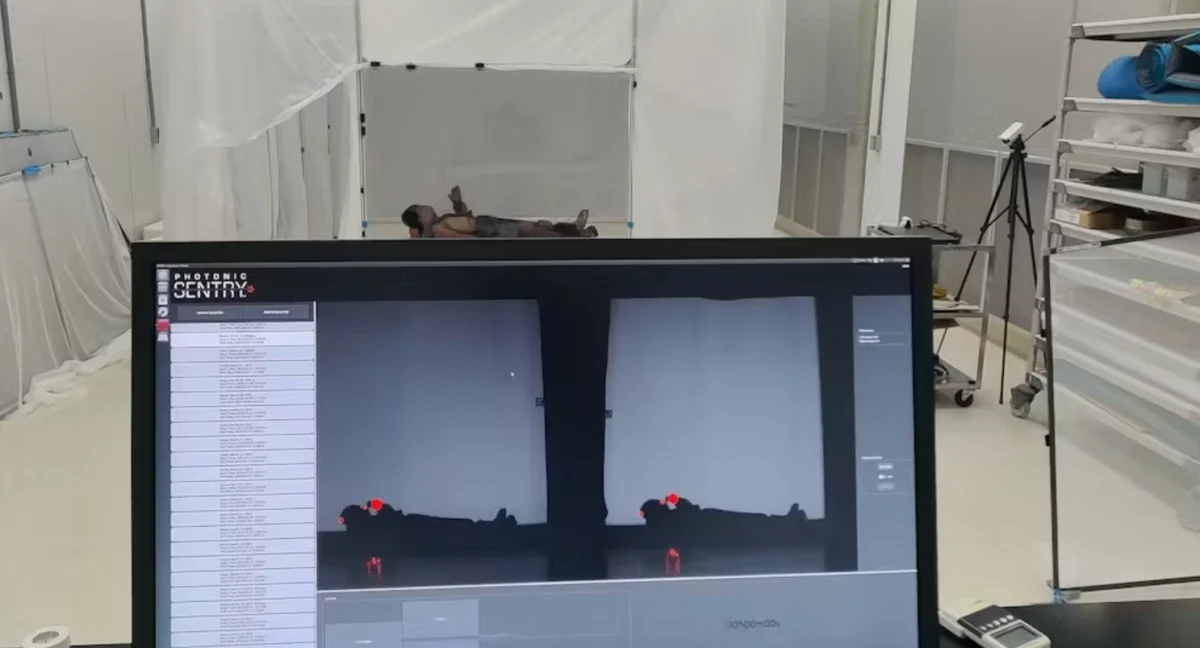
David Hu
Sign up to see the future, today
Can’t-miss innovations from the bleeding edge of science and tech
Scientists Recruit Undergrad to Step Into Room Filled With Ravenous Mosquitoes for “Full-Body Massacre”. Some dedicate their lives to science, pushing the boundaries of human knowledge and endurance; others, like Georgia Tech student Chris Zuo, literally offer their bodies to advance our understanding, enduring what can only be described as a “full-body massacre” at the hands of hundreds of hungry mosquitoes. This extraordinary sacrifice was part of a bizarre yet groundbreaking three-year study led by Georgia Tech engineering and biology professor David Hu, a renowned expert in the biomechanics of animal locomotion, who sought to unravel the mysteries of how mosquitoes precisely locate and select their prey. As Hu eloquently explained in an article for *The Conversation*, mosquitoes are unequivocally the world’s most dangerous animal, not due to venom or brute force, but because they act as vectors for deadly pathogens, responsible for over 700,000 human deaths annually by spreading devastating diseases such as Malaria, Dengue fever, Zika virus, West Nile virus, and Chikungunya. These tiny, blood-sucking insects pose a monumental global health threat, particularly in tropical and subtropical regions, making any insight into their predatory behavior invaluable.
The genesis of this ambitious research lay in a critical gap in our understanding: despite centuries of human-mosquito interaction and countless efforts to combat them, the precise sensory hierarchy and flight maneuvers mosquitoes employ to home in on a warm-blooded target remained largely elusive. To address this, Professor Hu devised an ingenious, if somewhat harrowing, experimental setup. In the initial phase of the experiment, Chris Zuo, then an undergraduate student, bravely volunteered to stand as bait in a specially designed chamber teeming with 100 ravenous mosquitoes, primarily *Aedes aegypti* or *Anopheles gambiae*, species notorious for their disease-carrying capabilities and aggressive biting. Zuo was initially provided with a fine-mesh suit, intended to protect him from the relentless onslaught while still allowing the researchers to observe the mosquitoes’ attraction. However, the mesh suit proved tragically inadequate. Despite its apparent protective qualities, the microscopic proboscises of the determined insects found their way through, leading to what Hu vividly described as a “full-body massacre.” Zuo emerged from these early trials covered in hundreds of itchy, swollen welts, a testament to his unwavering commitment to scientific discovery and the sheer persistence of these deadly pests. This painful experience underscored the challenge and highlighted the critical need for a more robust experimental design.
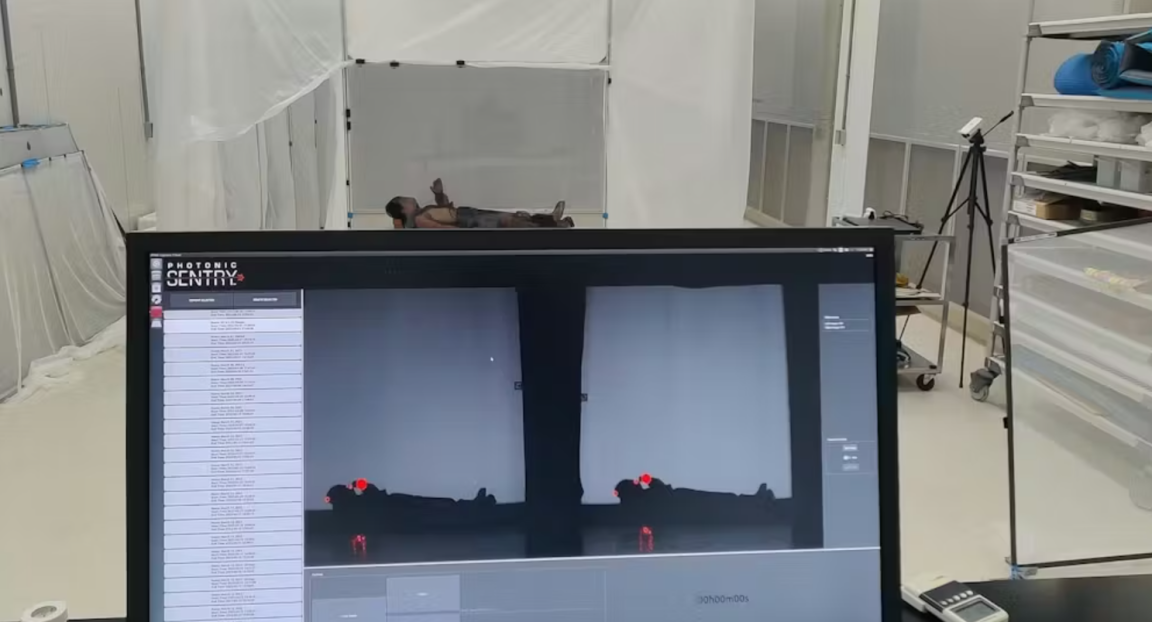
As the trials progressed and Zuo himself transitioned from an undergraduate volunteer to a dedicated graduate student researcher on the project, the methodology evolved significantly. Learning from the shortcomings of the initial mesh suit, Zuo and the team opted for a more practical, albeit still uncomfortable, form of protection. He switched to a basic long-sleeved shirt, long trousers, gloves, and a face mask – all meticulously washed with unscented detergent to eliminate any confounding human scent cues that weren’t part of the controlled CO2 emissions. Alongside a fellow student, Soohwan Kim, Zuo was tasked with standing motionless within the chamber, enduring the constant buzzing and probing of the mosquito swarm. The true innovation in this refined setup came from the sophisticated tracking technology deployed: a state-of-the-art photonic sentry camera, generously provided by the US Centers for Disease Control and Prevention (CDC). This high-speed imaging system was capable of tracking individual mosquito flight paths at an astonishing 100 frames per second, capturing every minute maneuver and trajectory with unprecedented detail. The CDC’s involvement highlighted the critical public health implications of this research, as understanding mosquito behavior is paramount to developing effective disease prevention strategies.
The result of these rigorous, often torturous, trials was an unprecedented dataset: a staggering 20 million individual mosquito flights. This immense volume of raw data represented “more mosquito flight data than had previously been measured in human history,” as Professor Hu proudly noted. Such an extensive dataset was crucial for identifying subtle, yet significant, patterns in mosquito behavior that would have been impossible to discern with smaller sample sizes. Armed with this glut of meticulously collected information, the Georgia Tech researchers embarked on the painstaking process of analysis, using advanced computational fluid dynamics and machine learning algorithms to decipher the mosquitoes’ decision-making process. Their findings unveiled a fascinating, multi-modal sensory strategy employed by mosquitoes to navigate their environment and locate their next blood meal.
The research revealed that mosquitoes fundamentally alter their flight behaviors based on the specific sensory cues present in their environment, operating on a sophisticated hierarchy of stimuli. In a controlled environment devoid of any discernible target, mosquitoes exhibited what the researchers termed “aimless wandering.” They flittered about randomly, their flight paths resembling a chaotic, undirected Brownian motion, as if conserving energy while passively searching for any distant stimulus. When presented with a purely visual target – a simple styrofoam ball mounted on a stick, designed to offer no thermal, olfactory, or CO2 cues – the mosquitoes demonstrated a “fly-by” maneuver. They would approach the visual cue, perhaps make a brief pass, but without further sensory confirmation, they would quickly lose interest and resume their aimless wandering. This indicated that vision alone, while capable of attracting attention, was insufficient to trigger a sustained attack response.
A more compelling response was observed when the target emitted only CO2 – a crucial indicator of a breathing organism, which Zuo provided through controlled exhalation. In this scenario, the mosquitoes executed a distinctive “double-take” maneuver. They would approach the CO2 source, momentarily pause or circle, as if confirming the presence of a potential host, before continuing their investigation. This demonstrated the powerful role of CO2 as a long-range attractant, drawing mosquitoes into the vicinity of a host. However, the most frenzied and decisive behavior occurred when the mosquitoes encountered the combination of a visual target and CO2 emission – precisely what Zuo presented as a warm-blooded organism. In this instance, the mosquitoes were “whipped into a frenzied orbit.” They would not merely approach and investigate; they would lock onto the target, circling intensely, repeatedly attempting to land and bite, demonstrating a highly focused and persistent attack strategy. This confirmed that the synergy of visual and olfactory (CO2) cues creates an irresistible beacon for these blood-seeking insects.
Over the painstaking three-year study period, Hu and his dedicated team leveraged this unprecedented data to achieve a remarkable feat: they were able to successfully predict specific areas of Zuo’s body that were particularly prone to mosquito attacks. This predictive capability, derived from understanding the precise interplay of visual and CO2 cues and the resulting flight patterns, represents a significant leap forward. Professor Hu framed this achievement as the “first step toward outsmarting them,” suggesting that by understanding the enemy’s targeting mechanism, humanity can begin to develop more intelligent defenses. This knowledge could revolutionize the design of personal protective equipment, leading to garments that not only physically block bites but also actively disrupt the mosquitoes’ sensory targeting systems. It could also inform the development of next-generation repellents that are more effective because they interfere with the specific cues mosquitoes rely on for their “frenzied orbit” behavior, rather than simply masking human scent.
While there remains plenty more work to do in the complex field of human-mosquito relations, this biting-edge research from Georgia Tech provides a critical foundation. The insights gained from Chris Zuo’s extraordinary sacrifice and the team’s meticulous data collection are invaluable. This study is hopefully the first of many to help aid humanity in our ongoing war against these pervasive and deadly blood-sucking pests, paving the way for more targeted and effective public health interventions and ultimately, saving countless lives.
**More on bugs: **Bugs Fed Microplastics Grow to Ludicrous Size