Imroatul Nasiyah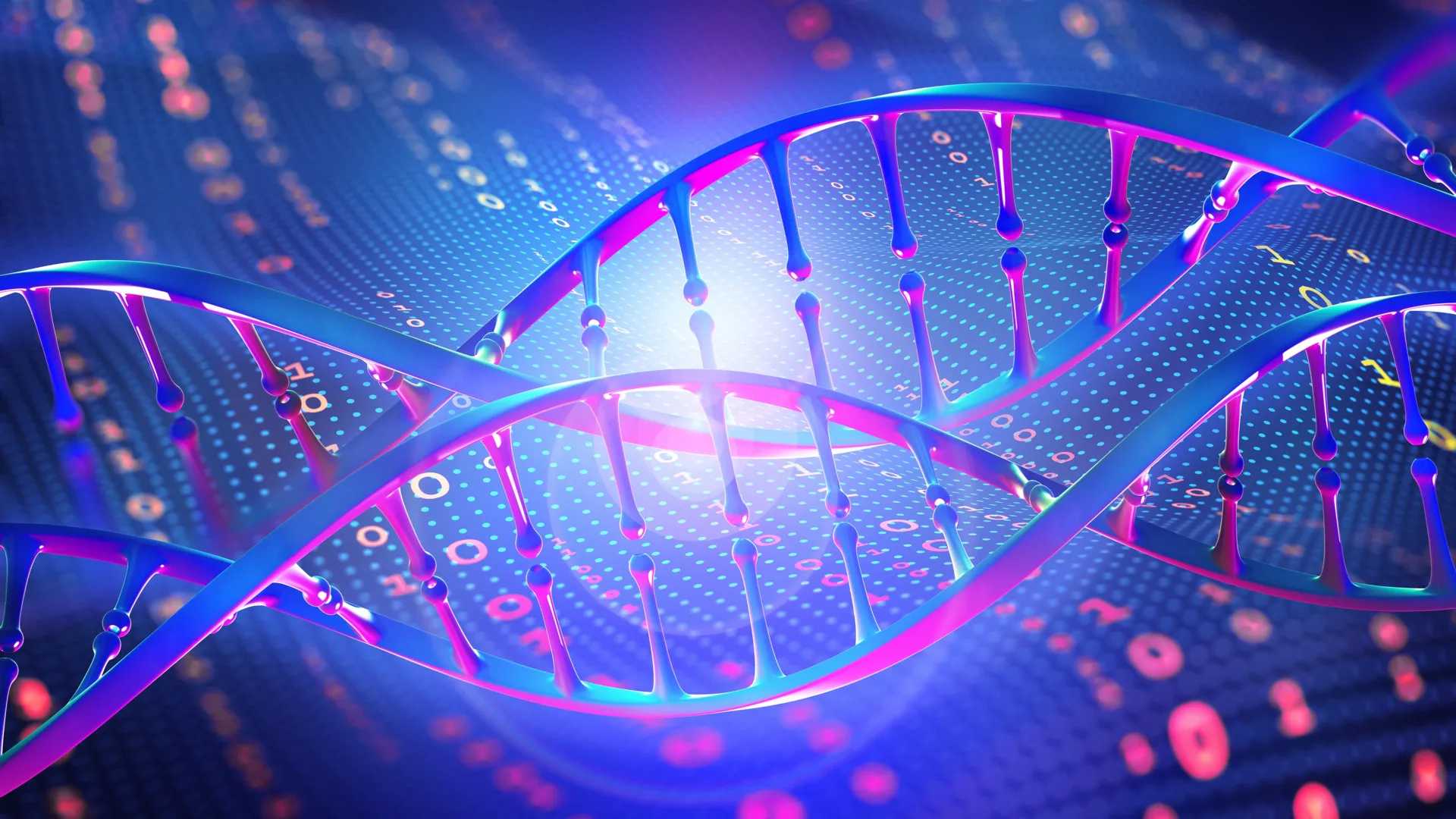
DNA, the fundamental blueprint of life, is also an astonishingly potent information storage medium, capable of holding an estimated 215 million gigabytes of data within a single gram. Harnessing this incredible density for electronic applications promises a revolution in data centers, computational speed, and the capacity to manage ever-increasing volumes of complex information. However, the significant hurdle has been the inherent incompatibility between biological DNA and electronic materials. Researchers at Penn State University have now unveiled a groundbreaking approach that effectively bridges this divide, paving the way for memory devices that operate with a fraction of the power consumed by conventional technologies.
This pioneering work, detailed in the journal Advanced Functional Materials and currently under patent review, hinges on the synergistic combination of two key components: synthetic DNA and crystalline perovskite. Synthetic DNA, meticulously engineered from commercially available chemical molecules into short, precise genetic sequences, is tailored to meet specific electronic requirements. Complementing this bio-engineered element is perovskite, a versatile semiconductor already making waves in solar cells, lasers, and data storage devices.
"Biology and electronics represent fundamentally different domains," explained Kavya S. Keremane, a postdoctoral researcher in materials science and engineering at Penn State and co-corresponding author of the study. "To forge a connection between these fields, we needed to develop an entirely novel materials platform that facilitates their seamless integration. By merging the unparalleled information storage capabilities of DNA with the exceptional electronic properties of perovskite semiconductors, we have created a bio-hybrid system that fundamentally redefines the design principles for low-power memory devices."
The team’s innovation lies in the creation of a memory resistor, or "memristor," that operates with remarkable energy efficiency. Unlike conventional resistors, which maintain a fixed resistance and lose all stored information when power is interrupted, memristors possess the unique ability to retain a record of their past electrical activity. They can "remember" the direction of current flow even after the power source is disconnected. This characteristic enables information storage and processing to occur within the same physical location, a paradigm shift that mirrors the functional architecture of neurons in the human brain. Such a system holds the potential to support more simultaneous and sophisticated data processing operations. However, the researchers acknowledge that practical commercial applications would still face challenges related to storage capacity and power consumption, making DNA’s ability to pack vast amounts of data into a minuscule space while consuming minimal energy indispensable.
"With the escalating demand for artificial intelligence (AI), a new strategic approach for low-power, high-storage devices is imperative," stated Bed Poudel, research professor of materials science and engineering at Penn State and a co-corresponding author. Poudel highlighted that AI and other nascent technologies are increasingly leaning towards neuromorphic computing, systems designed to emulate the human brain’s processing capabilities. These brain-inspired architectures can simultaneously evaluate multiple inputs and make informed decisions based on past experiences and future priorities. "Typically, storing more information necessitates greater power consumption. Our device, however, consumes 100 times less power while offering a storage capacity that surpasses traditional devices like flash drives."
The construction of this revolutionary device involved a meticulous process of engineering DNA to conduct electricity. The researchers introduced silver nanoparticles into a layer of custom-designed synthetic DNA sequences – specifically chosen for their precise composition and length – which were then integrated with thin films of perovskite. This technique, known as "doping," involves introducing a small quantity of another material to imbue the base material with specific properties. In this instance, the addition of silver nanoparticles not only rendered the DNA electrically conductive but also facilitated a more ordered alignment of its molecular units.
Synthetic DNA offered a significant advantage over its naturally occurring counterpart. While natural DNA exists as long, entangled strands that can be cumbersome to manipulate, short and rigid pieces of synthetic DNA can be precisely arranged at extremely small scales. Neela H. Yennawar, research professor and director of the Penn State Huck Institutes of the Life Sciences’ Biomolecular Interactions Core Facility, emphasized this point: "Molecularly engineered DNA provides structural organization, adjustable electrical conductivity, and functional control that natural DNA cannot achieve when incorporated into thin films. We can computationally determine the exact sequences and lengths required and then rationally design them using synthetic DNA. These structures can be systematically doped with silver and other ions and engineered to interface seamlessly with perovskites, transforming DNA from a biological macromolecule into a programmable, multifunctional nanomaterials platform."
The synergy between DNA and perovskite proved to be more than the sum of their individual parts. When combined, the silver-doped DNA and perovskite created bio-hybrid pathways that efficiently directed the flow of electrical current through the device. The researchers observed that electrons moved reliably with an applied voltage of less than 0.1 volt – a minuscule amount compared to the 120 volts found in standard U.S. electrical outlets. Furthermore, the device exhibited predictable responses when the direction of the current was reversed.
The meticulously engineered DNA structures, in conjunction with the perovskite, contributed to the device’s exceptional stability. The research team reported that the device maintained consistent operation at temperatures approaching 250 degrees Fahrenheit and remained functional at room temperature for over six weeks, significantly exceeding the performance benchmarks of existing perovskite-based memory storage devices. Crucially, the new system achieved the same memory functionality as comparable technologies while consuming only one-tenth of the power. This remarkable efficiency makes the approach particularly appealing for future electronics designed to handle massive datasets with minimal energy expenditure.
"Utilizing either DNA or perovskite in isolation did not yield results nearly as robust as their combined application," Keremane stated. "It is this specific combination that enables a very high memory storage density coupled with extremely low power consumption."
The Penn State team is now focused on further refining this technology and exploring a broader spectrum of applications for bio-inspired electronic systems. "Nature holds the solutions; our task is to discover and implement them," Poudel remarked. "This work, which integrates DNA into electronics to achieve remarkable feats, offers a glimpse into the vast possibilities that lie ahead."
In addition to Keremane, Yennawar, and Poudel, the research team included Luyao Zheng (co-corresponding author and postdoctoral researcher in materials science and engineering), Haodong Wu (doctoral student in materials science and engineering), Jiamao Zheng (former master’s student in materials science and engineering), Shashank Priya (former professor of materials science and engineering), and Chiranth C. Ravi (former master’s student in the Huck Institutes of the Life Sciences). Contributions were also made by Abhinav Gorthy and Rashmi Jha (co-corresponding author, chemical engineering and materials science, University of Minnesota). This groundbreaking research was supported by funding from the U.S. National Science Foundation, the National Institutes of Health, Penn State, and the University of Minnesota.