anjir abdul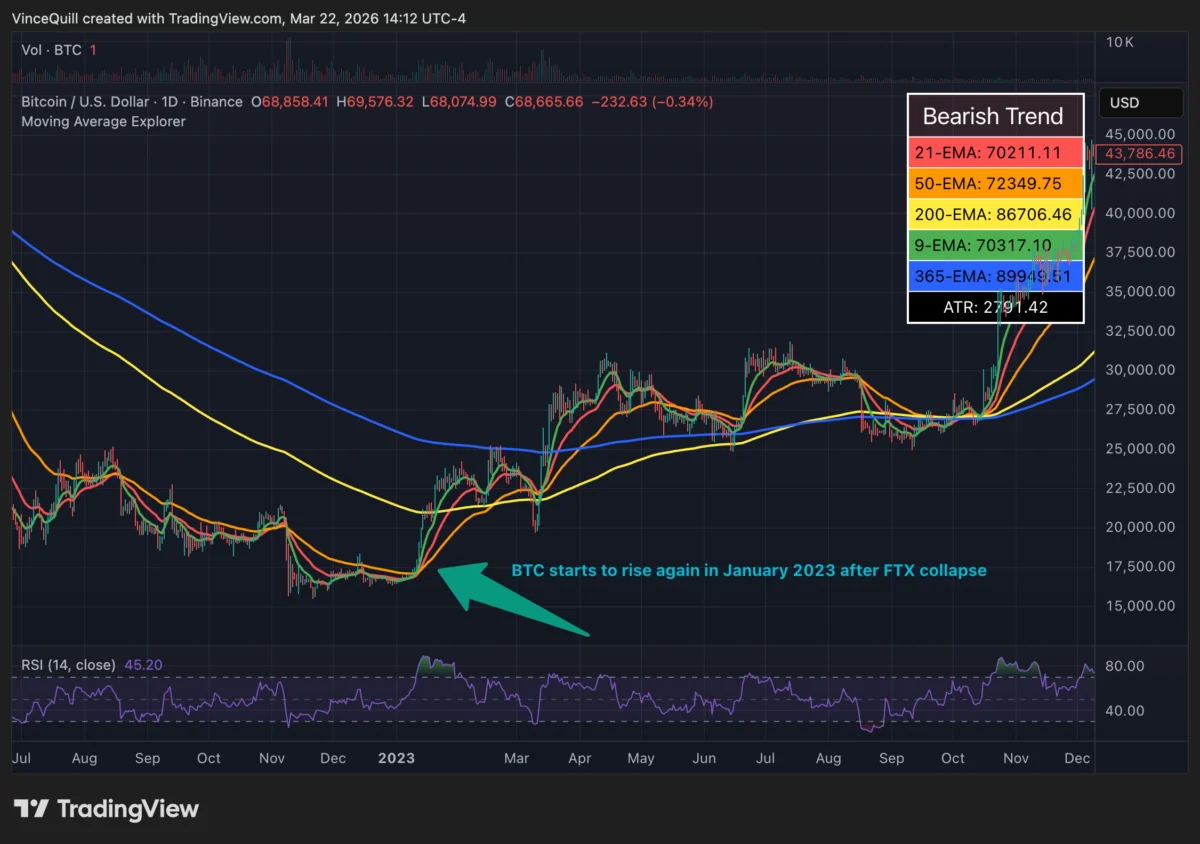
Scaramucci elaborated on how Bitcoin’s traditional four-year market cycle, historically characterized by halving events followed by bull runs and subsequent corrections, has been notably "muted" in recent times. This dampening of volatility, he suggests, is a direct consequence of the increasing ingress of institutional investors and the substantial inflows from Bitcoin exchange-traded funds (ETFs). These sophisticated market participants and regulated investment vehicles have introduced a layer of stability and broader market access that was absent in earlier cycles, cushioning some of the extreme price swings that defined Bitcoin’s nascent years. However, despite these evolving market dynamics, Scaramucci emphasized that these alterations have not entirely eradicated BTC’s ingrained cyclical patterns. He articulated this belief compellingly during a sit-down with Scott Melker of "The Wolf of All Streets" podcast, stating, "We’re in a four-year cycle, and there were some traditional whales, some OG’s, that believe in the four-year cycle, and guess what happens in life when you believe in something? You create a self-fulfilling prophecy." This statement underscores the powerful role of collective investor psychology, particularly among early and significant holders—the "OGs"—who, by acting on their belief in the cycle, inadvertently contribute to its perpetuation, especially around key price points like $100,000. These "OGs" are often early adopters or entities that accumulated substantial amounts of Bitcoin in its infancy, holding it through multiple cycles, and for whom a six-figure price represents a monumental return on investment, prompting strategic de-risking.

Looking ahead, Scaramucci’s forecast for Bitcoin’s price action through most of 2026 is one of continued choppiness. He anticipates that the market will likely experience significant fluctuations and periods of consolidation, testing investor patience and conviction. This turbulent phase is expected to persist until the fourth quarter of 2026, at which point he projects that prices will begin a sustained ascent, marking the onset of a new bull market cycle. This prediction aligns broadly with historical post-halving patterns, where the period immediately following a halving (the most recent being in April 2024) often sees accumulation and consolidation before a more pronounced price discovery phase. The expectation for a resurgence in late 2026 suggests a belief that the market will have fully digested current uncertainties and positioned itself for renewed growth, potentially fueled by renewed institutional interest and favorable macro conditions.
Interestingly, Scaramucci acknowledged that market participants, including himself, had widely held a more aggressive projection for Bitcoin, expecting it to climb to $150,000 in 2025. This optimistic consensus was largely underpinned by several anticipated catalysts: the perceived pro-crypto agenda of then-US President Donald Trump, which many believed would foster a more conducive regulatory environment for digital assets, and a general warming of US regulators to the burgeoning digital asset industry. The prospect of clearer regulations and governmental support was seen as a strong tailwind for Bitcoin’s adoption and price appreciation. However, this broadly held consensus was dramatically shattered by the October market crash of 2025. This significant downturn saw Bitcoin plummet from an impressive all-time high of approximately $126,000 to a low of $60,000. The rapid and severe correction caught many by surprise, forcing a re-evaluation of market expectations and highlighting the inherent unpredictability of even the most mature digital assets.

Scaramucci further elucidated on the contrarian nature of markets, observing that they frequently move in ways opposite to prevailing investor sentiment. He cited the period following the catastrophic collapse of the FTX exchange in November 2022 as a prime example of this phenomenon. In the wake of FTX’s implosion, investor sentiment was overwhelmingly negative, marked by widespread fear, skepticism, and a significant exodus from the crypto space. Bitcoin’s price bottomed out in December 2022 amidst this atmosphere of despair. Yet, counterintuitively, it was precisely during this period of "great disinterest and great apathy" that the market began its stealthy recovery, with prices starting to rise again in January 2023. This historical parallel reinforces Scaramucci’s current view that the ongoing BTC bear market, despite its severity, is merely a "garden variety" correction. Such corrections are a natural, albeit painful, part of market cycles, serving to flush out overleveraged positions and weak hands, thus laying the groundwork for future growth when sentiment eventually shifts.
The debate surrounding the validity of Bitcoin’s four-year cycle theory continues to rage among crypto industry executives, analysts, and market participants. The fact that BTC ended 2025 in the red, contrary to many cycle-based predictions, has intensified this discussion. Some argue that the increased institutionalization, the introduction of spot ETFs, and Bitcoin’s growing correlation with traditional financial markets have fundamentally altered its price dynamics, rendering the historical four-year cycle obsolete. They contend that new macro factors, such as inflation rates, global interest rate policies, and broader geopolitical tensions, now exert a more dominant influence than the halving event alone. Conversely, proponents maintain that while external factors may introduce noise, the underlying psychological and supply-side mechanisms tied to the halving continue to exert a powerful, albeit sometimes delayed, influence. Benjamin Cowen, a prominent crypto analyst, has notably argued that "the debate over Bitcoin’s four-year cycle is over," suggesting that changing market conditions have indeed broken the traditional pattern. However, others believe that while the cycle might be "muted" or extended, its core tenets remain relevant, manifesting in more prolonged accumulation phases and less explosive bull runs than witnessed previously.

The broader geopolitical landscape also presents significant headwinds for Bitcoin. The price of BTC notably fell below $69,000 on a recent Saturday in early 2026, as a hypothetical "war in Iran" entered its third week, sending shockwaves through risk assets across the board. This scenario highlights Bitcoin’s evolving perception in times of global crisis. While some proponents argue for Bitcoin’s role as a "digital gold" or a safe-haven asset, its recent price action often demonstrates a strong correlation with traditional risk assets like tech stocks, particularly during periods of heightened geopolitical uncertainty or economic instability.
Traditional stock market investors also felt the pinch, with the S&P 500 index extending its decline on the preceding Friday, dropping by approximately 1.3%. A day earlier, the widely watched gauge had closed below its 200-day moving average for the first time in 10 months. This technical indicator is a crucial benchmark for assessing the overall trend of equities markets, and a breach below it often signals a shift from a bullish to a bearish outlook, prompting further sell-offs. The synchronous downturn in both Bitcoin and major stock indices underscores the increasing interconnectedness of financial markets, dampening the narrative of Bitcoin as a completely uncorrelated asset. Some analysts, observing this growing positive correlation with the S&P 500 index, have consequently forecast a potential 50% drop in BTC’s price in 2026 should this correlation persist and deepen. This grim outlook serves as a stark reminder of the market’s vulnerability to macro-economic forces and geopolitical instability, regardless of Bitcoin’s intrinsic value proposition or long-term potential. The unfolding narrative suggests that while Bitcoin’s core cycles may endure in some form, its journey to widespread adoption and price stability remains intricately linked to the broader global economic and political environment.