anjir abdul
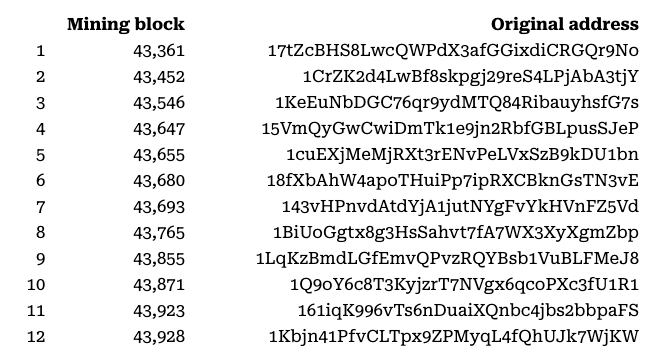
On Saturday, a dozen distinct Bitcoin addresses, collectively safeguarding a formidable 600 Bitcoin (BTC) – an amount now valued at approximately $48 million in today’s market – executed a series of transactions, transferring these ancient coins. This sudden reawakening, meticulously tracked and analyzed by on-chain data reviewed by platforms like Cointelegraph, marked the end of an extraordinary period of dormancy stretching back to the earliest days of Bitcoin’s existence. The sheer volume and the historical vintage of these coins immediately captured the attention of market watchers, analysts, and enthusiasts alike, prompting a wave of digital archaeology into their origins.
Blockchain transaction tracking platform Whale Alert, renowned for its vigilance over large crypto movements, quickly identified the source of the 600 BTC. Their forensic analysis confirmed that the coins originated from rewards earned across 12 distinct Bitcoin blocks, all mined during the nascent period of March 2010. Crucially, Whale Alert’s diligent research swiftly moved to temper the brewing storm of speculation, emphatically stating that their findings established no definitive connection to Nakamoto, the pseudonymous architect of Bitcoin. "None of the blocks can be connected to Satoshi based on our research," a spokesperson for Whale Alert communicated to Cointelegraph, effectively dousing the flames of what could have been a groundbreaking revelation. This clarification was vital, as any movement of "Satoshi-era" coins – those mined during the period when Bitcoin’s pseudonymous creator was still actively involved in its development and communication – invariably triggers intense public curiosity and often, unfounded conjecture about Satoshi’s identity or intentions.
Whale Alert’s detailed investigation spanned all 12 block rewards, confirming their genesis in March 2010. During this foundational phase of Bitcoin, each successfully mined block yielded a generous subsidy of 50 BTC as a reward to the miner. This historical detail underscores the dramatic evolution of Bitcoin’s monetary policy and value proposition. The block subsidy, designed to control inflation and gradually introduce new coins into circulation, has since undergone four halving events, progressively reducing the reward by half each time. The most recent halving occurred in April 2024, seeing the reward plummet from 6.25 BTC to the current 3.125 BTC per block. The stark contrast between the original 50 BTC reward and today’s meager 3.125 BTC highlights the incredible growth in Bitcoin’s network security, adoption, and, consequently, its market value.
The expanded findings from Whale Alert built upon their earlier analysis concerning seven of these rewards. In an X (formerly Twitter) post on Sunday, the platform had initially stated that those seven blocks, which contributed 350 BTC to the total, had been determined not to have been mined by Nakamoto. This meticulous, block-by-block approach is critical in distinguishing Satoshi’s known mining activity, which exhibits a unique and identifiable pattern known as the "Patoshi pattern," from that of other early miners. The Patoshi pattern refers to the distinct nonces used by Satoshi’s mining hardware, which allowed researchers to isolate a significant portion of the early blocks as likely belonging to the creator. The absence of this pattern in the recently moved coins was a key factor in ruling out Satoshi’s direct involvement.

Adding to the layers of on-chain scrutiny, Lookonchain, another prominent on-chain analytics platform, had also initially identified seven miner wallets responsible for moving 350 BTC after 16.5 years of inactivity. Their analysis similarly pinpointed the origin of these coins to mining operations conducted in March 2010. The convergence of findings from multiple analytics firms lends significant credibility to the non-Satoshi conclusion, even as the "Satoshi-era" moniker continues to evoke a powerful sense of history and mystery.
The immense attention garnered by these movements is deeply rooted in the historical context: these coins date back to a period when Satoshi Nakamoto was not only active but deeply engaged with the Bitcoin project. Satoshi’s involvement in Bitcoin’s development, code commits, and public communications was a defining characteristic of the network’s infancy throughout 2010. It was only gradually, through late 2010 and early 2011, that the enigmatic creator began to withdraw from the project, with their last known communication widely believed to be an email in April 2011. This period, often termed the "Satoshi-era," represents the foundational epoch of Bitcoin, a time when the network was fragile, its future uncertain, and its community small and fervent. Thus, any activity involving coins from this time carries an undeniable weight of historical significance.
However, it is crucial to differentiate between "Satoshi-era" and "Satoshi’s Bitcoin." While the coins were indeed mined during the period of Satoshi’s active involvement, this does not automatically imply ownership by the creator. Thousands of individuals, early adopters, and nascent enthusiasts were also mining Bitcoin in 2010, often using rudimentary CPU-based setups, long before specialized ASIC hardware dominated the landscape. These miners, driven by curiosity, technological interest, or an early belief in the nascent digital currency, were accumulating significant amounts of BTC at a time when its monetary value was negligible, often measured in fractions of a cent. The current movement serves as a powerful testament to the foresight and patience of these early participants who held onto their digital assets for over a decade and a half.
Whale Alert’s detailed transaction analysis further revealed an interesting pattern: one of the 12 rewards was moved several blocks before the others. This staggered movement is consistent with what is often observed as a "test transaction" – a small preliminary transfer conducted by the owner to ensure the integrity and functionality of the wallet and the transfer process, before proceeding with the bulk of the transfers. This meticulous approach speaks to the value and importance the owner places on these long-held assets. For someone moving tens of millions of dollars worth of Bitcoin after 16 years, caution and verification are paramount.
The awakening of these ancient coins prompts a multitude of questions regarding the motivations of their owner. Why now, after so many years of absolute silence? Several possibilities emerge:
- Security Enhancement: The owner might be consolidating their holdings, moving them from older, potentially less secure wallet formats or forgotten software to modern, more robust cold storage solutions or hardware wallets.
- Liquidation or Diversification: With Bitcoin’s price reaching multi-year highs and mainstream adoption growing, the owner might be looking to realize a portion of their extraordinary gains. This could involve selling the BTC for fiat currency or diversifying into other cryptocurrencies or traditional assets.
- Estate Planning or Access: It’s plausible that the original miner has passed away, and their heirs or estate managers are only now gaining access to and moving these funds. Alternatively, the owner might have simply rediscovered access to an old wallet.
- Rebalancing Portfolios: In a rapidly evolving crypto landscape, an early miner might be re-evaluating their long-term strategy, opting to rebalance their portfolio to mitigate risk or pursue new opportunities.
Regardless of the specific motivation, the movement of such a substantial amount of early Bitcoin invariably sends ripples through the market. While 600 BTC is a significant sum, it represents a fraction of Bitcoin’s overall daily trading volume, meaning direct market impact in terms of price fluctuations is often minimal. However, the psychological impact can be notable. Such "whale movements" are closely watched for signs of potential selling pressure, but they also serve as a powerful reminder of Bitcoin’s incredible journey from an obscure digital experiment to a globally recognized asset class. It highlights the profound wealth creation opportunities that early adoption and long-term conviction can unlock.
The narrative surrounding Satoshi Nakamoto continues to be one of the most enduring mysteries in the digital age. The founder’s decision to remain anonymous, to step away from their creation, has only amplified the intrigue. Every piece of information, every movement of early Bitcoin, is scrutinized through the lens of this mystery, underscoring humanity’s innate desire to understand origins and uncover hidden truths. While the direct link to Satoshi was disproven in this instance, the event powerfully reaffirms the historical significance of these early coins and the incredible foresight of those who mined and held them through years of skepticism and volatility.
In essence, the awakening of these 600 BTC is more than just a large transaction; it’s a living piece of Bitcoin history. It connects the present, with its multi-billion-dollar market capitalization and global recognition, to the humble beginnings of 2010, when Bitcoin was a nascent idea, a cryptographic experiment, and a vision for a decentralized financial future. It stands as a testament to the power of a revolutionary technology, the enduring mystery of its creator, and the extraordinary patience of its earliest believers, who now reap the rewards of a truly generational investment. The digital archaeology conducted by on-chain analysts continues to provide unprecedented transparency into the blockchain, helping to separate fact from the persistent, often romanticized, fictions surrounding Bitcoin’s genesis and its anonymous architect.