Faris Adani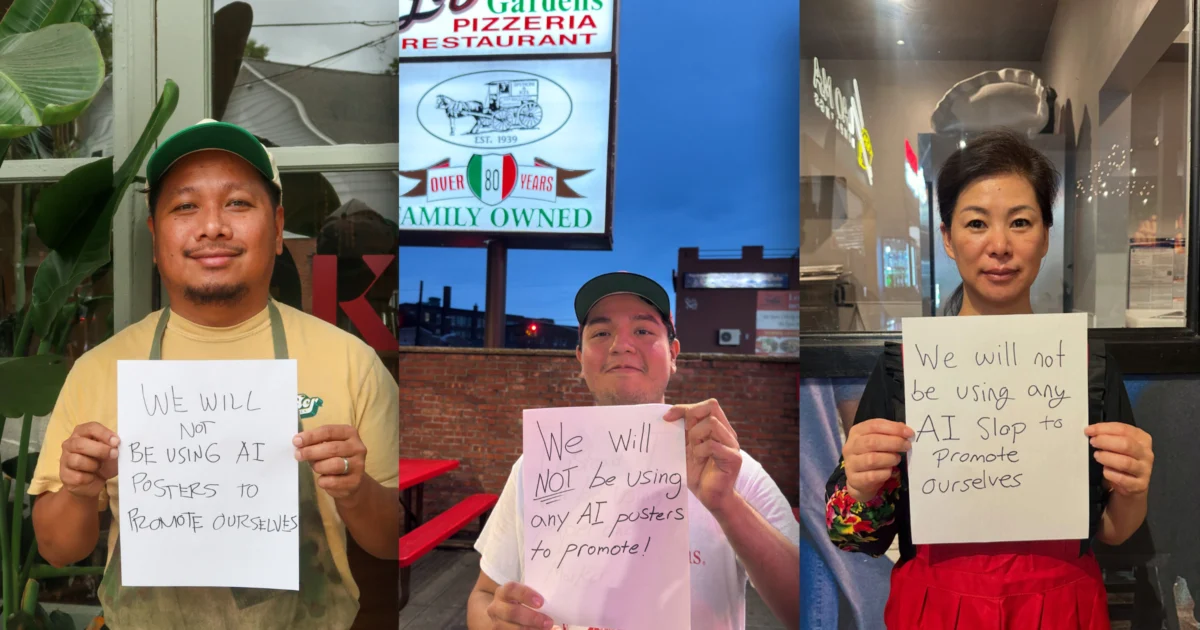
The digital age, with its seductive promise of efficiency and cost-cutting, has paradoxically led to a visible revolt in the culinary world, where the once-appealing notion of generative AI has morphed public-facing billboards and restaurant menus into what many describe as a Lovecraftian horror show, featuring unsettling images of food that evoke revulsion rather than hunger. For months now, potential customers have been put off by AI-generated depictions of bread resembling "reptile skin" and croissants reminiscent of "alien larva," a visual affront that undermines the very essence of appetizing food and leaves diners questioning the quality of what’s offered inside. This pervasive trend emerged from restaurant owners’ attempts to lower operational costs by leveraging AI for their promotional materials, a strategy that has spectacularly backfired, as social media platforms have become virtual forums for users to lambaste local businesses for such misguided marketing, highlighting a growing disconnect between technological convenience and consumer expectations for genuine culinary experiences.
Recognizing the detrimental impact of this ill-conceived advertising, a significant counter-movement has begun to gain traction, as 404 Media initially observed, with restaurants executing a strategic 180-degree turn to reclaim public favor and build trust; this burgeoning trend involves owners and chefs taking to social media, proudly uploading pictures of themselves holding simple, handwritten signs emblazoned with variations of the message, "We will not be using any AI to promote ourselves," a clear and direct repudiation of the synthetic aesthetic that has plagued their industry. Since 404 Media‘s initial report, this authentic display of commitment has truly caught fire, transcending local notoriety to engage a national audience, attracting well-known culinary figures like "Chopped" champion and South Carolina-based chef Nikko Cagalanan, the beloved Brooklyn institution L&B Spumoni Gardens, Phoenix’s vibrant Niu Mama, and numerous other establishments who are publicly vowing to eschew AI for self-promotion, underscoring a collective desire to preserve the human element in gastronomy. These heartfelt posts, often garnering hundreds of thousands of likes and thousands of comments, powerfully demonstrate that this movement is striking a profound nerve within the public consciousness, tapping into a widespread longing for authenticity and human connection in an increasingly automated world.
The rapid spread of this restaurant-led initiative serves as the latest, highly visible indicator of a growing societal backlash against artificial intelligence, a technology that is increasingly infiltrating nearly every facet of our daily lives, often without explicit consent or full understanding of its implications. This burgeoning movement has evolved beyond mere annoyance at uncanny imagery, escalating into outright public outrage, fueled by a range of concerns including the environmental toll of burgeoning, energy-intensive data centers that continue to sprout across landscapes, sparking a rare bipartisan crusade against their expansion, as well as anxieties about job displacement, the erosion of creative integrity, and the ethical quandaries posed by increasingly autonomous systems. In the context of the gastronomy world, this subject is particularly thorny and emotionally charged, given that cooking has always been revered as a fundamental form of human expression, deeply interwoven with cultural values, family traditions, and the nuanced artistry of individual chefs—qualities that an AI model, by its very nature, is inherently incapable of replicating or truly understanding, leading to outputs that feel soulless and disconnected.
By relying on unintentionally disturbing and often grotesque images conjured by an AI, restaurants inadvertently communicate a message far more profound than mere cost-cutting; as the New Yorker incisively articulated in a recent piece exploring this phenomenon, "The AI images are a sort of shorthand for saying, ‘Yes, we serve food, but it is slop, just like the photos we use to market it’"—implying a culinary experience likely characterized by frozen, factory-made ingredients, hastily prepared in a grease-caked fryer, resulting in a dish that is somehow both lukewarm and soggy upon the first bite, a grim forecast of gastronomic disappointment. This perceived lack of care and authenticity, inadvertently conveyed by AI-generated visuals, significantly erodes consumer trust and interest, making the food itself seem less appealing even before a single dish is tasted.
However, the act of publicly pledging not to use AI, even through the humble medium of a hastily put together, handwritten note, offers businesses a remarkably effective pathway to instantaneously regain and fortify their customers’ confidence, considering the overwhelmingly rapturous response observed across social media platforms. The very simplicity and human touch of a handwritten sign—a stark contrast to the slick, often sterile output of AI—resonates deeply with an audience fatigued by digital artifice, signifying genuine effort, personal commitment, and a prioritization of human craft over algorithmic shortcuts. This seemingly small gesture acts as a powerful declaration of values, reassuring patrons that the establishment cherishes authenticity, cares about the quality of its offerings, and respects the human touch inherent in the culinary arts. The viral nature of these pledges highlights a burgeoning consumer segment that actively seeks out and rewards businesses demonstrating a clear commitment to human-centric practices, indicating a growing preference for transparency and genuine connection over technologically driven expediency. As one user enthusiastically replied to a picture of Chef Cagalanan holding up his anti-AI note, "This is how you catch a fish," perfectly capturing the strategic brilliance of appealing to a public hungry for sincerity, while another, equally impressed, declared, "Just gained a new fan and will be there asap!" These reactions are not merely fleeting online endorsements; they translate into tangible patronage, demonstrating that for many, the promise of an authentic, human-made meal, unblemished by the uncanny valley of AI-generated imagery, is a compelling reason to choose one establishment over another. This trend suggests a pivotal shift in consumer behavior, where an explicit rejection of AI in creative and public-facing roles can become a significant competitive advantage, marking a new era where "human-certified" authenticity might just be the most coveted ingredient in the recipe for business success.
More on AI food slop: Restaurant in Major Trouble After Posting AI Pictures of “Its Food”