Faris Adani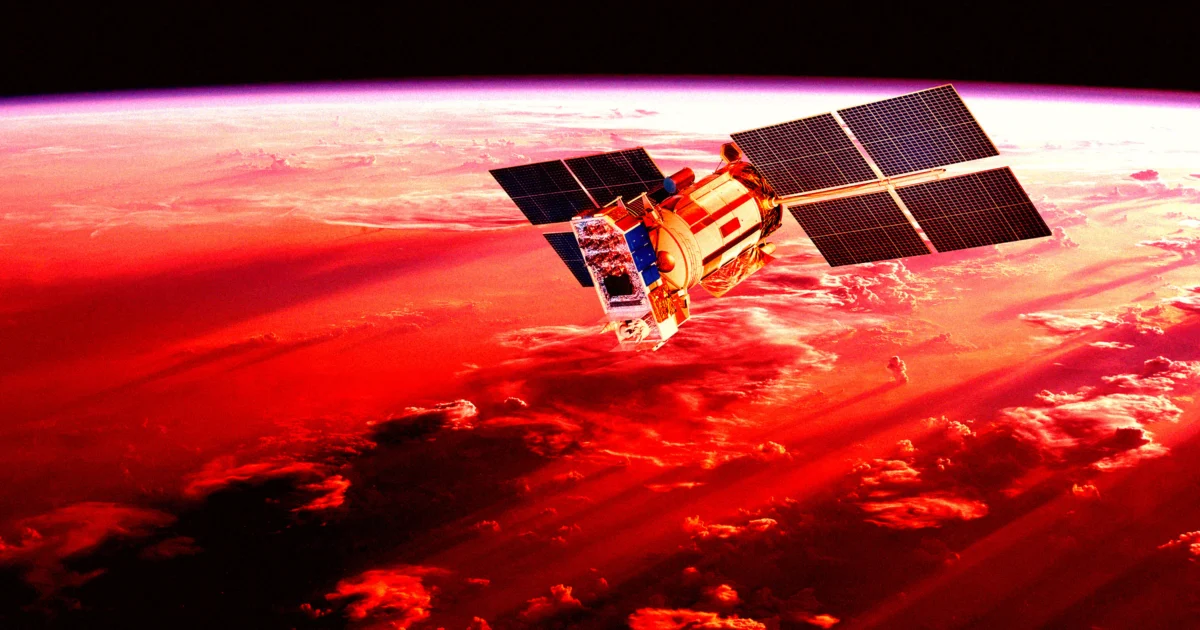
The quiet hum of our hyper-connected world belies a profound vulnerability, one that was starkly illuminated last November when a "severe" solar storm, the most potent in over two decades, slammed into Earth. This celestial event, originating from the Sun’s tempestuous surface, not only painted the skies with spectacular auroras but also wreaked an insidious havoc on the very backbone of modern navigation: the Global Positioning System (GPS). Scientists are now sounding a serious alarm, revealing that this superstorm induced positioning errors exceeding 33 feet (approximately 10 meters) across the continental United States – a margin wide enough to critically compromise precision-dependent industries, including the nascent autonomous transportation sector.
Solar storms are dramatic manifestations of solar activity, primarily driven by Coronal Mass Ejections (CMEs) and powerful solar flares. These phenomena unleash immense barrages of charged particles and magnetic fields into space. When directed towards Earth, they collide with our planet’s magnetosphere, triggering geomagnetic storms. While often celebrated for their dazzling auroral displays, these storms also possess the formidable capacity to disrupt satellite communications, radio signals, and, critically, the delicate balance of signals that underpin global navigation satellite systems (GNSS) like GPS. The November storm was so ferocious it even prompted the delay of a Mars-bound NASA spacecraft launch by Blue Origin, a testament to its intensity.
A new paper, published in the esteemed journal Geophysical Research Letters, meticulously details the findings of a team of scientists who analyzed the storm’s impact. Their research revealed that during the superstorm, GNSS systems experienced "significant positioning errors," reaching magnitudes of over 33 feet. For context, this degree of error is far beyond acceptable limits for applications where pinpoint accuracy is paramount. The paper explicitly warns that such deviations are "large enough to disrupt precision agriculture and autonomous transportation industries," underscor laying the severe implications for sectors increasingly reliant on millimeter-level precision.
The immediate imperative, as articulated by the researchers, is to cultivate a more robust and accurate understanding of various space weather phenomena. This knowledge is crucial for enhancing our predictive capabilities through coordinated observations and physics-based modeling. Ultimately, the goal is to mitigate and reduce disruptions to radio frequency (RF) applications during these increasingly frequent space weather events. Our reliance on satellite-based technologies has grown exponentially, transforming everything from logistics and finance to agriculture and personal navigation, making such vulnerabilities a systemic risk.
To understand how these errors occur, the scientists meticulously analyzed observations gathered from a network of advanced scientific instruments strategically deployed across the US. Their data revealed a critical mechanism: the Aurora Oval, traditionally a ring-shaped region of intense activity near Earth’s geomagnetic poles where auroras are common, was dramatically pushed southwards towards the equator during the storm. This displacement generated a "horizontally extended band of intense density gradients" within the upper atmosphere, specifically the ionosphere. The ionosphere, a layer of Earth’s atmosphere rich in ionized particles, acts like a dynamic lens for radio signals. Fluctuations in its density and composition, caused by the solar storm’s charged particles, alter the path and speed of satellite signals, causing them to take longer or deviate from their expected trajectories. The result, as observed, was "significant positioning errors at mid-latitudes," regions typically considered less susceptible to direct auroral effects.
A concerning correlation emerged from the study: as the auroras intensified and became brighter, the observed irregularities in the ionosphere grew more pronounced, leading to a corresponding deterioration in GPS accuracy. This direct link highlights the visual splendor of an aurora as a potential harbinger of navigational chaos.
The implications for autonomous transportation are particularly chilling. Self-driving cars, delivery drones, and even future autonomous air taxis rely on a sophisticated blend of sensors, including high-definition maps, lidar, radar, cameras, and crucially, precise GPS data. While these systems employ sensor fusion to achieve redundancy and robustness, a fundamental shift in GPS readings by 33 feet could introduce catastrophic errors. Imagine a self-driving vehicle misinterpreting its lane position by 10 meters, potentially veering into oncoming traffic or off the road entirely. For autonomous systems operating at high speeds or in complex urban environments, such an error is not merely an inconvenience; it represents an immediate and severe safety hazard, capable of causing collisions, fatalities, and profound economic disruption.
Beyond cars, other forms of autonomous transport would also be severely impacted. Drones used for package delivery, infrastructure inspection, or surveillance could lose their precise flight paths, leading to crashes or mission failures. Autonomous ships navigating crowded shipping lanes could deviate dangerously, risking collisions or groundings. The future vision of seamlessly integrated autonomous logistics hinges on uninterrupted and highly accurate positional data, making the vulnerability to solar storms a critical design challenge.
Precision agriculture, another sector revolutionized by GPS, also faces immense threats. Modern farming utilizes GPS-guided tractors, planters, sprayers, and harvesters to optimize everything from seed placement to fertilizer application and yield mapping. These technologies allow farmers to minimize waste, maximize output, and manage their land with unparalleled efficiency. A 33-foot positioning error during planting season, for instance, could result in acres of improperly spaced crops, wasted seeds, and inefficient resource allocation. During harvesting, misaligned equipment could damage crops or leave significant portions unharvested.
Fortunately, the November superstorm occurred long after the farming season had concluded in the American sector, inadvertently limiting the immediate economic fallout for agriculture. However, this stroke of luck was not repeated for the superstorm that hit in May 2024. Scientists estimate that the May event inflicted a staggering half a billion dollars in damages upon farmers, underscoring the severe and tangible economic consequences when such events coincide with critical agricultural operations. The paper’s grim warning is clear: "Had the November superstorm occurred during the farming season in the American sector, it could have caused significant economic losses for the American farming industry, in addition to affecting the autonomous transportation industry." This highlights a looming threat that will only intensify as our technological reliance deepens.
The Sun’s activity follows an approximately 11-year cycle, and we are currently entering Solar Cycle 25, which is predicted to be more active than initially anticipated. This means an increased likelihood of solar flares and CMEs, and consequently, a greater frequency of space weather events capable of impacting Earth. Historical events like the 1859 Carrington Event, which caused telegraph systems to fail and sparked auroras visible worldwide, serve as stark reminders of the potential for even more catastrophic disruptions. While our current infrastructure is more robust than 19th-century telegraphs, its complexity and interconnectedness also present new points of vulnerability. The 1989 Quebec blackout, triggered by a solar storm, demonstrated how even power grids can be crippled by these celestial phenomena.
Addressing this vulnerability requires a multi-faceted approach. Firstly, enhanced space weather forecasting is paramount. Agencies like NOAA’s Space Weather Prediction Center (SWPC) play a crucial role in monitoring solar activity and issuing warnings. Improved predictive models, integrating real-time data from solar observatories and space-based sensors, are essential to provide sufficient lead time for mitigation strategies.
Secondly, technological resilience must be built into our navigation systems. This includes the widespread adoption of multi-frequency GNSS receivers, which are less susceptible to ionospheric errors than single-frequency units. Augmentation systems like WAAS (Wide Area Augmentation System) in North America, EGNOS in Europe, and other Satellite-Based Augmentation Systems (SBAS) and Ground-Based Augmentation Systems (GBAS) can correct for some atmospheric errors, but their effectiveness can also be challenged during extreme events. Developing and integrating alternative navigation technologies, such as inertial navigation systems (INS), vision-based navigation (visual odometry), lidar/radar mapping, and even nascent quantum navigation systems, can provide critical redundancy when GPS signals are compromised or denied.
Finally, policy and investment are crucial. Governments and industries must invest in hardening critical infrastructure against space weather, from power grids to communication networks and satellite constellations themselves. International collaboration in space weather research and monitoring is vital, as these phenomena respect no national borders. Understanding the true economic impact of these events, as evidenced by the $500 million farmer losses, can help justify the necessary investments in preparedness.
The alarm raised by these researchers is not just a scientific curiosity; it’s a pressing call to action. As our world becomes increasingly automated and reliant on precise location data, the seemingly distant fury of the Sun poses a very real and present danger. The vulnerability of GPS to solar storms is a stark reminder that even our most advanced technologies are ultimately at the mercy of natural phenomena. Ensuring the safety and stability of our technologically advanced society demands a concerted effort to understand, predict, and ultimately mitigate the disruptive power of space weather. The future of autonomous transportation and precision agriculture, along with countless other critical applications, depends on it.