Faris Adani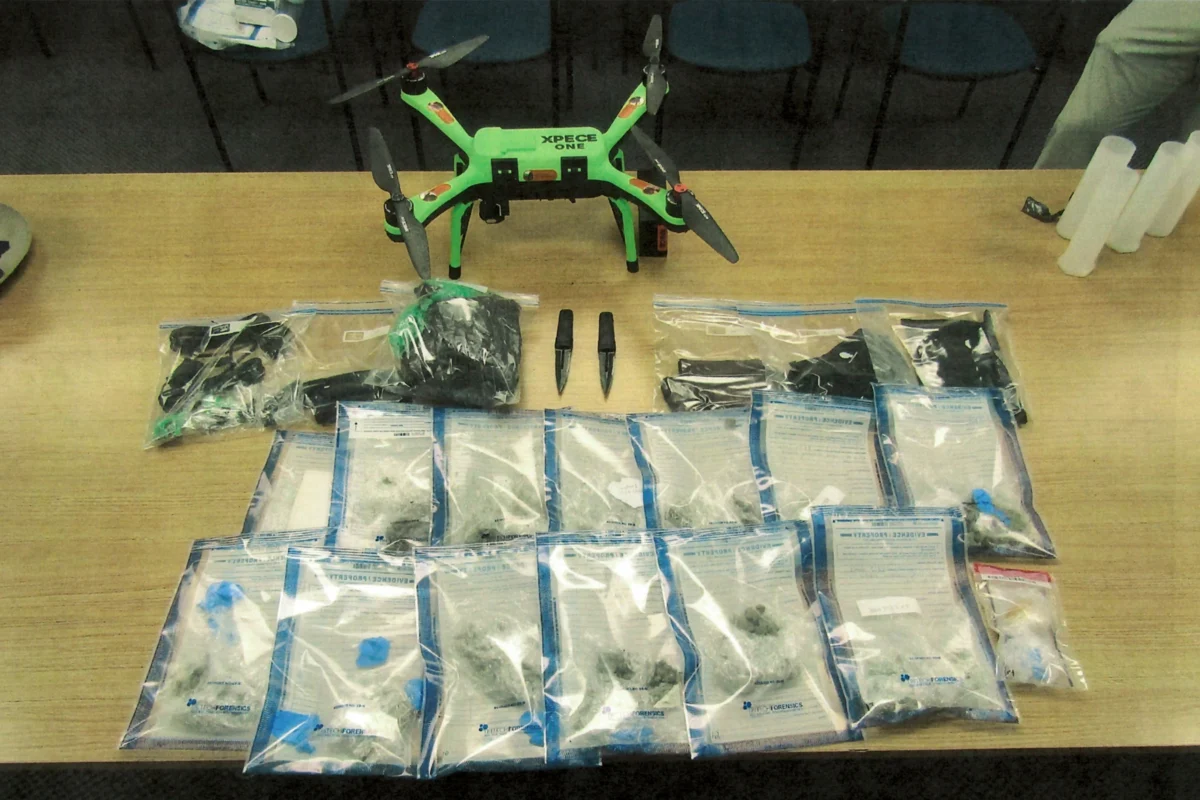
The recent interception of a neon-green quadcopter drone attempting to smuggle a significant cache of contraband, including two formidable eight-inch hunting knives, into a New York state prison has cast a stark spotlight on the escalating and multifaceted challenge of drone-enabled illicit deliveries plaguing correctional facilities nationwide. This incident, occurring just last weekend, saw vigilant corrections officers swiftly confiscate a massive bundle, underscoring the sophisticated and audacious methods now being employed by individuals intent on circumventing traditional prison security measures and introducing severe threats into an already volatile environment.
The audacity of the attempt was evident not only in the nature of the items but also in their sheer volume and the precise method of delivery. Beyond the two dangerous hunting knives, which pose an immediate and severe threat of violence to both inmates and staff, the extensive payload recovered included a Motorola phone—a highly prized item for illegal communication. Such devices enable inmates to orchestrate crimes, intimidate witnesses, manage illicit businesses, and maintain connections with outside criminal networks, completely undermining the security and rehabilitative goals of incarceration. Bandanas, often used as gang identifiers or makeshift masks during altercations, were also part of the illicit cargo, hinting at organized activity. Electric hair trimmers, seemingly innocuous, are commonly repurposed by resourceful inmates into crude yet effective tattoo guns, facilitating gang branding, the spread of unhygienic practices, and further entrenching an illicit subculture within prison walls.
Perhaps most concerning were several sheets of paper reportedly soaked in an unknown substance. This method is a particularly insidious and increasingly common way to introduce potent narcotics like synthetic cannabinoids (often referred to as K2 or Spice) or even fentanyl. These drug-infused papers can be ingested, smoked, or even absorbed through the skin, leading to unpredictable and often fatal overdoses, posing a significant health risk to users and those inadvertently exposed. Finally, at least 13 balloons, meticulously stuffed with marijuana, completed the diverse and dangerous package, destined for the lucrative prison black market where drugs command exorbitant prices.
The drone itself was also successfully recovered by vigilant officers, providing crucial evidence for investigators. Analysis of images released by New York state authorities revealed the smugglers utilized an Xpece One fishing drone. This particular model, retailing at approximately $2,299, is specifically designed to carry payloads of up to seven pounds, typically for dispensing bait. The choice of a fishing drone highlights a calculated effort by smugglers to leverage readily available commercial technology for nefarious purposes, adapting its legitimate function to illicit ends. The robust design, extended flight capabilities, and substantial payload capacity of such drones represent a significant escalation from earlier, smaller consumer drones, allowing for larger, heavier, and more diverse illicit deliveries, thus posing a greater challenge to prison security.
New York corrections commissioner Daniel Martuscello candidly acknowledged the severity of the situation, stating that the state is aware of nearly 12 other drone dead-drops. He described this emerging phenomenon as an “evolving but imminent threat,” a sentiment echoed by correctional authorities across the country. The term "dead-drop" itself suggests a pre-planned, often coordinated operation, where the drone is flown to a specific, pre-arranged location within the prison perimeter, dropping its payload for an awaiting inmate or accomplice before attempting to return to its launch point. Such operations require reconnaissance, precise timing, and often sophisticated external coordination, pointing to organized criminal elements rather than isolated, amateur attempts.
The appeal of drones for smuggling contraband into prisons is multifaceted and technologically driven. Their ability to bypass traditional physical perimeter defenses—fences, walls, and guarded gates—makes them an incredibly attractive alternative to riskier ground-based methods. Drones can operate under the cover of darkness, in adverse weather conditions, or at times when human surveillance is less intense, exploiting blind spots and human resource limitations. The increasing affordability, user-friendliness, and sophistication of commercial drones, coupled with advanced features like GPS navigation for precise delivery and remote operation, have democratized this form of smuggling, making it accessible to a wider range of criminal actors who seek to profit from the high demand for illicit goods within correctional facilities.
The types of contraband smuggled via drones directly reflect the high demand and lucrative black markets that unfortunately thrive within correctional facilities. Narcotics are a primary concern, fueling addiction, violence, and disciplinary issues, and contributing to the overall instability of the prison environment. Cell phones are perhaps the most coveted items, as they empower inmates to bypass institutional controls, communicate with the outside world, organize crimes, intimidate witnesses, and manage illicit businesses, completely undermining the security and rehabilitative goals of incarceration. Weapons, even makeshift ones like the recovered knives or improvised tattoo guns, dramatically escalate the risk of assault, gang violence, and self-harm, threatening the lives of both inmates and staff. Luxury items, such as expensive food or tobacco, while less inherently dangerous, still contribute to an underground economy that can foster debt, extortion, and power struggles among inmates, further complicating prison management.
The problem is far from unique to New York. Over the past few years, drones have indeed become an incredibly popular choice among individuals seeking an easy, albeit illegal, method to sneak contraband into prisons across the United States and internationally. The sheer scale of the problem is staggering. In December of last year, for instance, the South Carolina Department of Corrections intercepted a truly remarkable package crammed full of highly sought-after goods: crab legs, steaks, a significant amount of weed, and even a carton of cigarettes, complete with a tin of Old Bay seasoning. This particular incident, while somewhat humorous in its culinary details, nevertheless underscored the sophisticated nature of these operations and the diverse demands within prison walls. It vividly illustrates that smugglers are willing to deliver not just dangerous items, but also comfort items that command an incredibly high price in the illicit prison economy, highlighting the comprehensive nature of the challenge.
While precise national statistics on drone drops remain elusive due to the clandestine nature of these activities and varying reporting methods across jurisdictions, the numbers reported by individual states are alarming indicators of the widespread issue. In South Carolina, for example, authorities documented at least 250 drone drops in one year, a figure that rose slightly to 254 the following year. These numbers, however, represent only the known interceptions. As South Carolina DOC director Joel Anderson starkly put it to the corrections officer publication Corrections1, “It could be well over 300, 350, those that we don’t see in the middle of the night that never make it in.” He further detailed the frustrating reality: “We find drones crashed in the woods outside of the penitentiary. We find drones crashed at the bases of the fences. We find drones crashed in the yard.” This statement paints a vivid picture of a constant aerial assault on prison perimeters, with many attempts likely going undetected or only discovered after the fact, making the true scope of the problem potentially far greater.
The implications for prison security and the broader correctional system are profound. The continuous influx of contraband fuels violence, addiction, and gang activity, making prisons more dangerous for both inmates and the dedicated staff. It significantly diverts critical resources—both human and financial—from essential rehabilitation efforts, as staff are increasingly occupied with detecting, interdicting, and investigating these drone incidents. The widespread presence of cell phones compromises intelligence gathering and allows criminal networks to operate unimpeded from behind bars, extending their reach into communities. The introduction of powerful drugs, particularly synthetic opioids, exacerbates the opioid crisis within prison populations, leading to an increase in medical emergencies, costly overdoses, and tragic deaths. The psychological toll on correctional officers, constantly under threat from smuggled weapons and drug-fueled violence, is also significant.
Combating this “evolving but imminent threat” requires a dynamic, multi-pronged, and technologically advanced approach. Prisons are exploring and implementing a range of countermeasures, from sophisticated detection technologies to tactical responses and intelligence gathering. Radar systems, acoustic sensors, and thermal imaging cameras are being deployed to detect drones entering restricted airspace, often integrated with artificial intelligence for enhanced threat identification. Radio frequency (RF) analysis can identify drone control signals, providing early warnings. Signal jamming technology, while legally complex due to potential interference with legitimate communications and requiring federal approval, is also under consideration or limited deployment in some areas. Anti-drone nets or "drone catchers" are being developed to physically intercept and bring down offending drones. Furthermore, K9 units, specially trained to detect drugs, cell phones, and other contraband, are being utilized more extensively, not just for traditional searches but also in rapid response to suspected drone drops.
Beyond technology, intelligence gathering and inter-agency cooperation are crucial. Corrections officials are working more closely with local, state, and federal law enforcement agencies to trace drone purchases, track flight paths, analyze recovered devices, and identify individuals involved in complex smuggling rings. Public awareness campaigns aim to educate communities surrounding prisons about the dangers and severe legal consequences of drone smuggling, encouraging reporting of suspicious activity. Legislative efforts are also underway to strengthen laws against drone misuse, imposing harsher penalties for those caught attempting to smuggle contraband into correctional facilities, sometimes involving federal charges that carry substantial prison sentences. The federal government, through agencies like the Department of Justice and Homeland Security, is also investing in research and development for effective counter-drone solutions specifically tailored for sensitive environments like prisons.
However, significant challenges persist. The vast and often rural perimeters of many correctional facilities make comprehensive and continuous surveillance exceptionally difficult. The sheer number and variety of drones available on the market, coupled with rapid advancements in drone technology (such as increased autonomy, stealth capabilities, and anti-detection features), mean that countermeasures often struggle to keep pace. Legal frameworks for drone interdiction, particularly regarding the use of jamming or physical interception methods in civilian airspace, are still evolving, creating complexities and potential liabilities. Furthermore, the human element—the relentless determination of smugglers and the potential for corruption—remains a constant variable that technology alone cannot fully address.
The future of prison security will undoubtedly involve a continuous arms race between increasingly sophisticated smugglers and correctional authorities striving to maintain order and safety. As drones become more autonomous, capable of longer flights, heavier payloads, and evading detection through advanced programming, the need for sophisticated, integrated counter-drone systems will only intensify. This includes not only defensive measures but also proactive intelligence operations to dismantle smuggling networks before they can launch their aerial incursions. The recent incident in New York serves as a potent and timely reminder that the battle against contraband is taking to the skies, demanding constant vigilance, continuous technological innovation, robust inter-agency cooperation, and adaptable policy to safeguard the integrity and safety of correctional institutions and the communities they serve.