anjir abdul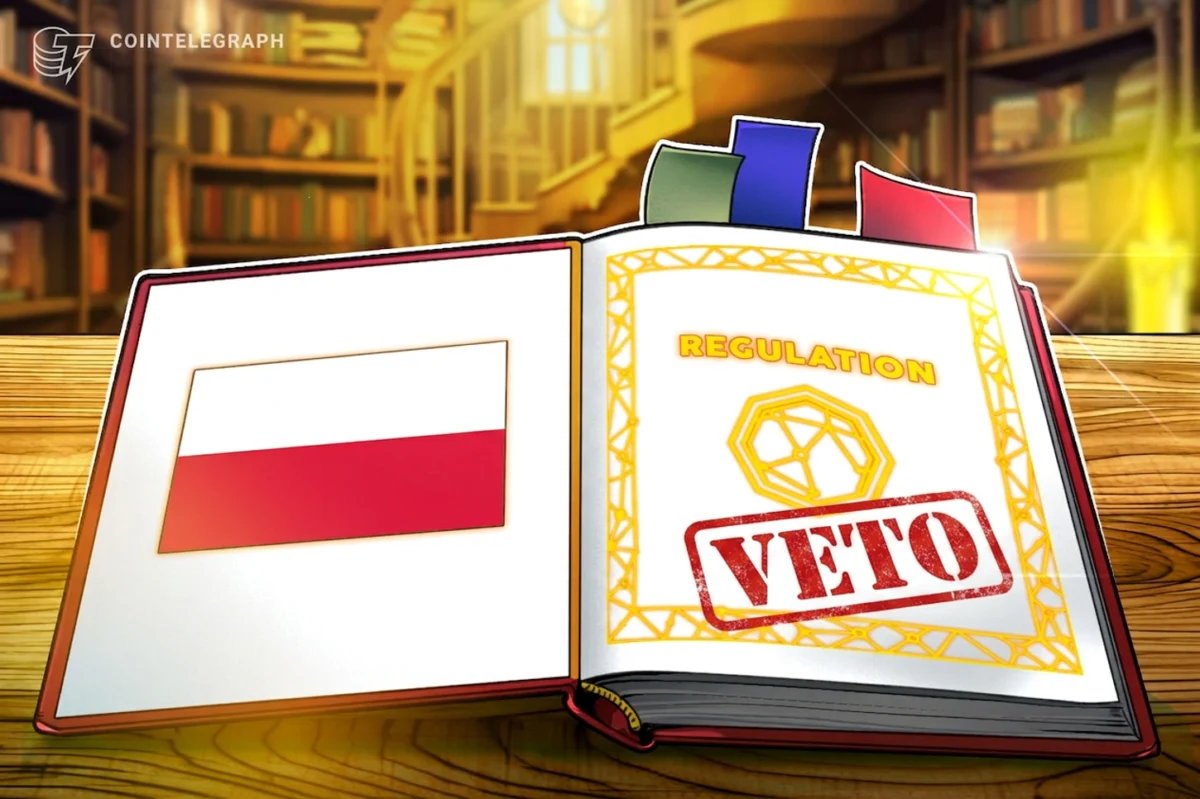
The political struggle surrounding crypto regulation in Poland is not new, nor is it isolated. President Nawrocki has now vetoed crypto legislation three times, consistently arguing that the proposed rules would impose an undue burden of overregulation on the nascent industry. His concerns have centered on the potential for excessive regulatory costs that could stifle innovation and the broad powers granted to authorities, including the ability to block websites, which he views as potentially infringing on digital freedoms. This repeated presidential intervention highlights a significant divergence in regulatory philosophy between the executive and legislative branches, further complicated by the broader political landscape in Poland. The current government, led by Prime Minister Tusk, has been pushing for stricter oversight, often clashing with the President, whose office has a history of political alignment with previous administrations. The inability to overcome a presidential veto, even with a strong parliamentary majority, underscores the complexities of Poland’s political system and the specific challenges of legislating in a rapidly evolving sector like cryptocurrency.
A critical ramification of this legislative deadlock is Poland’s continued lack of a designated national framework for implementing MiCA. The European Union’s landmark Markets in Crypto-Assets Regulation, designed to provide a harmonized legal framework for crypto-assets across member states, is already in effect across the bloc. MiCA aims to protect investors, ensure market integrity, and foster innovation within a regulated environment by establishing clear rules for crypto-asset service providers (CASPs) regarding authorization, operational requirements, consumer protection, and market abuse prevention. For Poland, the vetoed legislation was intended to establish the Polish Financial Supervision Authority (KNF) as the primary supervisor for the crypto market, a role that remains unfulfilled. The KNF itself issued a statement on Friday, reiterating that without this legislation, Poland remains without a designated authority responsible for supervising the crypto-asset market, leaving a significant regulatory void. This absence not only creates uncertainty for businesses operating within or looking to enter the Polish market but also raises questions about consumer protection and the country’s adherence to EU-wide financial stability initiatives. Crypto firms in Poland face the challenge of navigating an unclear regulatory environment, potentially delaying their full compliance with MiCA or even forcing some to seek licensing in other EU jurisdictions with established frameworks.
Adding a layer of urgency and political drama to the regulatory debate is the deepening scandal involving Zondacrypto, a defunct crypto exchange that was once a prominent player in the Polish market. The controversy surrounding Zondacrypto, previously known as BitBay, has become a focal point for calls for enhanced crypto oversight. Prime Minister Donald Tusk has been particularly vocal, leveraging revelations from the ongoing criminal investigation to press his case for tighter regulations. Ahead of Friday’s pivotal vote, Tusk disclosed excerpts from what he asserted was testimony from a key witness in the Zondacrypto probe. These allegations are grave, pointing towards potential corruption and attempts to influence politicians associated with Poland’s previous government.
According to Tusk, the witness testimony alleged a payment arrangement totaling 2 million Polish zloty (approximately $550,000) involving a foundation reportedly linked to former Justice Minister Zbigniew Ziobro. Ziobro, a powerful figure in the previous administration, has been a central figure in political debates and investigations. The allegations, if substantiated, suggest a disturbing nexus between high-level politics and the crypto industry, casting a shadow over the integrity of past governmental dealings. Furthermore, in separate testimony cited by Tusk, the witness allegedly claimed that an unnamed individual had promised to secure a presidential pardon if the witness were to be convicted – a particularly serious accusation that implies attempts to obstruct justice at the highest levels. It is crucial to emphasize that these are allegations cited by Prime Minister Tusk from witness testimony and are part of an ongoing criminal investigation. They have not been proven in court, and those implicated are presumed innocent until proven otherwise.
The Zondacrypto investigation itself is a complex and wide-ranging affair. Polish prosecutors are actively probing suspected fraud and money laundering connected to the exchange. A significant development occurred in July when prosecutors merged the Zondacrypto case with a separate, equally mysterious probe into the 2022 disappearance of Sylwester Suszek, the founder of BitBay, the precursor to Zondacrypto. Suszek’s disappearance, which occurred amidst reports of inaccessible crypto wallets holding significant amounts of Bitcoin and a withdrawal crisis at the exchange, has been a source of intense speculation and concern for investors. The merger of these cases indicates a belief among prosecutors that the events are interconnected, pointing to a larger scheme of financial malfeasance. In April, prosecutors estimated that the losses linked to Zondacrypto were no less than 350 million Polish zlotys, equivalent to approximately $95 million, underscoring the substantial financial impact on numerous investors.
The operational arm of Zondacrypto, BB Trade Estonia, faced its own legal reckoning when it was officially declared bankrupt by an Estonian court in August. This bankruptcy declaration further complicates the recovery process for affected creditors and investors. The first creditors’ meeting, scheduled for September 17, will be a critical step in determining the path forward for those who lost funds. The bankruptcy of the Estonian entity, coupled with the ongoing criminal investigation in Poland, paints a bleak picture for victims and reinforces the arguments for robust regulatory oversight to prevent such incidents in the future.
The confluence of the prolonged regulatory vacuum and the escalating Zondacrypto scandal presents a significant challenge for Poland. The repeated presidential vetoes, driven by concerns over regulatory scope and cost, have left the country in an anomalous position within the European Union, unable to fully implement MiCA. This not only delays the establishment of clear rules for crypto businesses but also potentially compromises investor protection. Simultaneously, the Zondacrypto scandal, with its allegations of vast financial losses, fraud, money laundering, and disturbing political connections, provides a stark illustration of the risks inherent in an inadequately regulated crypto market. Prime Minister Tusk’s decision to publicly link the scandal to the need for tighter controls serves to politicize the regulatory debate further, making it a battleground not just for economic policy but also for political accountability and integrity.
The current situation poses broader implications for Poland’s standing in the international financial community. A lack of clear crypto regulation can deter legitimate businesses seeking to operate within a predictable legal framework, potentially pushing innovation and investment to other, more regulated, EU member states. Moreover, the ongoing scandal and the perceived slow pace of legislative reform could erode investor confidence in Poland’s financial markets generally. The path forward remains uncertain. While the government is keen to pass legislation that aligns with MiCA and addresses the vulnerabilities exposed by cases like Zondacrypto, the persistent presidential veto power and the deep political divisions suggest that a quick resolution is unlikely. The saga underscores the delicate balance between fostering innovation, protecting consumers, and navigating complex political dynamics in the rapidly evolving world of digital assets.