Faris Adani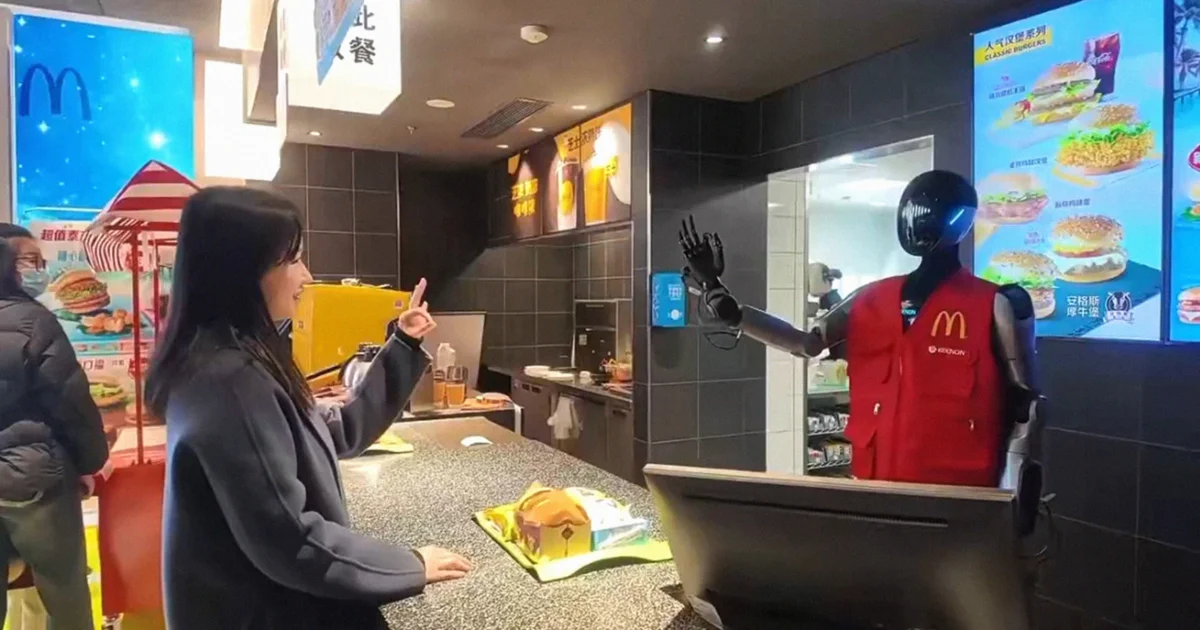
A recent viral video ignited a fresh wave of speculation and anxiety across social media and news outlets, depicting a uniformed humanoid robot at a McDonald’s restaurant in Shanghai, China, seemingly greeting patrons and taking orders. The footage, widely circulated by accounts like CyberRobo on X (formerly Twitter), showed the bipedal automaton, clad in what appeared to be a standard McDonald’s uniform, engaging with a customer, fueling the narrative that the global fast-food giant was on the cusp of a major robotic workforce overhaul. This narrative quickly took hold, with headlines proclaiming McDonald’s was experimenting with human-like robots “on the front line” and “piloting humanoid robots to serve meals.” The public reaction wasn’t entirely surprising; in an era marked by rapid advancements in artificial intelligence and robotics, the specter of machines replacing human labor has become a pervasive concern, often fanned by impressive demonstrations of robots achieving astonishing agility and increasing capabilities previously thought exclusive to humans.
However, the reality behind the captivating viral clip proved to be far less revolutionary than the initial buzz suggested. McDonald’s global chief impact officer, Jon Banner, swiftly moved to clarify the situation, tweeting in response to the widely shared video. Banner explicitly stated, “Just to be clear – the robots were part of the grand opening of the Shanghai Science and Technology Museum restaurant.” He further explained that the robots were specifically requested by the museum as a temporary attraction designed “to draw attention through a temporary greeting. Mission accomplished!” Crucially, Banner underscored that “The robots were not involved in any service or operational functions,” and emphatically denied that McDonald’s was replacing any human labor at its restaurants. He even added a touch of humor, noting, “And if you didn’t visit prior to today, you missed them,” highlighting their brief, promotional presence.
The company behind the humanoid robots featured in the video is Keenon Robotics, an international firm specializing in service robots. While Keenon does produce advanced robotic solutions, including the wheeled serving trays that are increasingly common sights in restaurants globally, their collaboration with McDonald’s in this instance was primarily for promotional purposes. Keenon itself celebrated the event, posting on Facebook, "Our Humanoid series are leading the squad and hitting the streets. It’s a showcase of how service automation is becoming a seamless part of global dining, and how technology brings more smiles to every mealtime." This statement, while enthusiastic about automation, still frames the humanoid deployment as a "showcase" rather than a fully integrated operational shift. Keenon Robotics has a track record of similar collaborations, as evidenced by a video on its homepage featuring Burger King regional manager Riku-Matti Meuronen, who spoke positively about how Keenon’s wheeled serving robots brought a "smile" to children’s faces during a different event.
Despite the clear clarification from McDonald’s, the initial confusion highlights a significant public sentiment: a growing wariness and fascination with the potential for humanoid robots to replace human labor. The decision to dress these robots in human staff uniforms, even for a temporary greeting role, undeniably contributed to the misleading optics. Why present a robot as a worker if it isn’t actually performing work? This marketing strategy, whether intentional or not, played directly into the public’s anxieties, blurring the lines between futuristic vision and present-day operational reality.
The rapid pace of innovation in robotics, with companies like Boston Dynamics, Tesla, and Figure AI showcasing humanoids capable of increasingly complex tasks like traversing varied terrains, performing intricate manipulations, and even playing sports, undoubtedly fuels this public discourse. These demonstrations, often shared widely online, create a powerful impression of an impending robotic workforce revolution. However, the economic and practical realities of deploying such advanced, general-purpose humanoid robots in everyday commercial settings like fast-food restaurants remain a significant hurdle. The cost of acquiring, maintaining, and integrating truly dexterous and intelligent humanoid robots capable of handling the myriad unpredictable tasks of a busy kitchen or service counter is currently prohibitive. Furthermore, their current capabilities, while impressive in controlled environments, often fall short of the nuanced interactions and problem-solving skills human employees bring to customer service.
Fast food chains have indeed been at the forefront of adopting various forms of automation to streamline operations, reduce labor costs, and improve efficiency. Self-serve kiosks have become a ubiquitous feature, allowing customers to place orders directly without human interaction. More recently, some chains have experimented with AI chatbots at drive-thru lanes, aiming to speed up the ordering process. However, these AI-driven systems have often yielded mixed results, sometimes leading to humorous or frustrating misunderstandings, as seen with some Taco Bell AI drive-thru trials. These examples underscore that while automation is undeniably progressing, its implementation in customer-facing roles, especially those requiring complex communication and adaptability, is still a work in progress.
The incident serves as a potent reminder of the delicate balance between leveraging advanced technology for publicity and accurately communicating its current role and future implications. Companies have a responsibility to be transparent about their automation efforts to mitigate public anxiety and avoid inadvertently fostering misinformation. While a marketing stunt can generate buzz, it can also inadvertently trigger deeper societal concerns about job displacement and the future of work.
The broader conversation about automation’s impact on the workforce is ongoing and complex. Trade unions, for instance, are increasingly alarmed by robots designed to perform blue-collar work, advocating for policies that ensure fair transitions, retraining programs, and the protection of human jobs. As technology continues to evolve, the distinction between specialized, task-specific robots (like those delivering food on wheels) and general-purpose humanoids capable of replacing a wide array of human functions will become increasingly important. For now, McDonald’s foray into humanoid robot display was a temporary spectacle, a successful marketing ploy to draw attention to a new restaurant location. It was not, as many initially believed, a precursor to a sweeping replacement of human staff with bipedal automatons. Yet, the viral reaction to this brief appearance underscores how deeply ingrained the vision of a robot-filled future has become in the public consciousness, and how eagerly – or fearfully – people watch for signs of its arrival.