Imroatul Nasiyah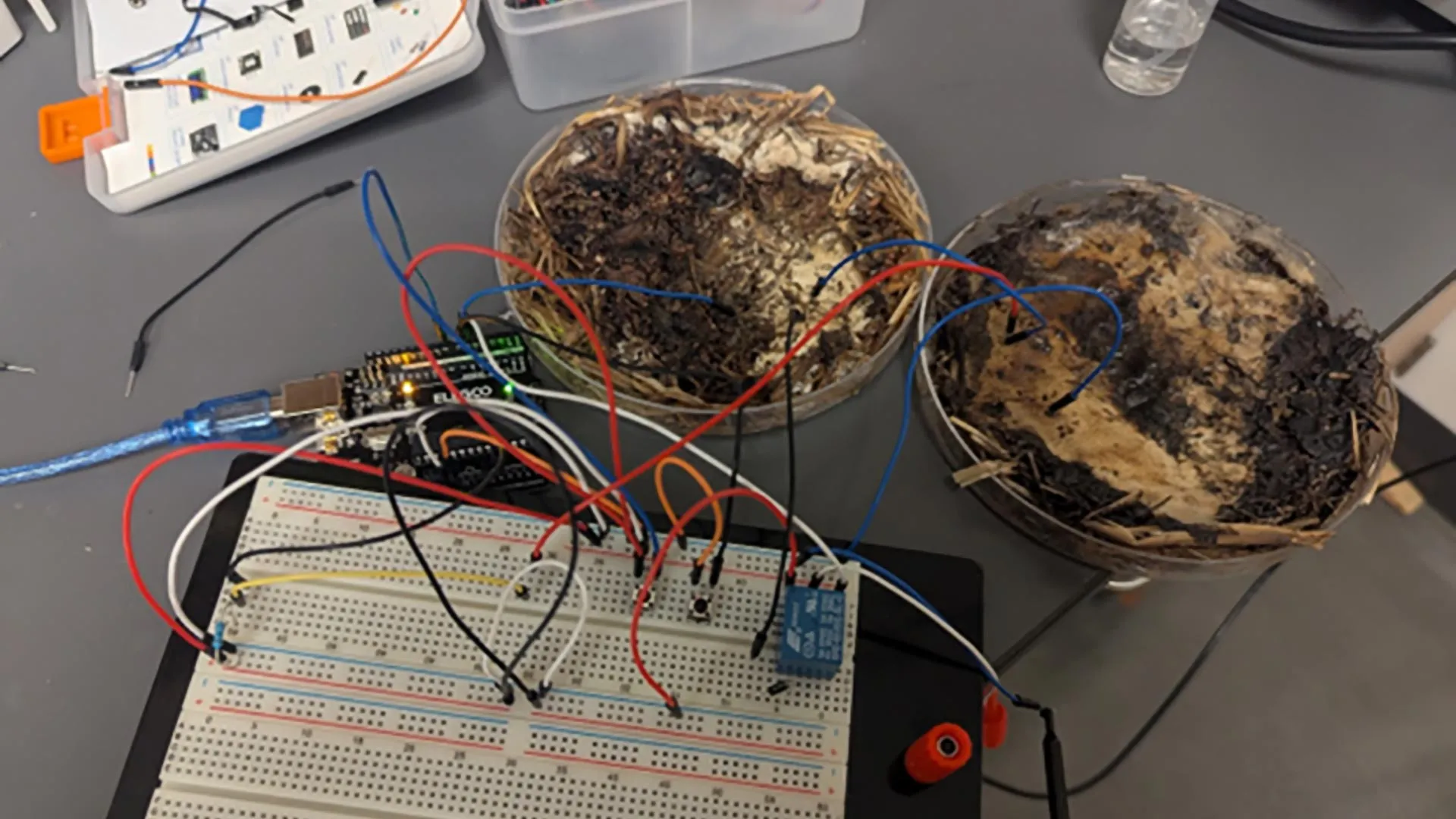
The allure of mushrooms for bioelectronics stems from their inherent resilience and fascinating biological characteristics. These qualities make them exceptionally well-suited for integration into electronic systems, offering a unique blend of organic adaptability and electrical conductivity. The emerging field of bioelectronics is dedicated to harnessing these natural properties to design innovative and environmentally conscious materials for the next generation of computing technologies. Traditional microchips, composed of finite and often rare mineral resources, demand significant energy for both manufacturing and operation, contributing to a growing global concern over electronic waste. Fungal electronics, conversely, present a compelling argument for sustainability due to their biodegradable nature and the relative ease and low cost of their production.
At the heart of this discovery lies the concept of the memristor, a fundamental component in modern electronics that functions as a memory cell. Memristors possess the unique ability to "remember" their past electrical states, a crucial characteristic for data storage and processing. The Ohio State University team, led by research scientist John LaRocco, has demonstrated that cultivated edible fungi can exhibit this same memristive behavior. Their experiments have shown that these fungal devices can replicate the memory functions observed in conventional semiconductor chips, opening doors to the creation of eco-friendly, brain-like computing tools that are significantly less expensive to produce.
LaRocco highlights the profound implications of this research, stating, "Being able to develop microchips that mimic actual neural activity means you don’t need a lot of power for standby or when the machine isn’t being used. That’s something that can be a huge potential computational and economic advantage." This notion of low-power consumption is particularly significant in an era of increasing energy demands and the constant pursuit of energy efficiency in electronic devices. The ability of fungal components to retain information without continuous power input could lead to devices that are not only more sustainable but also more efficient in their operation, reducing energy footprints across a wide spectrum of applications.
The concept of utilizing mycelium, the root-like network of fungi, as a substrate for computing is not entirely novel. However, the Ohio State team has pushed the boundaries of this exploration by focusing on creating functional memristive systems. "Mycelium as a computing substrate has been explored before in less intuitive setups, but our work tries to push one of these memristive systems to its limits," LaRocco explains. This focused approach aims to translate theoretical possibilities into practical applications, moving fungal computing from the realm of curiosity to that of tangible technological advancement.
The experimental process involved a meticulous approach to cultivating and testing the fungal samples. Researchers began by growing specimens of shiitake and button mushrooms. Once matured, these mushrooms were carefully dehydrated to preserve their structure and electrical properties. They were then integrated into custom-designed electronic circuits. The core of the experimentation involved exposing these mushroom-based circuits to controlled electrical currents, varying the voltage and frequency to observe their responses. "We would connect electrical wires and probes at different points on the mushrooms because distinct parts of it have different electrical properties," LaRocco elaborates. "Depending on the voltage and connectivity, we were seeing different performances." This intricate testing methodology allowed the researchers to map the electrical behavior of the mushrooms and identify their potential as computational elements.
The results of these experiments were both surprising and promising. After a rigorous two-month testing period, the team discovered that their mushroom-based memristors were capable of switching between electrical states an impressive 5,850 times per second, achieving approximately 90% accuracy. While performance did show a decline at higher electrical frequencies, the researchers observed a remarkable phenomenon: connecting multiple mushrooms together seemed to restore stability to the system. This behavior is highly analogous to the way neural connections in the human brain work, where multiple interconnected neurons enhance signal processing and stability.
Qudsia Tahmina, a co-author of the study and an associate professor of electrical and computer engineering at Ohio State, emphasized the inherent adaptability of mushrooms for computing purposes. "Society has become increasingly aware of the need to protect our environment and ensure that we preserve it for future generations," Tahmina stated. "So that could be one of the driving factors behind new bio-friendly ideas like these." This growing societal consciousness regarding environmental sustainability is a powerful catalyst for the development and adoption of technologies like fungal computing.
The inherent flexibility of mushrooms also points towards significant potential for scaling up fungal computing systems. Tahmina suggests that larger mushroom-based architectures could find applications in areas such as edge computing, where data is processed closer to its source, and in the demanding environment of aerospace exploration. Conversely, smaller-scale fungal components could be instrumental in enhancing the performance of autonomous systems and wearable devices, making them more efficient, responsive, and sustainable.
While organic memristors are still in their nascent stages of development, the scientific community is actively working towards refining cultivation methods and miniaturizing device sizes. Achieving smaller, more efficient fungal components will be the critical next step in establishing them as viable alternatives to the microchips that currently dominate the technological landscape. LaRocco envisions a future where fungal computing can be implemented across a wide spectrum of scales and resources. "Everything you’d need to start exploring fungi and computing could be as small as a compost heap and some homemade electronics, or as big as a culturing factory with pre-made templates," he remarked. "All of them are viable with the resources we have in front of us now." This optimistic outlook underscores the accessibility and scalability of fungal computing, suggesting that its impact could be far-reaching, from individual hobbyists experimenting with simple setups to large-scale industrial applications.
The research was further supported by contributions from Ruben Petreaca, John Simonis, and Justin Hill from Ohio State, with crucial funding provided by the Honda Research Institute. This collaborative effort highlights the interdisciplinary nature of this pioneering work, bringing together expertise from various scientific fields to unlock the potential of living computers powered by mushrooms. The implications of this research extend beyond mere technological advancement, offering a glimpse into a future where our electronic devices are not only smarter and more efficient but also harmoniously integrated with the natural world.