isnaini azizah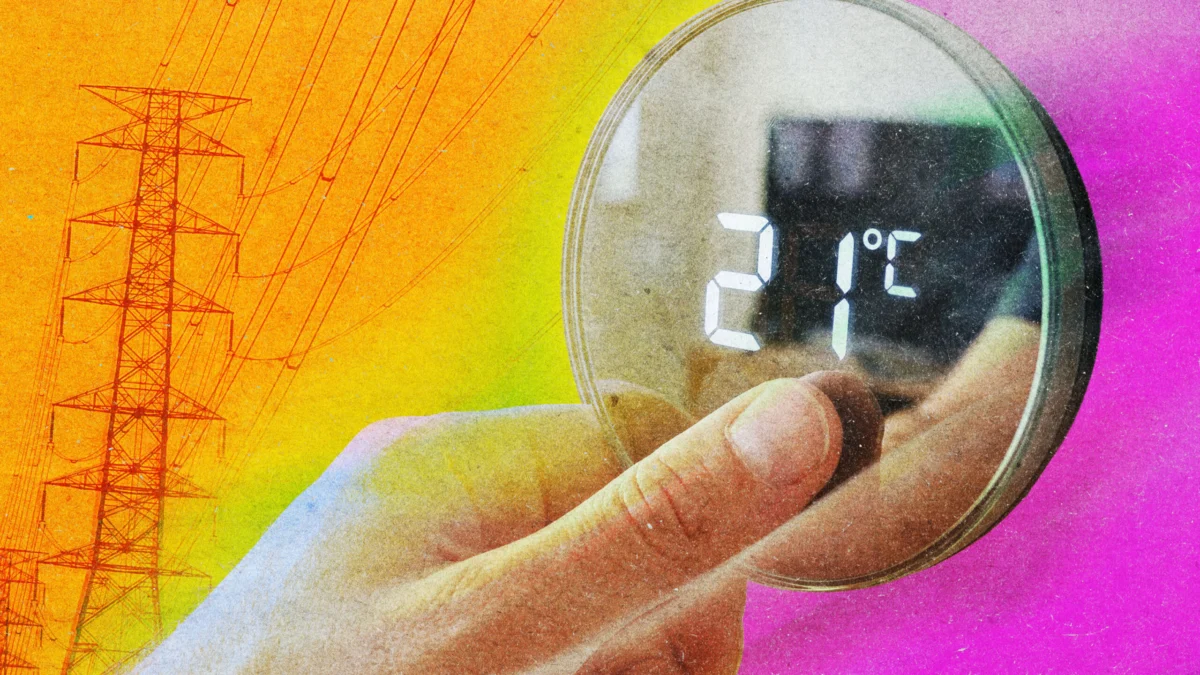
A virtual power plant (VPP) is a network of interconnected household devices, such as smart thermostats, electric vehicle (EV) chargers, home batteries, and solar panels, that a utility company can remotely manage. Typically, this management involves instructing these devices to reduce their electricity consumption during peak demand periods. For instance, a utility might adjust your thermostat’s temperature or delay or slow down your EV charging when the overall electricity demand on the grid is exceptionally high. In return for this participation, VPP programs usually offer consumers incentives, which can include discounts on their energy bills and, in some cases, an upfront signing bonus. Seth Frader-Thompson, CEO and cofounder of EnergyHub, a software company that facilitates VPP programs for utilities, explains that a smart thermostat program might provide an initial bonus ranging from approximately $50 to $150, along with annual savings of about $25 to $50. For participants with home batteries or EVs, the potential annual savings could be significantly higher, potentially reaching hundreds or even thousands of dollars.
While the power a utility might adjust in any single home is relatively small, the collective impact across a large number of participants is substantial. Frader-Thompson emphasizes that when aggregated across hundreds of thousands, or even millions, of households, this collective action has a "profound impact," akin to "firing up a power plant." As of 2023, the United States alone hosted over 500 VPP programs, and this number has continued to grow. Major technology companies like Google are also investing in this technology, recognizing its potential to help power their data centers. It’s estimated that around 4 million households with smart thermostats were already enrolled in VPP programs by last year.
However, as Severin Borenstein, faculty director of UC Berkeley’s Energy Institute at Haas and a member of the board of governors for the California Independent System Operator, points out, VPP technology is still relatively new, and some programs may encounter challenges. If a program is not implemented effectively, utilities might miscalculate when participants intend to use more electricity, potentially leading to them being compensated for not consuming energy they weren’t planning to use anyway. This could inadvertently increase energy bills for non-participants. Despite these potential pitfalls, Borenstein believes that "if we do it well, I think it can really be a benefit," offering a way for utilities to avoid costly grid upgrades or implement emergency power conservation measures.
It’s important to note that most consumer-facing VPPs today are less dramatic than their name might suggest. They don’t typically involve actively sending energy from your EV or home battery back to the grid. However, battery-to-grid programs are becoming more prevalent and hold the promise of even greater savings for consumers in the future.
So, how does one actually sign up for a VPP, and how can you determine if it’s a worthwhile endeavor?
1. Verify Your Utility’s Program and Device Compatibility
The first step is to check if your local utility company offers a VPP program and, crucially, whether it supports the smart devices you already own. The specific types and brands of home devices compatible with these programs can vary significantly from one utility to another. Your utility’s official website is the primary place to start your search for qualifying programs. However, it’s important to be aware that you might not always find the exact phrase "virtual power plant." You may have more success by searching for your utility’s name combined with terms such as "demand response," "peak rewards," "connected solutions," "battery storage," "smart thermostat rewards," "managed charging," or "bring your own device."
Frader-Thompson also advises that you shouldn’t limit your search to just the utility. "The way most people actually learn about this and sign up is through the manufacturer of the device they have," he notes. This means that an offer might appear directly within your smart thermostat app, EV app, or battery app, or it could arrive via an email from the company that manufactured your device.
Once you’ve identified a suitable program, the enrollment process can be remarkably straightforward. It might involve simply clicking through an app, completing a form provided by the utility, or confirming your account and device details on a third-party enrollment page. For EV drivers, Joseph Vellone, CEO of ChargeScape, an EV-focused VPP company, explains that they can often view the program’s terms and compensation details within their automaker’s app and enroll with "a click of a button."
However, eligibility criteria can sometimes be quite specific and potentially frustrating. A smart thermostat program might mandate the use of an approved Wi-Fi thermostat. An EV program’s eligibility could depend on your vehicle’s make, your charging station, your utility service territory, or even your specific electricity rate plan. Similarly, a home battery program might require a particular battery brand, inverter, or installer, and your system must be capable of communicating with the utility. Furthermore, these programs are not uniformly distributed across the country. Most are concentrated in regions with a high prevalence of flexible devices, strained electricity grids, utilities that are supportive of such initiatives, or strong state-level policies. California, Texas, New England, and increasingly parts of the mid-Atlantic region are notable examples.
2. Assess Your Household’s Flexibility
Before committing to a VPP program, it’s crucial to consider your household’s willingness and ability to allow a company to make adjustments to your home devices, even if these adjustments typically occur only a few times a week. For some individuals, this decision might be straightforward. If your EV is habitually plugged in overnight and only requires a couple of hours to charge fully, shifting the timing of that charging might go largely unnoticed. Similarly, a home battery program could be financially attractive if you have a clear understanding of how frequently the battery will be utilized, how much backup power you can maintain, and whether increased cycling impacts the lifespan of your equipment.
However, as Sanya Carley, a professor at the University of Pennsylvania and faculty director of the Climate Center for Energy Policy, points out, "Other households… do not have the flexibility to engage in one of these programs." Individuals who work night shifts, have caregiving responsibilities or specific health needs, or are already making significant efforts to limit their energy consumption to save money may have less capacity to permit a utility to adjust their heating, cooling, or charging schedules during peak demand periods.
3. Understand Opt-Out Rules and Read the Fine Print
VPP programs generally grant participants the right to override temporary adjustments made by the utility. This ability to "opt out" is a critical feature that makes these programs feasible for many consumers. You should ask yourself: Can you skip a day of the program for your thermostat if you’re expecting guests? Can you instruct your car to charge immediately before embarking on a long road trip? Can you ensure a certain battery reserve remains available for power outages? Utilities are typically incentivized to make the opt-out process as user-friendly as possible, with minimal restrictions.
It’s also prudent to investigate where your data might be shared. EV and battery programs may need to collect information about charging status, schedules, and power draw. Smart thermostat data, on the other hand, can reveal patterns about when occupants are home, sleeping, or using appliances. The Electronic Frontier Foundation, a digital rights advocacy group, has cautioned that such data could be used to infer private routines within a household. Depending on the program’s structure, this information might not only be transmitted to the utility but also shared with device manufacturers, software platforms, or other third parties involved in running the program. Companies like ChargeScape and EnergyHub maintain that the data utilized for these programs is functional and limited in scope. Vellone states that EV data is primarily focused on "the physics and the energy of the asset itself." Frader-Thompson elaborates, "It doesn’t really matter what any one customer is doing. It matters what the average customer is doing."
4. Evaluate the Offer’s Value
The compensation offered for participating in a VPP can vary considerably. Payments may not always be in the form of direct cash. Incentives can manifest as signup bonuses, gift cards, monthly bill credits, discounted thermostats, free or reduced-price EV charging, annual performance-based payments, or additional "export credits" for energy sent back to the grid.
The most expensive devices, such as EVs and home batteries, often yield the most substantial savings, which can present a barrier to entry for individuals who cannot afford these products initially. A smart thermostat program, in contrast, can serve as a low-risk starting point.
You might have various motivations for joining a VPP, including contributing to the overall stability of the electricity grid or helping to prevent the construction of new power plants in your community. Frader-Thompson notes, "There are not that many things that you can do that directly contribute to decarbonizing the electric supply, or to improving affordability, or to improving reliability, and this is just a clearly effective way to do that. And you get paid for it."
Ultimately, the best VPP program is not necessarily the one offering the highest financial payout. It’s the program that clearly outlines what it can control, the exact amount of compensation you will receive, how easily you can opt out of its adjustments, and how effectively it aligns with your community’s energy objectives. Your home might not feel like a bustling power plant. However, if your thermostat, car, or battery can be subtly adjusted when the grid requires it, your household can play a small but significant role in supporting the larger energy system.