Faris Adani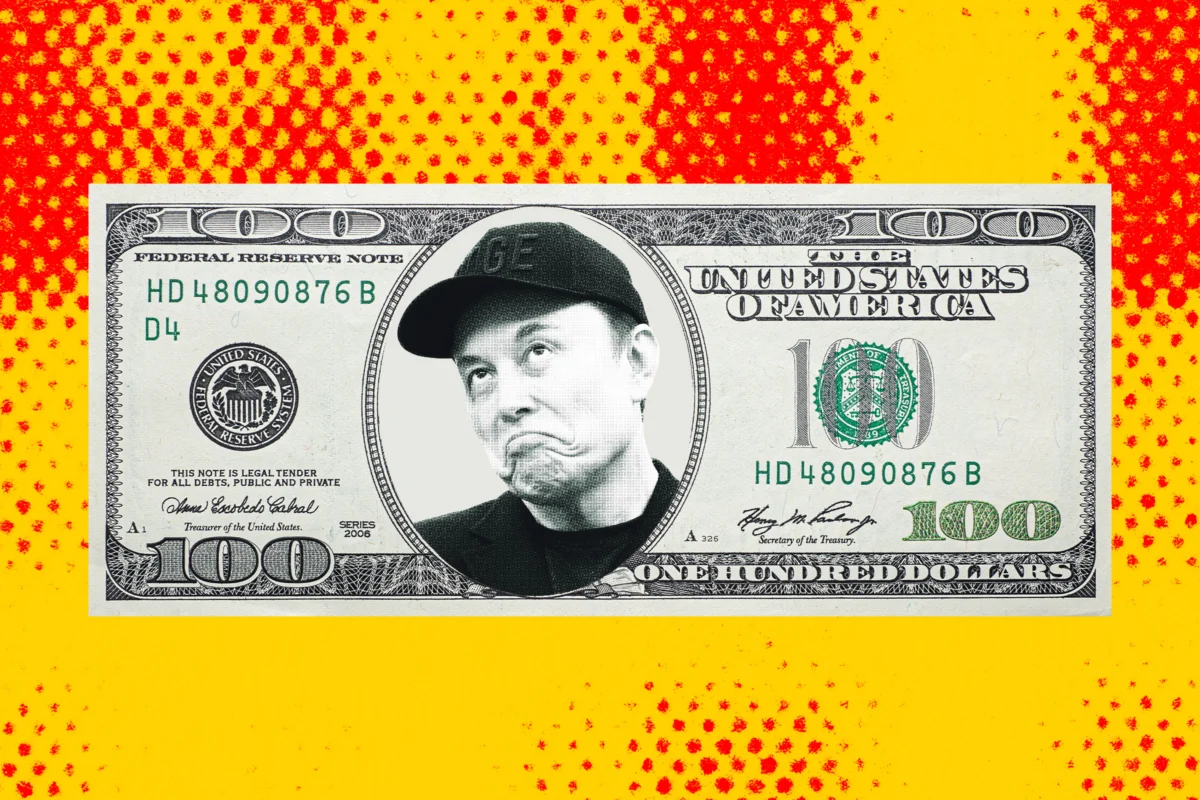
If you were looking for even more ways to give Elon Musk your hard-earned cash, you’re in luck! His social media platform X has officially rolled out a new banking service, uninspiredly called X Money, to its Premium and Premium Plus users – who are already shelling out up to $40 a month for a blue checkmark and more prominent tweet replies. The service allows users to store their money in a deposit account and withdraw cash via ATMs using a physical Visa debit card. The microblogging platform is also enticing users with three percent cash-back and six percent annual percentage yield (APY), a seemingly attractive offer designed to lure in a user base that has grown increasingly skeptical of the platform’s overall direction and its unpredictable leadership. This move represents a significant, albeit delayed, step in Musk’s long-held ambition to transform X into an all-encompassing "everything app," mirroring the functionalities of platforms like China’s WeChat, which seamlessly integrates social media, messaging, payments, and various services. However, the path to achieving this vision, particularly in the highly regulated and trust-dependent financial sector, is fraught with challenges, not least of which is the current public perception of X and its controversial owner.
The genesis of X Money can be traced back to Elon Musk’s early entrepreneurial days. In 1999, he cofounded X.com, an ambitious online financial services and email payment company. This venture eventually merged with Confinity, a company that developed PayPal. While the combined entity later became PayPal, Musk’s initial vision for X.com was far grander than just a payment processor; he envisioned a comprehensive financial institution accessible online. His departure from the company, a board-led ousting that saw him replaced by Peter Thiel, has been described by Musk himself as a "clear source of frustration and anger." This historical context is crucial to understanding the current drive behind X Money. It’s not merely a new feature; it’s the fulfillment of a decades-old personal quest, a redrawing of a chapter where he felt wronged and underestimated. The "X" branding itself is a direct nod to this foundational enterprise, signifying a return to his roots with the full weight of his current empire behind it.
However, the modern iteration of X (formerly Twitter) is a far cry from the promising digital landscape of the late 1990s. Since Musk’s acquisition and rebranding, the platform has faced an unprecedented barrage of criticism, leading to a significant erosion of trust among users, advertisers, and public figures alike. The very notion of entrusting one’s life savings to a company primarily known for the dissemination of misinformation has raised alarm bells globally. Reports and analyses have consistently highlighted X’s struggles with content moderation, leading to a proliferation of conspiracy theories, politically charged falsehoods, and health misinformation. This environment not only compromises the integrity of public discourse but also creates a breeding ground for scams and financial exploitation, which would be catastrophic for a banking service.
Beyond misinformation, the platform has been heavily scrutinized for its alleged failures in combating child sexual abuse material (CSAM) and a demonstrable surge in hate speech. Multiple reports from civil rights organizations and independent researchers have documented a significant increase in racist, antisemitic, misogynistic, and anti-LGBTQ+ content since Musk’s takeover, often attributed to mass layoffs in moderation teams and policy changes that appear to favor "free speech absolutism" over user safety. These issues are not just moral failings; they represent profound operational vulnerabilities that directly contradict the stability and trustworthiness required of a financial institution. For a company grappling with such severe content issues, pivoting to handle sensitive financial data seems not only ambitious but potentially reckless in the eyes of many.
It’s this "track record operating X" that drew the sharp criticism of Senator Elizabeth Warren (D-MA), who earlier this year penned a scathing letter directly addressed to Musk. Warren articulated serious concerns that X Money could pose a significant risk to "consumers, our national security, and the stability of the financial system." Her letter directly challenged Musk’s competence, stating, "Your failure to operate X in a safe and responsible manner does not breed confidence in your ability to safely expand into consumer finance." This isn’t just political rhetoric; it reflects deep-seated concerns within regulatory bodies about data security, privacy, and the potential for a volatile social media platform to disrupt the delicate balance of the financial sector. The potential for foreign state actors or malicious entities to exploit vulnerabilities on X, combined with access to users’ financial data, presents a national security nightmare.
The financial incentives offered by X Money – 3% cashback and 6% APY – are indeed attractive in the current economic climate. Many traditional banks offer far lower interest rates on savings accounts, and competitive cashback rewards often come with strings attached. However, these figures must be weighed against the substantial risks. Are these rates sustainable in the long term, or are they merely introductory offers designed to gain market share? What are the terms and conditions? Are there hidden fees or caps on earnings? More importantly, can a user truly rest easy knowing their life savings are managed by a company whose leadership has been described as "broadly loathed" and whose platform is often characterized as a "depressing echo chamber" for its CEO? The psychological barrier to entrusting one’s money to such an entity is immense, especially when safer, more established alternatives exist.
Musk’s ambition for X to become "the everything app" is frequently compared to WeChat, China’s ubiquitous platform that integrates social networking, messaging, mobile payments, e-commerce, and a host of other services. However, this comparison often overlooks crucial differences. WeChat operates within a unique regulatory and cultural environment in China, where user data privacy expectations and government oversight differ significantly from Western democracies. Replicating its success in the US or Europe requires navigating stringent financial regulations, robust consumer protection laws, and a highly competitive market where consumers have numerous established and trusted financial service providers. Furthermore, WeChat’s success stems from deep user trust built over many years, a commodity that X, under Musk’s stewardship, has conspicuously squandered.
Adding to the skepticism is Musk’s consistent pattern of overpromising and under-delivering, particularly concerning timelines. He originally promised X Money would launch by the end of 2024, telling then-Twitter employees in October 2023, "It would blow my mind if we don’t have that rolled out by the end of next year." Considering the service is only now rolling out, over two and a half years past his self-imposed deadline, it’s safe to say his mind has been "blown" several times over. This significant delay highlights the inherent complexities and regulatory hurdles involved in launching a financial service, complexities that Musk, with his characteristic optimism, frequently underestimates. Such missed deadlines, far from being minor inconveniences, erode confidence and suggest a lack of realistic planning and execution, qualities antithetical to responsible financial management.
Ultimately, the launch of X Money is a bold, albeit precarious, move in Elon Musk’s long-standing quest to build a financial super-app. While the attractive financial incentives may tempt some, the platform’s documented issues with misinformation, hate speech, and security, combined with the CEO’s controversial public persona and a history of missed deadlines, present formidable obstacles to widespread adoption. The success of X Money will hinge not just on its features, but on X’s ability to rebuild trust, demonstrate robust security protocols, and navigate an increasingly skeptical regulatory landscape – a challenge that, given its current trajectory, seems more daunting than ever. For users, the question remains: are the promised returns worth the perceived risks of handing over their financial future to a platform that has, at times, struggled with its core mission of safe and responsible communication? The market, and time, will tell.