Pradipta eManuel
Consumer data broker Radaris.com, notorious for its persistent disregard of personal information removal requests, has seen its extensive network of people-search domains transferred to plaintiffs in a privacy lawsuit. The legal battle stemmed from allegations that Radaris violated a New Jersey privacy law, Daniel’s Law, which imposes substantial fines on data brokers for publishing sensitive information of state law enforcement officials. After repeated delays and evasive tactics by Radaris’s legal team, a judge ordered the forfeiture of radaris.com and over a dozen related domains.
The case began in February 2024 when Atlas Data Privacy Corp., a firm actively pursuing data brokers for Daniel’s Law violations, filed suit against Radaris. Daniel’s Law, enacted to protect state law enforcement, government personnel, judges, and their families, mandates the complete removal of their personal information from commercial data brokers and people-search services, with penalties of $1,000 per violation for non-compliance.
This legal action followed a March 2024 investigative report by KrebsOnSecurity that exposed the Radaris co-founders, Russian-born brothers Igor and Dmitry Lubarsky (also known as Lybarsky), who operate a sprawling web of people-search and Russian language dating services from Massachusetts. The Lubarsky brothers’ attorneys threatened defamation lawsuits, vehemently denying the reporting and claiming the true ownership lay with Ukrainians in Ukraine.
KrebsOnSecurity stood by its findings, further detailing how the Lubarsky brothers allegedly orchestrated Radaris and other data broker operations using a fabricated CEO, "Gary Norden." Their attorney, Val Gurvits of Boston Law Group, admitted to the creation of this pseudonym and the issuance of misleading press releases quoting the fictitious CEO to attract investors.
Radaris’s legal counsel adopted a strategy of last-minute court appearances, arguing that Atlas had failed to properly serve the actual owners of the companies. Atlas re-filed an expanded lawsuit in June 2025, implicating a wider array of Radaris-affiliated data brokers. Matt Adkisson, CEO of Atlas, described Radaris’s tactics as a "tried-and-true playbook" involving legal delays and obfuscation regarding their true country of origin and ownership. Adkisson characterized this period as an "island-hopping phase," marked by constant changes to privacy policies and the emergence of new entities from offshore jurisdictions like the Marshall Islands, British Virgin Islands, and Seychelles. He likened the defense’s strategy to a "shell game," where entities were presented as responsible parties only to be discarded as judgments loomed, while the actual domain owners claimed immunity.
Adkisson recounted how Atlas hired an investigator in the Marshall Islands after Radaris updated its terms of service to claim management by a Marshallese company. The investigation revealed that this newly formed entity did not yet exist.
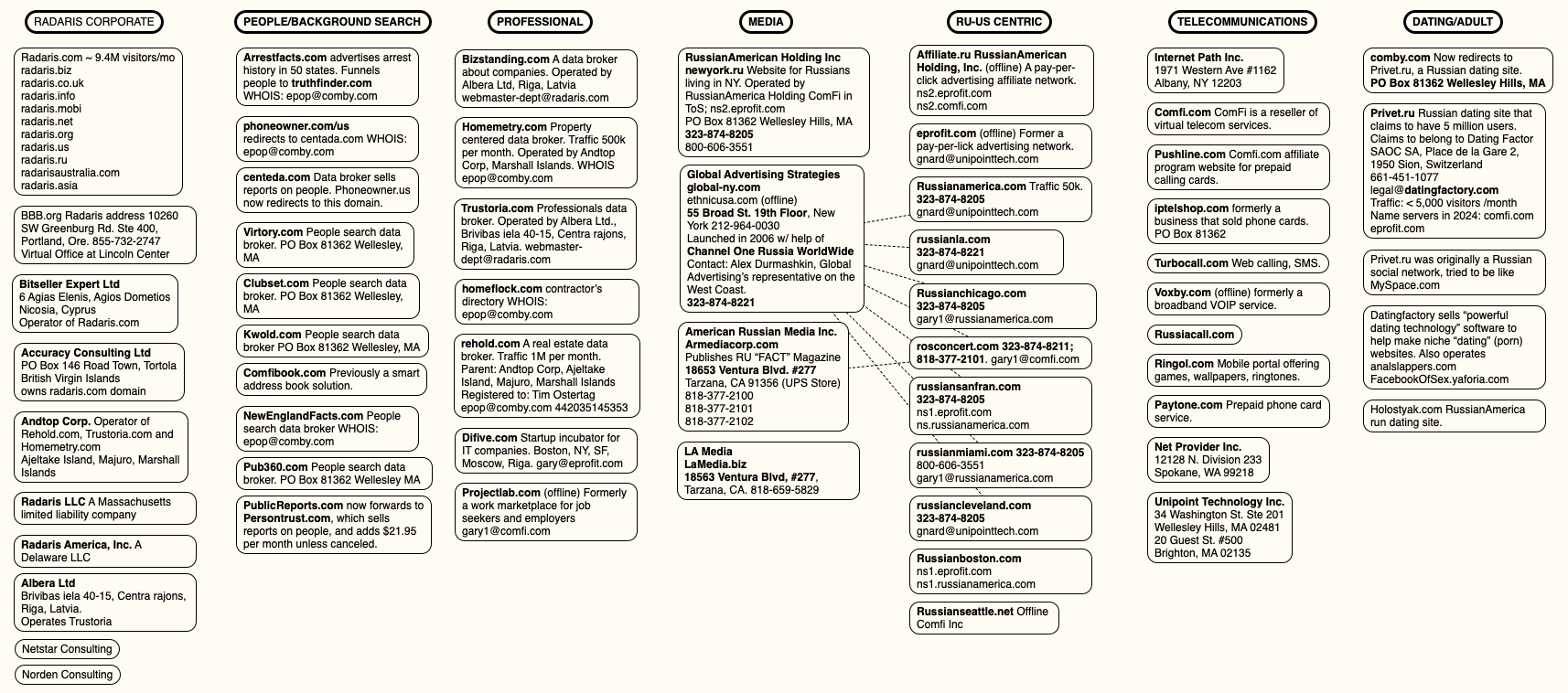
Notably, Mr. Gurvits had previously represented Radaris in a 2017 class-action lawsuit where a $7.5 million default judgment was entered. Due to Radaris’s failure to contest the claims, the court ordered Verisign to transfer the radaris.com domain to the plaintiffs. Gurvits successfully appealed this decision by arguing that the lawsuit had not named the actual owner, Cyprus-based Bitseller Expert Limited, thus violating their due process rights. The 2017 judge halted the domain transfer, allowing the plaintiffs to refile. Shortly thereafter, Radaris’s operator shifted from Bitseller to Andtop Company, incorporated in the Marshall Islands in October 2020, and the plaintiffs did not refile.
Raj Parikh, a partner at PEM Law representing Atlas, described this pattern as a "modus operandi" of winning through attrition, where opposing attorneys would tire of procedural games and withdraw. He acknowledged the difficulty of recovering funds from foreign entities but emphasized their commitment to removing the threat Radaris posed to New Jersey law enforcement.
On August 26, the New Jersey judge ruled that the defendants had ample opportunities to defend themselves and had failed to do so. Mr. Gurvits declined to comment, stating the case was assigned to Mr. Victor Worms. Worms maintained that the court’s transfer of radaris.com was part of a default judgment against a non-existent legal entity, and that they intended to appeal, arguing the transfer constituted an unconstitutional forfeiture.
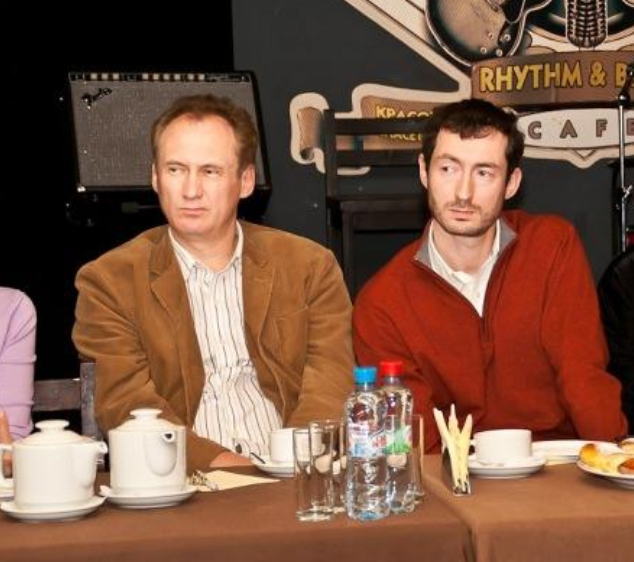
While radaris.com still appears in online searches for U.S. residents, it no longer offers detailed personal dossiers. The homepage now displays a notice from Atlas and links to previous reporting.
Email Confirmations
Atlas revealed it has secured over 10,000 emails and documents confirming KrebsOnSecurity’s reporting on Radaris’s ownership and operations. These documents allegedly demonstrate that nominal legal entities like Radaris America, Inc., Bitseller Expert Limited, and others are managed by the same small group using shared mailboxes, payment methods, and virtual office addresses. Atlas’s summary indicates that these entities, along with at least 25 other people-search websites, are part of a single operation run by a Boston-area group, with administrative, financial, and technical functions routed through specific mail domains.
The emails reportedly show Radaris.com generating approximately $42,000 per month, while Veripages.com earns around $45,000 monthly through a partnership with Lifetime Value Company, which operates brands like PeopleLooker and PeopleSmart. Additionally, the Radaris family of websites allegedly earns up to $25,000 monthly from a partnership with Onerep, a company that assists individuals in removing their data from people-search sites. This partnership is particularly notable given KrebsOnSecurity’s earlier exposé on Onerep’s founder, who launched numerous people-search sites himself.
In total, the New Jersey court has transferred 14 domains from the Radaris group to Atlas, with radaris.com now redirecting to an informational notice.
The Road Ahead
The Radaris companies still face potential fines under Daniel’s Law. However, the law itself is currently under constitutional challenge from approximately 150 other consumer data brokers sued by Atlas. The data broker industry has moved many of these lawsuits to federal court, arguing that Daniel’s Law is overly broad and violates the First Amendment. The Third Circuit Court of Appeals’ decision is pending, with further appeals to the U.S. Supreme Court anticipated.
While at least 14 other states have adopted laws similar to Daniel’s Law, a federal district court in August 2025 ruled West Virginia’s version unconstitutional under the First Amendment.
Privacy expert Justin Sherman, author of the forthcoming book "The Middlemen," noted the intense lobbying efforts by the tech industry against comprehensive U.S. data privacy legislation at the federal level. He highlighted the opposition from social media, big tech, cryptocurrency, and AI firms, who argue that data scraping restrictions could cripple the U.S. economy. Sherman believes people-search companies will continue to flourish until meaningful federal privacy laws are enacted, as most state laws exempt publicly available government records.
Sherman pointed out the lack of federal law governing the use and sharing of data collected through age verification processes, despite at least 25 states having such laws. He cited the recent breach at IDScan.net, which exposed the driver’s license information of over 153 million Americans, as an example of the potential consequences of such regulatory gaps. Sherman concluded that the public’s desire for broader privacy protections, as exemplified by Daniel’s Law, is clear, and that the ongoing lack of comprehensive federal privacy law, despite numerous "wake-up calls," is not due to a lack of awareness but rather a failure to act.