Pradipta eManuel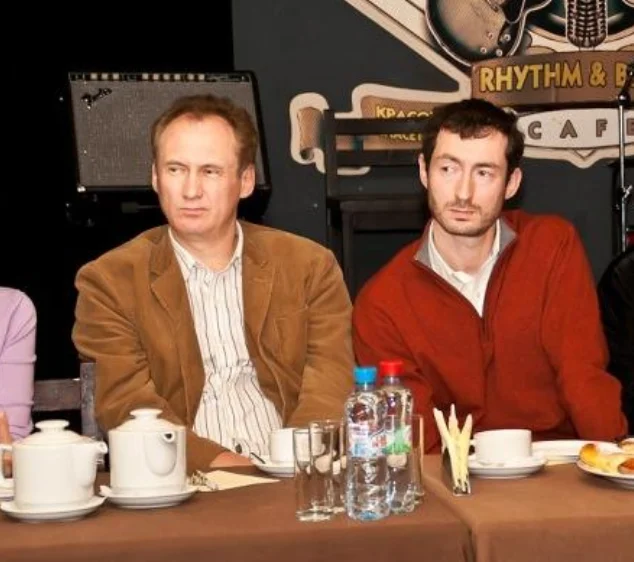
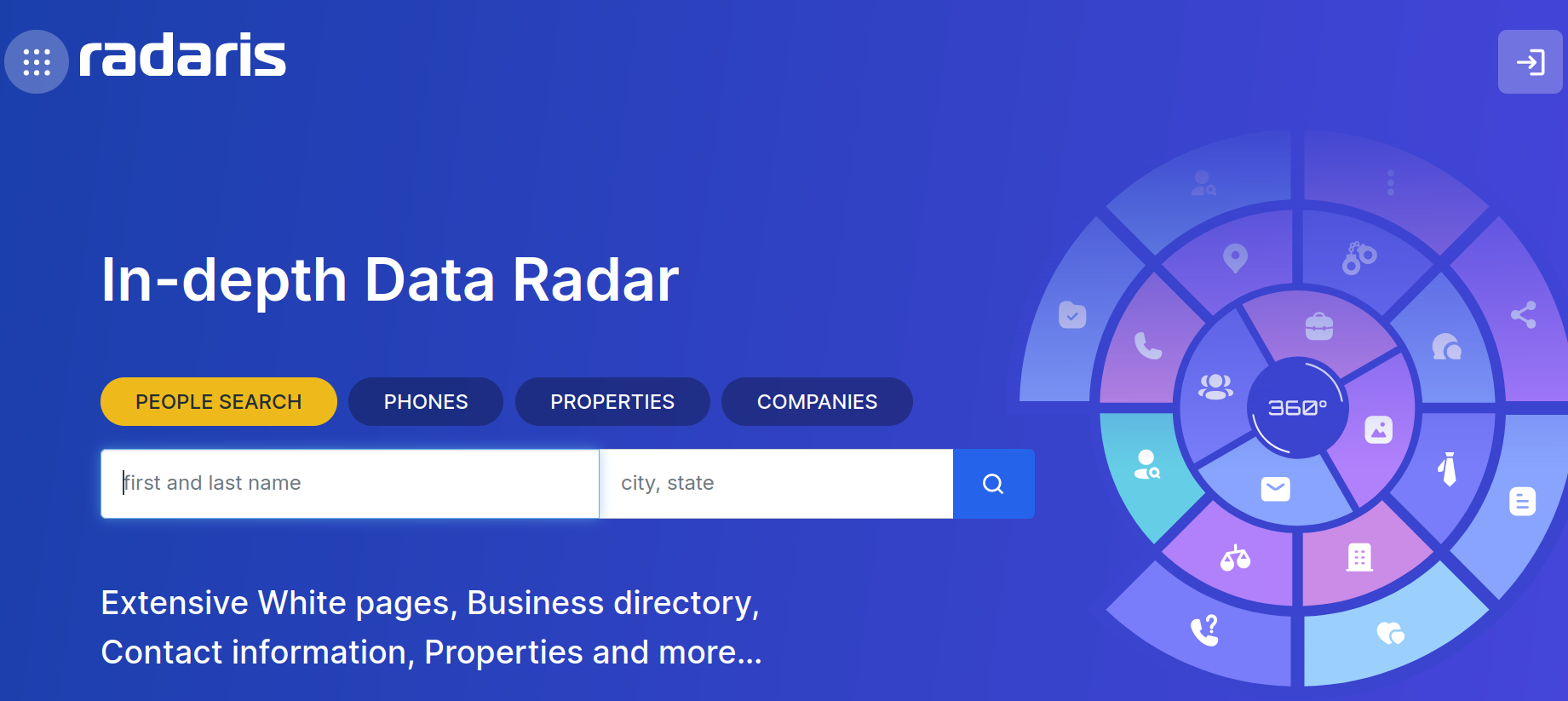
In a significant legal victory for consumer privacy advocates, the data broker Radaris.com has been compelled to forfeit its domain names, including the primary radaris.com, to plaintiffs in a lawsuit alleging violations of New Jersey’s stringent privacy law. This development marks a crucial moment in the ongoing battle against data brokers who have historically operated with impunity, often ignoring requests to remove personal information from their vast online databases. The judge’s order, stemming from Radaris’s persistent "stonewalling and prevarication," underscores the growing legal and public scrutiny faced by the data brokerage industry.
The case was initiated in February 2024 by Atlas Data Privacy Corp., a firm actively pursuing data brokers accused of breaching Daniel’s Law. This New Jersey statute empowers state law enforcement officials, government personnel, judges, and their families to demand the complete removal of their personal information from commercial data brokers and people-search services. Crucially, the law imposes hefty fines of $1,000 per violation against companies that disregard these removal requests, offering a potent legal weapon against privacy infringements.
The legal action against Radaris gained further traction following a detailed exposé by KrebsOnSecurity in March 2024, which delved into the operations of Radaris co-founders Igor and Dmitry Lubarsky. These Russian-born brothers, residing in Massachusetts, were revealed to be orchestrating a complex network of people-search companies, alongside Russian language dating services and affiliate programs. The reporting highlighted the brothers’ alleged use of a fictitious CEO, "Gary Norden," to mask their true involvement and solicit investments, a tactic that later drew an admission from Radaris’s attorney, Val Gurvits of the Boston Law Group. Gurvits conceded that the CEO pseudonym was invented and that multiple press releases had quoted this fabricated identity to attract potential investors.
In response to KrebsOnSecurity’s reporting, the Lubarsky brothers’ legal team threatened defamation lawsuits, asserting the story was inaccurate and that the true owners were Ukrainians. However, KrebsOnSecurity stood by its findings, further detailing how the Lubarsky brothers operated Radaris and its affiliated entities using the deceptive CEO persona. This aggressive defense by Radaris’s legal team, including late court appearances and claims of improper service, ultimately proved unsuccessful.
Atlas Data Privacy Corp. re-filed its lawsuit in June 2025, significantly broadening the scope to include a larger array of Radaris family data brokers accused of violating Daniel’s Law. Matt Adkisson, president and CEO of Atlas, described Radaris’s strategy as a deliberate "island-hopping phase," characterized by constant changes to privacy policies and the emergence of new entities from offshore jurisdictions like the Marshall Islands, the British Virgin Islands, and Seychelles. This tactic, Adkisson explained, was a "shell game" designed to obscure ownership and evade accountability, with defense lawyers attempting to shift blame between various shell corporations.
Adkisson recounted how, upon discovering that Radaris claimed to be managed by a newly formed Marshall Islands company, Atlas hired an investigator in the country. The investigation revealed that this purported management entity did not even exist at the time of the claim. This pattern of evasion and obfuscation is a recurring theme in the data broker industry, as highlighted by a previous class-action lawsuit against Radaris in 2017. In that instance, a $7.5 million default judgment was rendered after Radaris failed to contest the claims. The court ordered the transfer of the radaris.com domain to the plaintiffs, but the domain transfer was halted on appeal when Radaris’s attorney argued that the lawsuit had not named the actual domain owner, a Cyprus-based company called Bitseller Expert Limited. The judge at the time allowed the plaintiffs to refile their complaint. Subsequently, the operator of Radaris changed from Bitseller to Andtop Company, an entity formed in the Marshall Islands in October 2020, and the plaintiffs did not refile.
Raj Parikh, a partner at PEM Law in New Jersey and lead counsel for Atlas in Daniel’s Law litigation, characterized Radaris’s approach as a long-standing "modus operandi" of winning by attrition. He noted that plaintiffs’ attorneys often become fatigued by the procedural complexities and abandon their cases. However, Atlas remained committed to removing the threat posed by Radaris to law enforcement and public officials in New Jersey, dedicating the necessary resources.
On August 26, the New Jersey judge found the defendants had ample opportunity to defend themselves but failed to do so. Radaris’s attorney, Mr. Val Gurvits, declined to comment, stating the case was assigned to another attorney, Mr. Victor Worms. Worms, however, asserted that the court transferred radaris.com based on a default judgment against Radaris.com, which he claims is not a legal entity. He stated their intention to file a motion to vacate the judgment and pursue appeals, arguing the domain transfer constitutes an unconstitutional forfeiture.
Currently, radaris.com no longer offers detailed personal dossiers on Americans. Instead, it redirects to a notice from Atlas, informing visitors of the court-ordered domain transfer and linking to previous reporting on Radaris. Atlas has revealed that over 10,000 emails and documents obtained during litigation corroborate KrebsOnSecurity’s findings regarding the ownership and operation of Radaris and its associated companies. These documents reportedly show that nominal legal entities such as Radaris America, Inc., Bitseller Expert Limited, Digital Orbit Corp, and others are managed by a small group of individuals from shared mailboxes, using common payment methods and a single virtual office address.
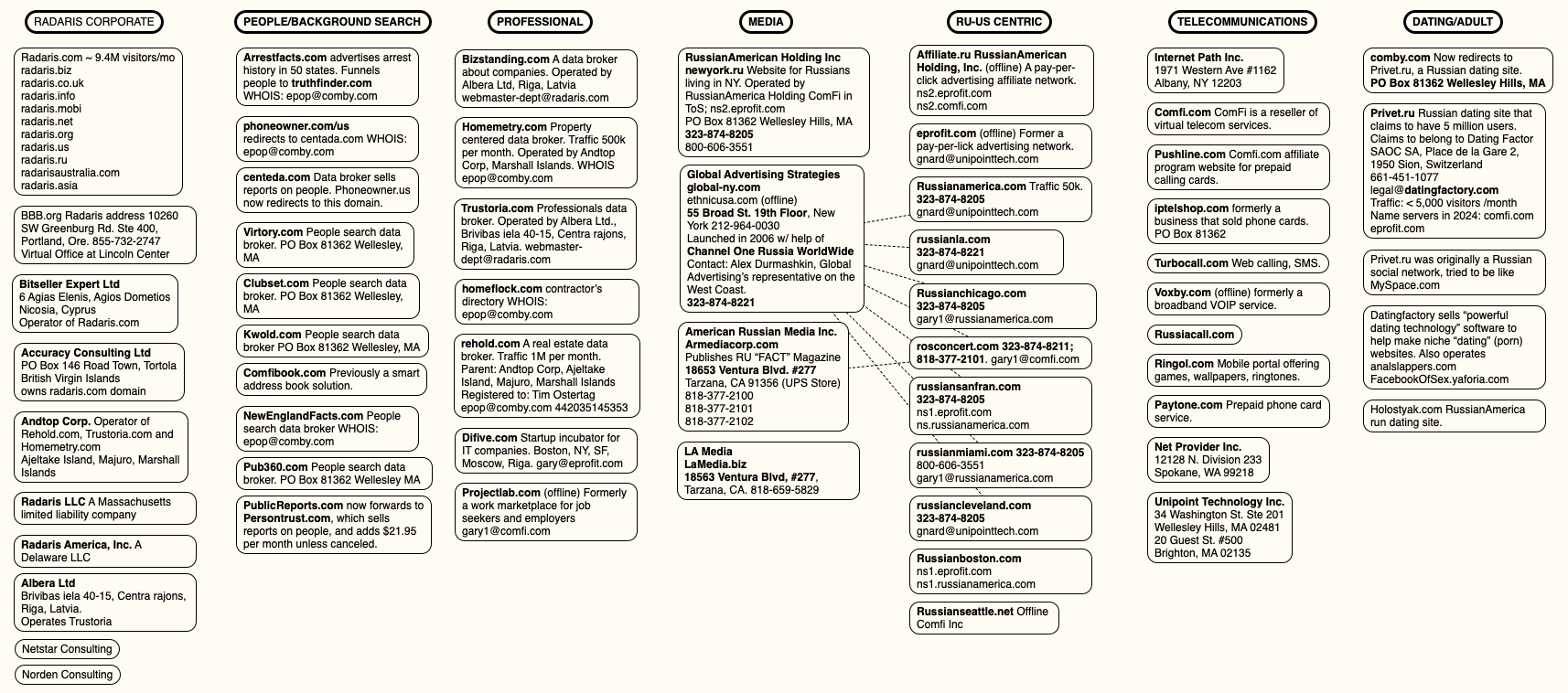
Atlas further detailed that the gathered evidence indicates a unified operation run by a small Boston-area group, with administrative, financial, and technical functions managed through the difive.com mail domain and its successors. Financial records obtained suggest Radaris.com generates approximately $42,000 monthly, while Veripages.com earns around $45,000 monthly through its partnership with the Lifetime Value Company, which operates brands like PeopleLooker and PeopleSmart. The Radaris family of websites also reportedly earns up to $25,000 monthly from a partnership with Onerep, a company that itself has been scrutinized for its founder’s history of launching numerous people-search sites.
To date, the New Jersey court has transferred 14 domain names from the Radaris group to Atlas. The industry, however, is mounting a significant challenge to Daniel’s Law, with approximately 70 lawsuits filed by Atlas being moved to federal court. These suits argue that the New Jersey statute is overly broad and violates the First Amendment. The U.S. Court of Appeals for the Third Circuit’s decision on this constitutional challenge is anticipated, with the case likely to reach the U.S. Supreme Court.
The legal landscape for data privacy is complex and evolving. While 14 other states have enacted laws similar to Daniel’s Law, West Virginia’s version was recently ruled unconstitutional by a federal district court. Privacy experts like Justin Sherman, author of the forthcoming book "The Middlemen," point to intense lobbying efforts from various technology sectors, including social media, big tech, cryptocurrency, and AI proponents, as significant obstacles to comprehensive federal data privacy legislation. Sherman argues that people-search companies will continue to thrive unless robust federal laws are enacted, as most state privacy laws exempt publicly accessible government records, such as voter registries, property filings, and criminal records. The absence of federal regulations on how companies handle sensitive data, such as driver’s license information, was starkly illustrated by a recent breach at IDScan.net, which exposed the data of over 153 million Americans. Sherman concludes that the need for better privacy laws is evident, with numerous "wake-up calls" already occurring, and any claims to the contrary are a denial of reality.