anjir abdul
The immediate catalyst for this market contraction was the Senate’s vote on a cloture motion, a procedural step required to bring the CLARITY Act to the Senate floor for a full vote. The motion fell short of the necessary 60 votes, effectively halting the bill’s progress. The CLARITY Act, an acronym for "Clear Regulatory Agenda for US Digital Asset Markets," aimed to provide much-needed clarity by delineating the jurisdictional boundaries between the Commodity Futures Trading Commission (CFTC) and the Securities and Exchange Commission (SEC) over various digital assets. For years, the crypto industry has operated in a legal gray area, with both agencies asserting authority over different aspects of the market, leading to confusion, costly litigation, and a perceived stifling of innovation within the United States. The bill sought to resolve this by categorizing certain digital assets as commodities under the CFTC’s purview, while others, particularly those deemed to be securities, would fall under the SEC. This framework was widely seen as crucial for fostering a predictable environment that could attract institutional investment, encourage technological development, and protect consumers.
The failure of the cloture motion carries significant implications, particularly given the approaching legislative deadline. With fewer than 36 legislative days remaining before a new Congress is sworn in following November’s midterm elections, the CLARITY Act now faces an extremely narrow, if not impossible, window to advance this year. This effectively means the bill is dead for the current legislative session, pushing the prospect of comprehensive federal crypto regulation further into an uncertain future. The ongoing regulatory vacuum leaves market participants vulnerable to continued enforcement actions by agencies like the SEC, which has adopted an "enforcement-first" approach, often through lawsuits against major crypto firms, rather than proactive rulemaking.

Following the legislative setback, Bitcoin, the world’s largest cryptocurrency, briefly dipped below the $75,000 mark. While it managed to recover to approximately $76,000 at the time of writing, according to CoinGecko data, the immediate price volatility underscored the market’s sensitivity to regulatory developments. The broader crypto market, often influenced by Bitcoin’s performance and regulatory sentiment, also registered declines, albeit with varying degrees of severity across different altcoins.
The push for regulatory clarity has been a consistent theme among industry leaders, with Coinbase CEO Brian Armstrong emerging as one of the most vocal advocates for the CLARITY Act. Armstrong had repeatedly emphasized the critical need for a clear regulatory framework to enable the U.S. to remain competitive in the global digital asset landscape. In May, he expressed optimism, stating that the legislation had never been in a "stronger or more bipartisan position," highlighting the collaborative efforts that had gone into drafting the bill. His optimism continued into August, when he made a bold prediction, anticipating either "60+ votes in the Senate on September 15th" for the CLARITY Act or new "rules" from the CFTC and SEC by September 16th if the bill failed. "Sounds like clarity is coming either way," he had written on X, reflecting the industry’s desperate hope for a definitive path forward.
Ahead of Tuesday’s crucial vote, Armstrong intensified his lobbying efforts, urging senators to support the legislation. He framed the decision as a binary choice: either promote U.S. crypto innovation and leadership or risk ceding that ground to other nations actively developing their own comprehensive regulatory frameworks. His stark warning, "History — and the crypto voter — won’t forget," underscored the growing political significance of the crypto industry and its potential influence on future elections. The failure of the vote, therefore, represents a significant blow to Coinbase and other platforms that have been actively seeking a clear operating environment. For Circle, the issuer of the USDC stablecoin, the CLARITY Act was particularly important as it could have provided a much-needed framework for stablecoin regulation, clarifying their legal status and operational requirements, thereby enhancing their stability and investor confidence. Without such clarity, stablecoins continue to face scrutiny and potential classification as securities by the SEC.
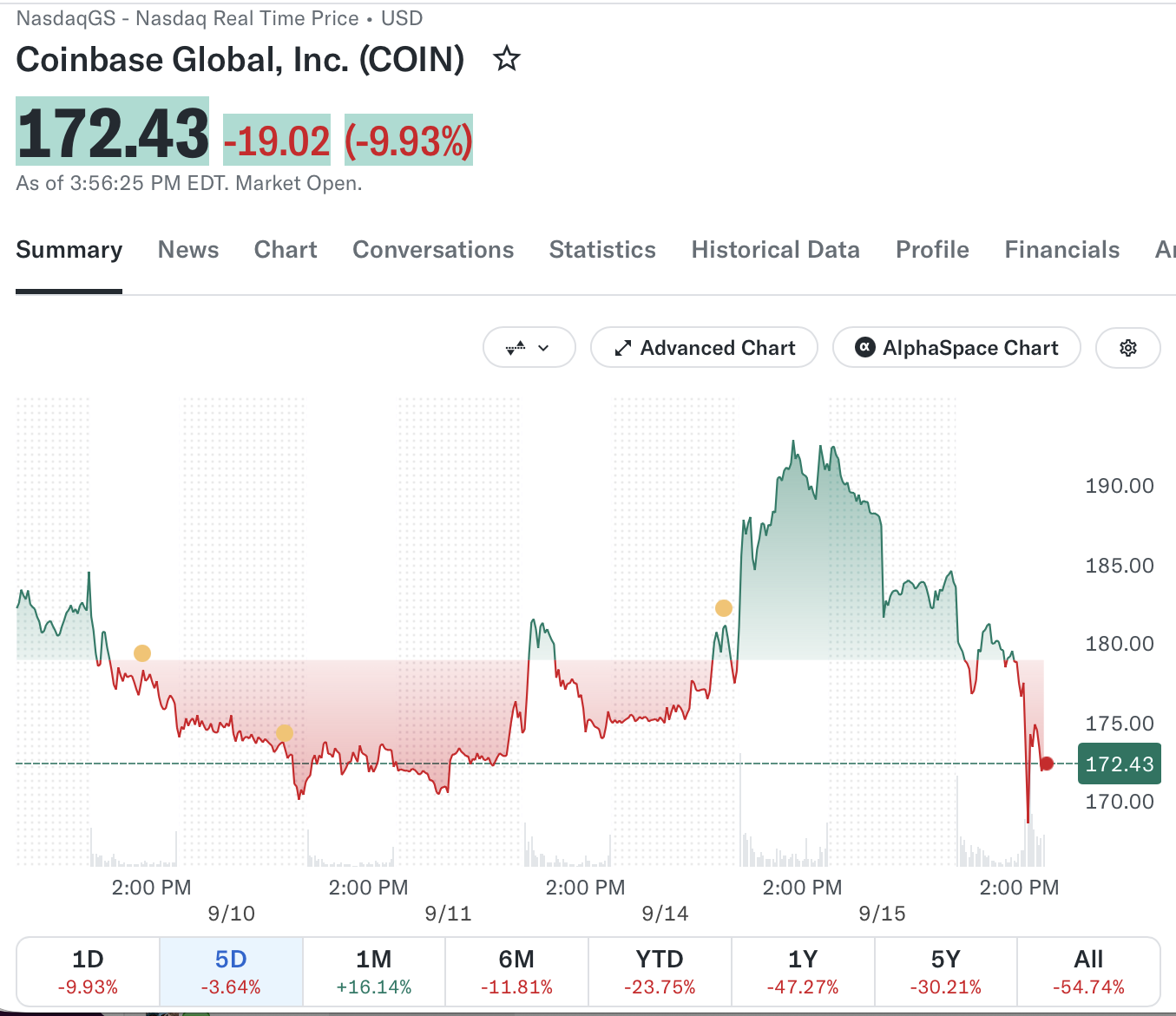
The market’s reaction also highlighted the intertwined fate of crypto assets and the companies that facilitate their use. Coinbase, as a leading exchange, thrives on a vibrant, regulated market where it can list a wide array of digital assets without fear of constant legal challenges over their classification. The lack of clear rules means continued uncertainty over which tokens might be deemed unregistered securities, posing an existential threat to its business model and listing practices. Similarly, Bitcoin treasury companies like American Bitcoin, Strategy, and Strive, whose valuations are heavily tied to their Bitcoin holdings, are impacted by anything that dampens investor confidence in the broader crypto market. Regulatory uncertainty can lead to increased risk premiums, making these companies less attractive to traditional investors. Bitcoin miners, including Riot Platforms and CleanSpark, also suffer from a general downturn in crypto sentiment, as their profitability is directly linked to Bitcoin’s price and network activity, which can be negatively affected by regulatory ambiguity and its potential to deter new capital inflows.
In the aftermath of the failed vote, Michael Saylor, co-founder of MicroStrategy (likely the "Strategy" mentioned in the original text, a prominent Bitcoin treasury company), offered a contrasting, almost defiant, perspective. "The only clarity you need is Bitcoin," he wrote on X. Saylor’s statement encapsulates a segment of the crypto community, particularly Bitcoin maximalists, who believe that Bitcoin’s decentralized nature and robust monetary policy make it inherently superior and less reliant on government-imposed regulations. His comment suggests that true clarity lies in the fundamental properties of Bitcoin itself, rather than in legislative efforts that often struggle to keep pace with technological innovation. This viewpoint, while perhaps not universally held, reflects a frustration with the slow and often contentious nature of traditional legislative processes when applied to novel technologies.
The failure of the CLARITY Act leaves the U.S. at a critical juncture regarding its approach to digital asset regulation. Without a comprehensive federal framework, the industry will continue to navigate a patchwork of state laws and an "enforcement-by-litigation" strategy from federal agencies. This stands in stark contrast to other major global jurisdictions, such as the European Union, which has already enacted the Markets in Crypto-Assets (MiCA) regulation, providing a unified regulatory framework across its member states. The United Kingdom and countries in the Middle East are also actively developing their own clear rules to attract crypto businesses and foster innovation. The U.S. risks falling further behind, potentially driving talent, investment, and innovation overseas. The path forward remains unclear, with possibilities ranging from new legislative attempts in the next Congress, potentially influenced by the midterm election outcomes, to more aggressive rulemaking or enforcement actions by the SEC and CFTC in the absence of congressional guidance. For the crypto industry, the quest for clarity continues, now shrouded in even greater uncertainty.