Faris Adani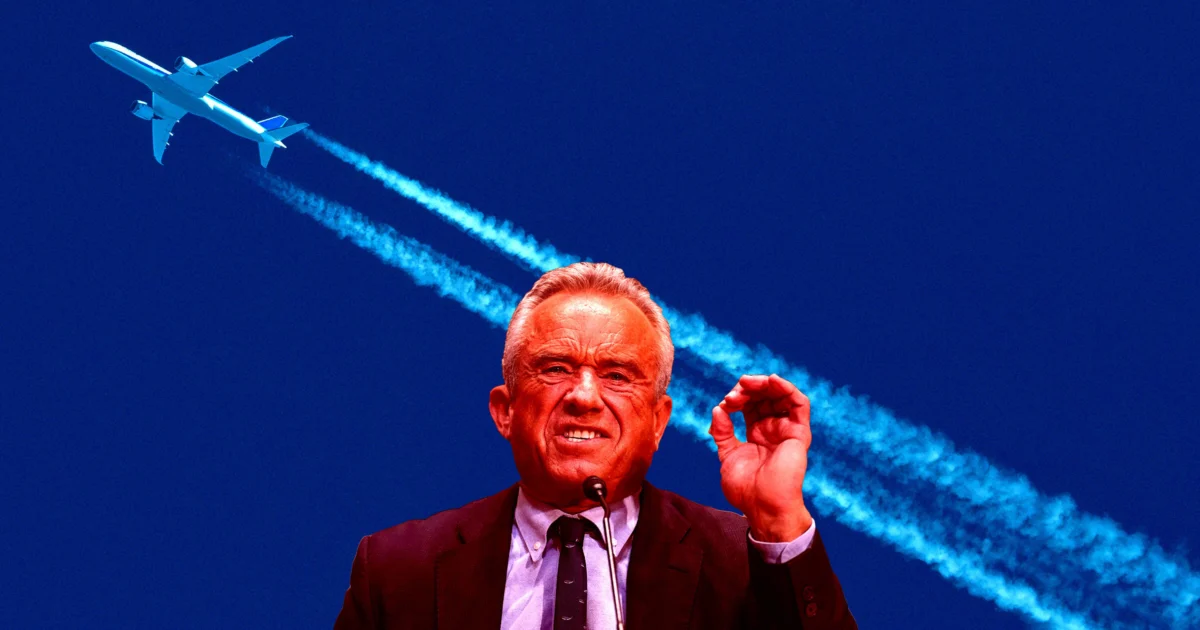
Andrew Harnik/Getty Images/Shutterstock/Futurism
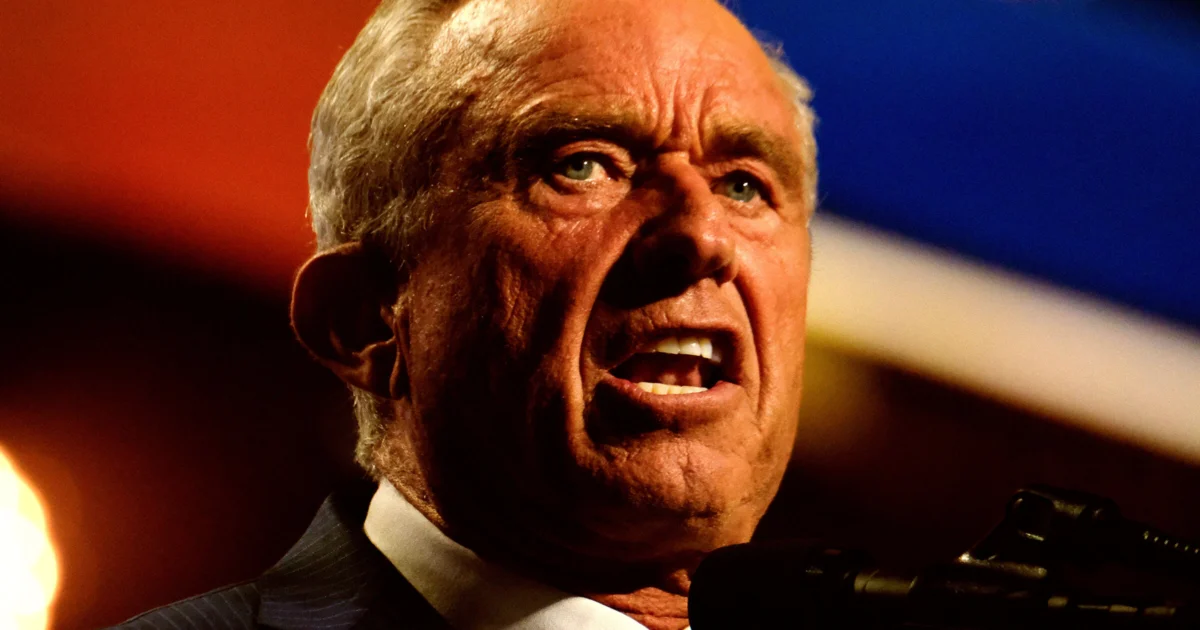
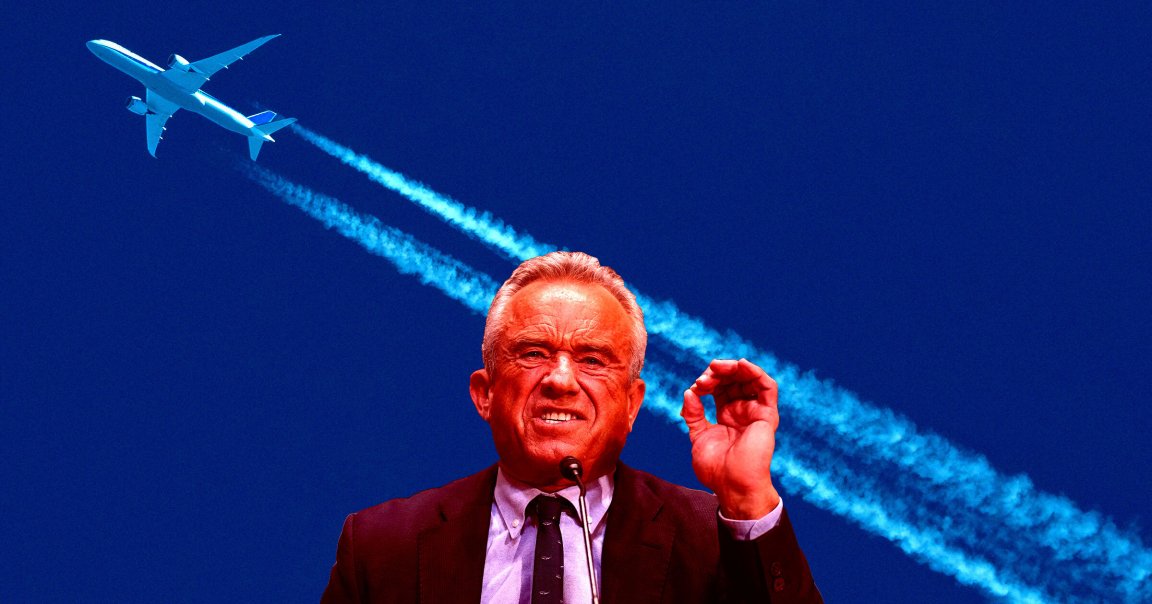
Crowd Cheers as RFK Jr. Says the Government Will Investigate “Chemtrails”. In a move that sent ripples of concern through the scientific community and public health advocates, Robert F. Kennedy Jr., serving as the US Health and Human Services (HHS) Secretary, publicly declared that his department would investigate “chemtrails”—a long-debunked conspiracy theory claiming that aircraft are secretly seeding the skies with chemicals for nefarious purposes like weather modification or population control. This extraordinary announcement was made during a keynote address at the Children’s Health Defense (CHD), an organization he co-founded and which is widely known for its fervent anti-vaccine advocacy. The event itself underscored the brazenness with which Kennedy continues to align himself with fringe theories, even in a high-ranking government position.
Kennedy’s speech at the CHD was, predictably, a mélange of unproven health claims and conspiratorial musings. However, his specific commitment to probe “chemtrails” stood out as particularly alarming. Addressing an applauding audience, Kennedy stated, “We’re also looking at chemtrails at the impact of emissions… Emissions from, um, aircraft, and those potential impacts on health.” This statement, delivered with a characteristic rasp, confirmed suspicions that Kennedy’s role as HHS Secretary would be used to legitimize and amplify baseless theories, rather than champion evidence-based public health initiatives. For many, it represented a “mask-off moment,” revealing the depth of his commitment to narratives far removed from established scientific understanding.
Robert F. Kennedy Jr. has a well-documented history of promoting anti-vaccine sentiments and other conspiracy theories, a trajectory that drew significant controversy during his appointment to lead HHS under the Trump administration. His past rhetoric, often disseminated through his presidential campaign and platforms like the CHD, has consistently challenged mainstream medical consensus. His presence at a CHD event, therefore, was not entirely surprising but nonetheless significant, serving as a powerful endorsement of the very ideologies his office is meant to counteract. Critics argue that his appointment itself signaled a dangerous shift away from scientific integrity in government, and his latest pronouncement only reinforces these fears.
The “chemtrails” conspiracy theory itself emerged in the late 1990s and early 2000s, gaining traction through nascent internet forums and alternative media. Adherents believe that the persistent streaks of white clouds left by aircraft are not simply contrails—condensation trails—but instead are composed of chemical or biological agents deliberately sprayed into the atmosphere. The alleged purposes range wildly, from geoengineering experiments to control weather and climate, to more sinister plots involving mass sterilization, mind control, or the spread of disease for population reduction. Despite these outlandish claims, the theory has a devoted following among those deeply distrustful of government and mainstream science, who often seek simple, albeit incorrect, explanations for complex phenomena.
In stark contrast to this elaborate theory stands the scientific reality of contrails. Contrails are simply clouds formed from the exhaust of jet engines. When hot, humid exhaust gases from aircraft engines mix with the extremely cold, low-pressure air in the upper atmosphere, the water vapor in the exhaust rapidly condenses and freezes, forming visible ice crystals. This process is analogous to seeing one’s breath on a cold day. The appearance and persistence of contrails depend entirely on atmospheric conditions like temperature, humidity, and air pressure. On a dry day, contrails might dissipate quickly; on a humid day, they can linger and spread, sometimes resembling natural cirrus clouds. Atmospheric scientists overwhelmingly agree that contrails are a well-understood meteorological phenomenon, primarily composed of water vapor and carbon dioxide, with no evidence of nefarious chemical seeding. In fact, the Environmental Protection Agency (EPA) formally debunked the “chemtrails” conspiracy theory last year, reaffirming the scientific consensus.
The implications of an official government investigation into “chemtrails” are profound and deeply troubling. Firstly, it lends an undeserved air of legitimacy to a thoroughly debunked conspiracy theory. When a high-ranking public health official, especially one leading the nation’s health agencies, treats such a theory with seriousness, it can embolden believers and sow further doubt among the general public regarding scientific facts. This risks blurring the lines between evidence-based science and speculative fiction, undermining critical thinking and public trust in institutions designed to protect their health.
Secondly, such an investigation would represent a egregious misallocation of precious government resources. The HHS is tasked with addressing real, pressing public health crises, from chronic diseases and mental health issues to emerging infectious diseases and health disparities. Diverting time, money, and personnel to investigate a baseless theory is not only wasteful but actively detracts from the department’s ability to tackle verifiable threats. This decision signals a leadership prioritizing ideological appeasement over responsible governance and evidence-based policy-making.
This move is particularly alarming given the backdrop of actual public health emergencies under Kennedy’s stewardship. The United States is currently grappling with its worst measles outbreak in over three decades. Pennsylvania, in particular, has emerged as an epicenter, recording more than 3,300 cases. This resurgence is almost certainly a direct consequence of declining vaccination rates, fueled in no small part by the anti-vaccine rhetoric that Kennedy and other figures on the political right have aggressively promoted. Compounding this crisis, a scandal is brewing regarding reports that the Kennedy-led Centers for Disease Control and Prevention (CDC) is refusing to count some measles deaths reported by Pennsylvania health officials, raising concerns about potential political interference in data reporting and public health transparency.
While the nation confronts a preventable disease outbreak, struggles with an opioid epidemic, and grapples with the health impacts of climate change, Kennedy’s focus on “chemtrails” appears tone-deaf and irresponsible. It highlights a profound disconnect between the responsibilities of his office and his personal ideological agenda. His “head, in an almost literal sense, in the clouds,” as one observer noted, demonstrates a concerning willingness to chase shadows while urgent, tangible public health crises demand his department’s full attention.
Kennedy’s pledge to investigate “chemtrails” is more than just a peculiar aside; it is a significant political and ideological statement. It underscores his strategy of appealing to a base that thrives on distrust of mainstream institutions and science. By openly embracing and promising to investigate such theories, he further entrenches anti-science sentiment within governmental discourse. This phenomenon is amplified by the current information landscape, where social media readily disseminates and legitimizes conspiracy theories, making it increasingly difficult for evidence-based information to penetrate. The decision to investigate “chemtrails” not only wastes resources but actively undermines the credibility of scientific institutions, fostering an environment where verifiable facts are dismissed in favor of unsubstantiated claims.
In conclusion, the announcement by HHS Secretary Robert F. Kennedy Jr. to investigate “chemtrails” is a deeply concerning development. It represents a worrying legitimization of a baseless conspiracy theory by a senior public health official, diverting critical resources from pressing health challenges. Coming amidst a significant measles outbreak—a crisis directly linked to the anti-vaccine rhetoric he champions—this decision casts a long shadow over the future of evidence-based policymaking in the US. For the sake of public health and scientific integrity, it is imperative that government agencies remain committed to verifiable facts and address real-world problems, rather than indulging in conspiratorial fantasies. The health and well-being of the nation depend on it.