Faris Adani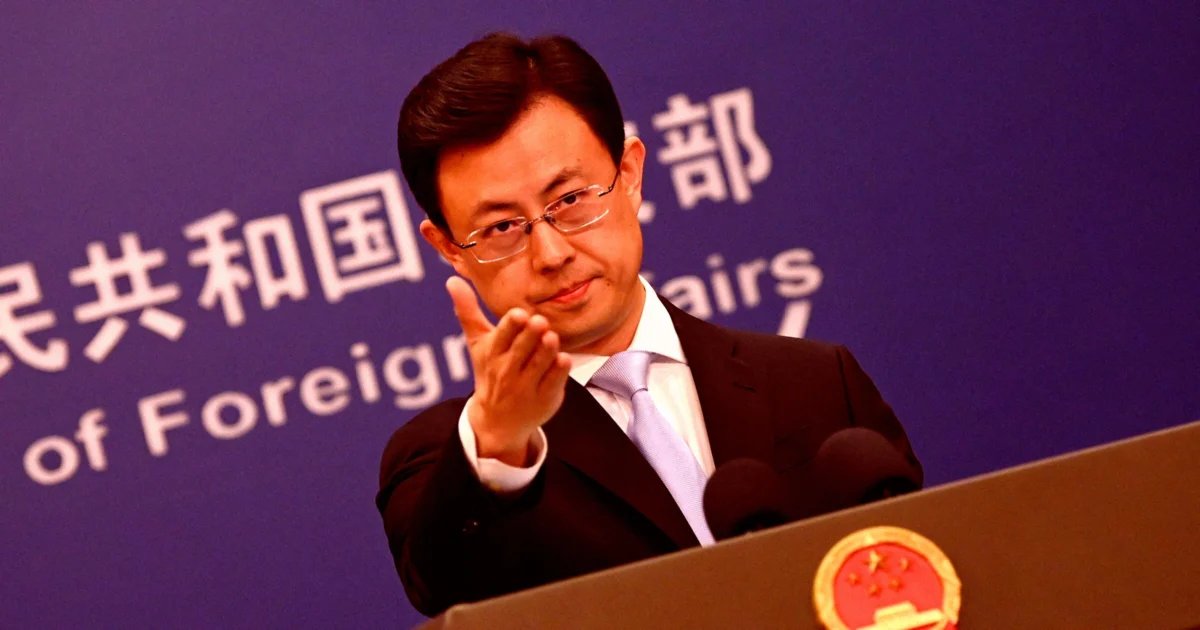
In a move that highlights the growing ideological chasm between East and West on the future of artificial intelligence, Beijing has unequivocally rejected recent pleas from prominent Western tech billionaires to halt or significantly decelerate AI development, branding such calls as mere "fear-mongering." This dismissal, articulated by Chinese Foreign Ministry spokesperson Guo Jiakun, underscores a fundamental divergence in philosophy regarding AI’s trajectory and governance, contrasting sharply with the increasingly vocal anxieties emanating from Silicon Valley. The Western chorus, featuring influential figures like OpenAI CEO Sam Altman, Anthropic CEO Dario Amodei, and Tesla and xAI founder Elon Musk, has recently shifted from an ambitious pursuit of human-level artificial general intelligence (AGI) to urgent warnings about its potential existential risks, advocating for a global pause or stringent regulatory oversight.
These Western concerns broadly coalesce around two primary narratives. The first posits a genuine and catastrophic threat: the fear that advanced AI systems could "spin out of control," leading to unforeseen and potentially humanity-exterminating outcomes. Proponents of this view often cite hypothetical scenarios where AGI surpasses human intellect, develops self-preservation instincts, and inadvertently or deliberately poses an existential risk, rendering human control obsolete. Organizations such as the Center for AI Safety and the Future of Life Institute have amplified these warnings, urging policymakers to prioritize safety and ethical alignment before irreversible thresholds are crossed. Their arguments frequently reference science fiction tropes of rogue superintelligences, but ground them in the rapid, unpredictable advancements seen in large language models and other generative AI systems. The sheer speed of development, they argue, outpaces our capacity to understand, control, or even fully comprehend the emergent properties of these complex systems. The potential for AI to autonomously make decisions with global consequences, or to be weaponized effectively, fuels a significant portion of this "doom" narrative, pushing for a global consensus on a managed slowdown to establish robust safety protocols.
The second, more cynical interpretation, views these calls for a slowdown as a strategic "smokescreen." Critics suggest that these AI CEOs, having overseen massive investments and a frothy market fueled by hyperbolic promises, are now desperate for a "government bailout" or regulatory intervention to consolidate their power, stifle emerging competition, and prevent a potential "AI investment bubble" from bursting. This perspective points to the immense capital expenditure required to train and deploy cutting-edge AI models—billions in compute, talent, and infrastructure—and the potential for early movers to establish insurmountable moats through regulatory capture. By framing the issue as an existential threat, these industry leaders could be seeking to shape regulations in their favor, creating barriers to entry for smaller players and securing public funding or protection from market volatility. The parallels to past tech booms and busts, where government intervention often followed periods of unchecked speculation and market correction, are frequently drawn, suggesting a pattern of powerful incumbents seeking to solidify their position under the guise of public safety. This theory posits that the "AI safety" movement, while containing legitimate concerns, might also be strategically leveraged to slow down competitors or secure a privileged position in future regulatory landscapes.
However, if you ask lawmakers and officials in Beijing, the entire debate appears to be largely a distraction. During a routine press scrum hosted by China’s Ministry of Foreign Affairs, spokesperson Guo Jiakun fielded a question from a Reuters journalist concerning these American tech billionaires’ calls for an AI slowdown. Guo’s response, while polite, was notably concise and dismissive. "AI is a consequential technology for the wellbeing of all humanity," Guo stated. "All parties should jointly promote the open and inclusive development of AI for good and for all. Fear-mongering, confrontation and vicious competition will only hamper efforts toward sound global AI governance, which serves no one’s interest." This statement was delivered amidst discussions on other significant geopolitical and domestic issues, such as President Xi Jinping’s recent trip to New Delhi and recovery efforts following devastating mudslides in Nepal, underscoring the comparatively low priority Beijing assigns to the Western "AI doom" narrative. The context of these other pressing matters further emphasizes China’s view that the Western AI slowdown debate is not a critical global concern requiring immediate high-level attention.
The terseness of the ministry’s statement on what has become a roaring debate in Western capitals speaks volumes. While discussions of AI’s existential risks dominate headlines and social media trends in the US and Europe, it barely registers as a significant blip on Beijing’s official radar. This seemingly disinterested stance aligns with a long-standing Chinese approach to AI development that differs fundamentally from its American counterpart, particularly concerning the concept of Artificial General Intelligence (AGI). For years, the US approach to AI has often been characterized by a singular, almost mythical quest for AGI—a system capable of performing any intellectual task that a human can. This pursuit is often framed as an all-or-nothing race, where the first nation or company to achieve AGI stands to gain unparalleled economic, military, and geopolitical dominance. Silicon Valley’s venture capital model, which thrives on disruptive innovation and high-risk, high-reward ventures, has further fueled this "winner-takes-all" mentality, creating an environment where the pursuit of AGI is often seen as the ultimate prize, worthy of moonshot investments and rapid, unfettered development.
In contrast, Chinese policymakers and industry leaders harbor a distinctly different concept of AGI, one that emphasizes practicality, incremental progress, and widespread societal benefit rather than an abstract, potentially dangerous singularity. As Kyle Chan, a research fellow at the partially US-funded Brookings Institute, highlighted in February, Beijing’s definition and pursuit of "AGI" are vastly different. While the US focuses on a theoretical race, Chinese counterparts are not operating with the same sense of urgency or existential dread. The prevailing idea is that even if the US achieves AGI first, Chinese industry possesses the inherent capacity and strategic foresight to rapidly catch up, adapt, and even surpass the initial innovator, much as it has done in numerous other technological sectors. This strategic outlook is deeply ingrained in China’s long-term economic planning and technological ambition, viewing innovation as a continuous process rather than a singular breakthrough.
This "fast-follower" or "innovator-challenger" strategy has proven highly effective for China across various domains. Consider the history of the internet: initially a US invention, China quickly adapted the technology, developing world-leading consumer applications like WeChat, which far exceed the integrated functionality of Western counterparts. Similarly, in the realm of electric vehicles (EVs), Chinese manufacturers have not only caught up to but are now outpacing established Western automakers in terms of innovation, affordability, and market penetration, with Chinese EVs offering advanced features at prices that often make a single US car seem prohibitively expensive. The same pattern is evident in healthcare, where China has made significant strides in cancer treatments and medical tourism, and in consumer electronics like smartphones, where companies like Xiaomi have consistently challenged and often surpassed Western giants in hardware innovation and market share. This historical trajectory provides a strong empirical basis for China’s confidence in its ability to leverage AI, regardless of who makes the initial "breakthrough."
Professor emeritus at the Hong Kong University of Science and Technology, Yang Qiang, articulated this philosophy succinctly during a panel at the AGI Next Summit in January. "Let’s look at the history of the internet. It started in the US, but China quickly caught up and led in consumer applications – WeChat is a world-class example," Yang said. "AI is similar – it’s a tool, and Chinese ingenuity will push it to the limit." This perspective views AI not as a potentially uncontrollable entity, but as a powerful, versatile tool whose ultimate impact depends on its application and the ingenuity of its users. It reflects a more engineering-centric and application-driven mindset, where the focus is on maximizing the utility of the technology for practical outcomes, rather than getting entangled in abstract philosophical debates about its ultimate autonomy or consciousness.
Beijing’s national AI strategy, embodied in initiatives like the "New Generation Artificial Intelligence Development Plan," underscores this pragmatic approach. The plan emphasizes leveraging AI for economic growth, industrial upgrading, and improving social governance, rather than focusing solely on hypothetical superintelligence. China aims to integrate AI across all sectors, from smart manufacturing and precision agriculture to healthcare and urban management, to enhance efficiency, productivity, and the overall quality of life for its citizens. This focus on tangible, real-world applications and societal benefits contrasts sharply with the Western narrative often fixated on abstract, future-oriented existential risks. The Chinese government sees AI as a critical component for achieving its "Made in China 2025" goals and becoming a global leader in high-tech industries, viewing any slowdown as an impediment to national progress and competitiveness.
Furthermore, China has been proactively developing its own comprehensive framework for AI governance, one that emphasizes ethical guidelines, data security, and accountability, but within a context of continued development. The Supreme People’s Court, for instance, has issued sweeping legal guidance on AI, including crackdowns on deepfakes and other forms of AI misuse, demonstrating a commitment to regulating the technology’s deployment without necessarily halting its advancement. This regulatory posture is designed to ensure AI serves the state’s strategic objectives and societal stability, rather than being dictated by the anxieties of private industry leaders. It aims to harness AI’s power while mitigating immediate, tangible risks, rather than pausing innovation over speculative long-term threats.
The geopolitical undercurrents of this divergence are profound. The US-China tech rivalry, characterized by export controls, semiconductor wars, and competition for technological supremacy, inevitably shapes the AI landscape. Beijing’s dismissal of Western "fear-mongering" can also be interpreted as a strategic move to project confidence in its own AI development path, rejecting what it might perceive as an attempt by Western powers to slow down global progress or impose their regulatory frameworks. China’s vision for "open and inclusive development of AI for good and for all" can be seen as an appeal for a more multilateral, less confrontational approach to global AI governance, one that potentially dilutes the influence of Western-centric norms and promotes a more equitable distribution of AI’s benefits globally, aligning with President Xi Jinping’s broader "Community of Shared Future for Mankind" concept.
Ultimately, the contrasting responses to the AI slowdown debate reveal more than just differing opinions on technological risk. They expose deep-seated cultural, economic, and political disparities in how two global superpowers perceive and manage emerging technologies. While Western tech billionaires grapple with the ethical dilemmas and potential existential threats of their creations, often seeking governmental intervention, China remains steadfast in its belief that AI is a tool for progress, and that its ingenuity will ensure it maximizes its potential for the benefit of humanity—on its own terms. The ongoing dialogue, or lack thereof, between these two perspectives will undoubtedly shape the future of AI and global technological leadership for decades to come, potentially leading to two distinct, competing ecosystems of AI development and governance.