anjir abdul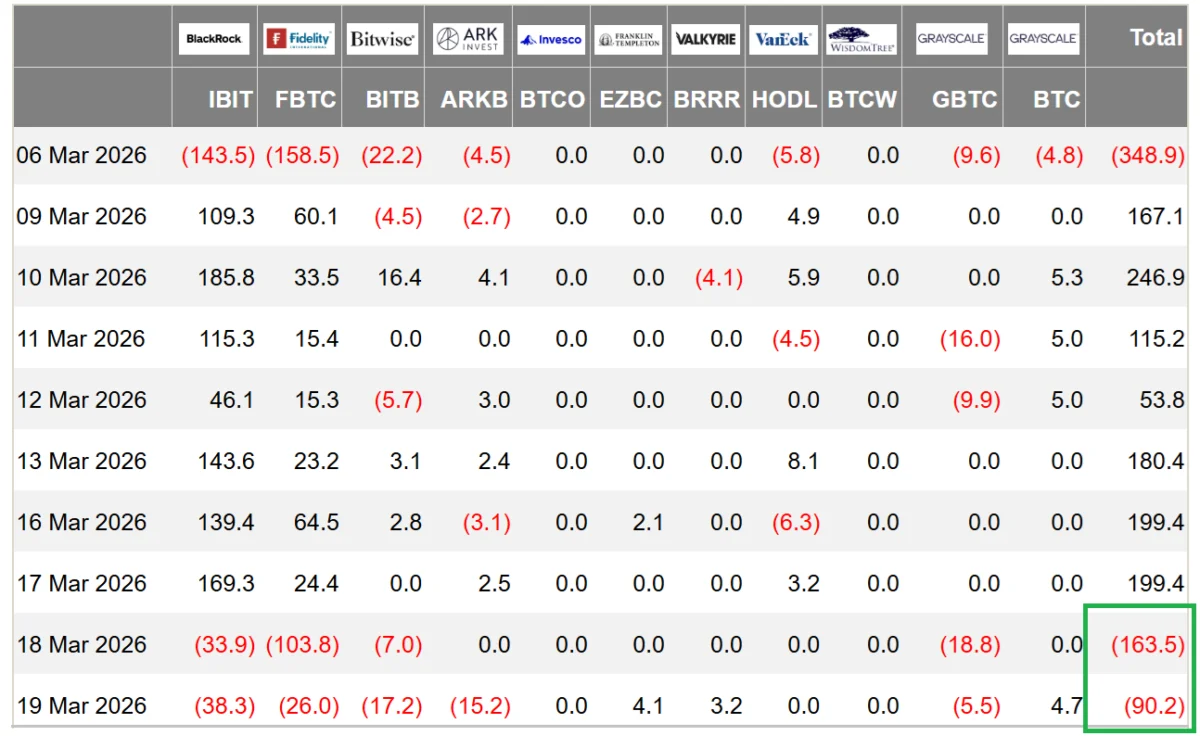
The recent behavior of Bitcoin’s price, oscillating around $70,000, suggests a battle between buying and selling pressure, with bulls struggling to push beyond key resistance levels. The failure to decisively break above $75,000 on Tuesday was a significant technical setback, indicating that upward momentum is either weakening or encountering substantial selling interest at higher valuations. This price action is further underscored by the shifting sentiment observed in the nascent but influential US spot Bitcoin ETF market. After an initial period of robust inflows following their launch, these funds have become a crucial barometer for institutional appetite for Bitcoin. The abrupt cessation of inflows, culminating in two days of net outflows, directly contradicts the previously established bullish trend and raises questions about sustained institutional conviction. This reversal of fortunes in the ETF space, which had been a significant driver of Bitcoin’s rally earlier in the year, suggests a more cautious approach from large-scale investors who might be de-risking their portfolios in response to prevailing market uncertainties. The fact that this occurs amidst broader signs of weakness in the US stock market, often a bellwether for risk sentiment, only compounds the apprehension, leading many to question the immediate future trajectory of the cryptocurrency.

The palpable bearish sentiment permeating global markets is exerting considerable downward pressure on Bitcoin, a phenomenon evidenced by the S&P 500’s recent plunge to its lowest level in six months. Even gold, traditionally revered as a quintessential safe-haven asset, faced an unexpected and substantial 10% sell-off over a mere three days, a rare occurrence that underscores the extreme level of risk aversion gripping investors. As the escalating geopolitical tensions stemming from the US and Israel-Iran conflict trigger a widespread flight from risk, the repercussions are clearly manifesting in Bitcoin derivatives data, which now starkly reflect an increasing tide of fear among traders. The ongoing conflict, while geographically distant for some, sends ripples across global economies, affecting everything from oil prices to supply chains and investor confidence. This heightened uncertainty makes investors less willing to hold speculative assets, leading to a scramble for liquidity and a general de-risking strategy that impacts even assets like gold, which typically thrive in turbulent times. For Bitcoin, which has increasingly become intertwined with traditional financial markets, this environment is particularly challenging, as its volatility is amplified by the prevailing market anxiety.
A closer examination of Bitcoin derivatives, specifically options trading on Deribit—one of the largest cryptocurrency options exchanges—reveals a telling shift in market sentiment. On Friday, the demand for put (sell) Bitcoin options premiums was nearly 2.5 times greater than that for equivalent call (buy) instruments. This significant imbalance indicates a pronounced increase in demand for neutral-to-bearish strategies, where traders are either hedging against potential price drops or outright betting on a decline. Put options confer the right, but not the obligation, to sell an asset at a predetermined price by a certain date, making them a popular tool for downside protection. The overwhelming preference for puts over calls, which grant the right to buy, suggests a collective market expectation of downward pressure on Bitcoin’s price. This isn’t an isolated incident; a similar surge in this metric was observed earlier on February 27, following reports that Iran had rejected negotiations aimed at dismantling its key nuclear facilities and exporting its enriched uranium. This historical precedent underscores how closely Bitcoin’s derivative market sentiment is tied to geopolitical developments, particularly those involving Iran, as such events often trigger waves of uncertainty and risk aversion across global financial landscapes. The consistent pattern suggests that geopolitical instability acts as a direct catalyst for increased hedging and bearish positioning within the crypto options market.

To precisely confirm whether this heightened demand for put options is indeed being utilized for downside protection rather than speculative bearish bets, analysts often turn to the delta skew metric. The delta skew serves as a crucial indicator of market makers’ sentiment and the relative pricing of out-of-the-money put versus call options. When market makers perceive an imminent risk of a Bitcoin price correction, they demand a higher premium for put options relative to equivalent call instruments. This translates to a delta skew reading of 6% or higher, signifying that protection against downside movement is becoming more expensive and sought after. Conversely, periods characterized by robust bullish sentiment tend to push this indicator below -6%, as traders are more willing to pay for upside exposure. On Friday, the Bitcoin 30-day options delta skew (put-call) on Deribit stood at a significant 16%. This elevated reading unequivocally signaled that professional traders were far from comfortable with the $69,000 support level holding firm. While this level of skew, though high, was still distant from the extreme panic levels witnessed in late February, the current conditions nonetheless vividly reflect the stress induced by Bitcoin’s 21% price drop over the preceding three months. This decline contrasts sharply with the relatively steady performance of gold and the US stock market during the same period, further highlighting Bitcoin’s particular vulnerability to the current macro environment and the anxiety gripping its professional trading cohort.
Adding to the growing trepidation is the palpable frustration among traders regarding Bitcoin’s notable underperformance relative to traditional financial assets. Over the past three months, Bitcoin has lagged the S&P 500 by a significant 17%, a stark comparison that challenges its narrative as a resilient or uncorrelated asset. While the S&P 500 and gold have either held relatively steady or seen modest gains, Bitcoin has endured a painful 21% price drop. This divergence is particularly concerning for investors who might have viewed Bitcoin as a hedge against inflation or a "digital gold" in times of geopolitical instability. The recent rally to $75,000 on Tuesday, which might have offered a glimmer of hope, was ultimately unable to meaningfully shift the sentiment in Bitcoin options markets. This lack of response from derivatives traders, despite a brief price surge, serves as a powerful indicator that professional investors remain overly cautious, refusing to abandon their defensive postures even in the face of short-term positive price action. This persistent skepticism suggests that the underlying concerns, primarily macroeconomic and geopolitical, are too deeply entrenched to be swayed by fleeting market movements, highlighting a broader lack of conviction in Bitcoin’s immediate upward trajectory.

The prevailing pessimism can, in large part, be attributed to a significant surge in energy prices, a direct consequence of the escalating geopolitical tensions. WTI oil prices have remarkably sustained levels above $94 per barrel since March 12, marking an alarming 50% increase compared to the prior month. This dramatic rise is directly linked to the disruption of oil and gas production and logistics in the Middle East, a region critical to global energy supplies, exacerbated by the ongoing conflict. Such disruptions inevitably cast a long shadow over economic growth expectations worldwide. High energy costs translate into increased operational expenses for businesses and higher living costs for consumers, dampening overall economic activity. More critically, the sustained surge in fuel prices severely limits the ability of the US Federal Reserve to implement interest rate cuts. The Fed’s dual mandate of maintaining price stability and achieving maximum employment means that persistent inflationary pressures, largely fueled by expensive energy, constrain its capacity to ease monetary policy. Higher interest rates, or the expectation of them remaining elevated for longer, typically act as a significant headwind for risk assets like Bitcoin, as they increase the cost of capital and make safer investments more attractive.
The economic fallout from surging energy prices extends beyond the direct costs. A recent analysis by Oxford Economics has issued a stark warning that the fuel price surge is expected to cause consumers to significantly pull back on spending. This reduction in discretionary income and consumer confidence can lead to a slowdown in economic growth, affecting various sectors from retail to services. Furthermore, the analysis highlighted that US manufacturers heavily reliant on imports would also be profoundly impacted. Increased shipping costs and potential supply chain disruptions, stemming from the Middle East conflict, are likely to cause further price increases for goods and, in worst-case scenarios, lead to "outright shortages of some products," as reported by Yahoo Finance. These broader economic consequences create a climate of uncertainty and inflationary pressure, forcing central banks globally to grapple with the difficult choice between combating inflation and supporting economic growth. For Bitcoin, which often thrives in periods of easy money and robust economic expansion, this environment of tightening liquidity and economic deceleration presents formidable challenges.

Ultimately, while the mere $254 million in net outflows from US spot Bitcoin ETFs over two days may not be a definitive sign of institutional investors flipping entirely bearish, it is an undeniable indicator of caution and de-risking. Traders are clearly not confident that the $68,000 level for Bitcoin will hold amidst the prevailing market anxieties. The overarching sentiment in the cryptocurrency market has been profoundly shaped by a confluence of worsening macroeconomic conditions, including persistent inflation and the specter of higher interest rates, alongside the acute uncertainty unleashed by the prolonged and escalating geopolitical conflict involving Iran. These powerful forces have collectively driven a significant increase in demand for downside protection strategies, as evidenced by the robust activity in Bitcoin derivatives markets. In an environment fraught with so many variables, from central bank policy to geopolitical flashpoints, investors are prioritizing capital preservation, signaling a period where prudence trumps aggressive risk-taking in the volatile world of digital assets.