anjir abdul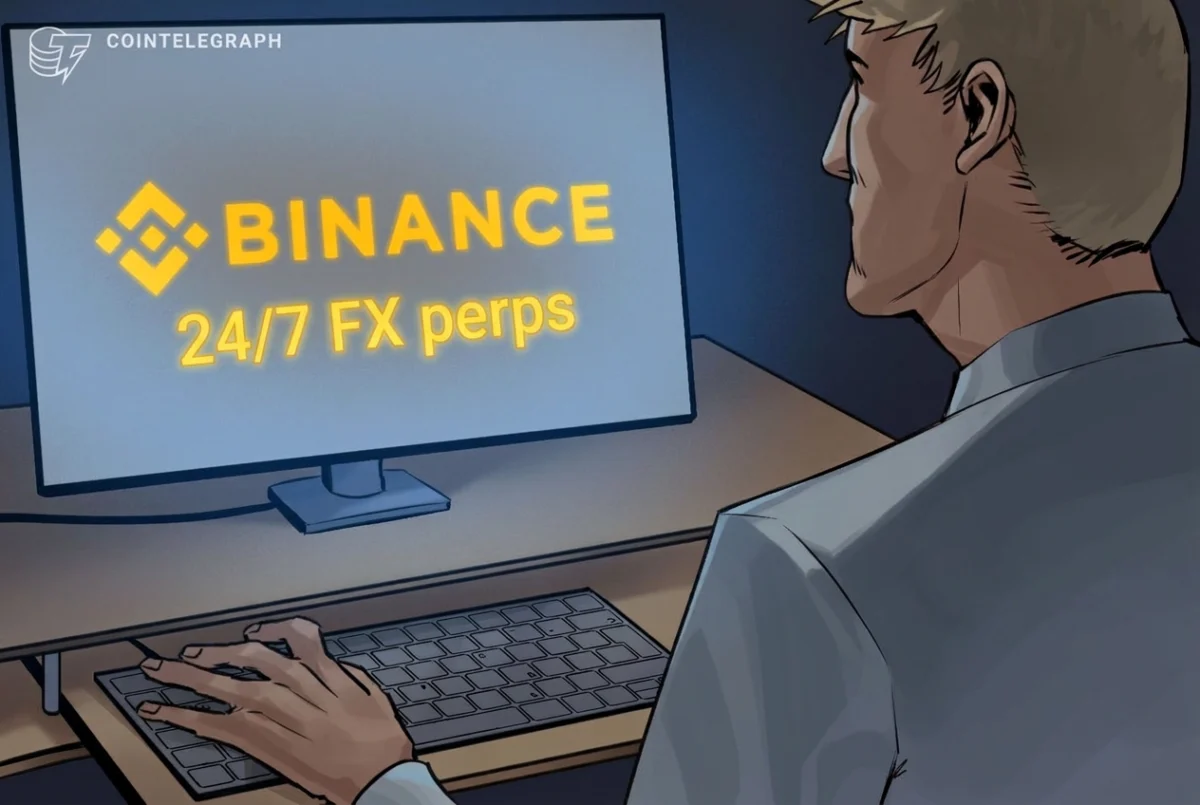
Unlike conventional FX markets, which operate within specific weekday hours and observe weekend closures, Binance’s innovative contracts are designed to trade continuously, mirroring the always-on nature of cryptocurrency markets. This continuous operation is facilitated by a sophisticated dual-mode pricing system, engineered to provide robust and fair valuations regardless of traditional market holidays or weekend breaks. During regular foreign exchange trading hours, the pricing mechanism will dynamically track a weighted index derived from a consortium of reputable third-party data providers, ensuring accuracy and alignment with established global benchmarks. However, when traditional FX markets close their doors for weekends or public holidays, Binance will seamlessly transition to an orderbook-based pricing mechanism, maintaining uninterrupted trading and price discovery.
The inaugural USDBRLUSDT contract is scheduled to go live on September 21st, settling in Tether (USDT), the widely used stablecoin, and offering an impressive leverage of up to 100x. This high leverage is a hallmark of crypto derivatives markets, appealing to traders seeking magnified exposure to price movements. Binance’s official announcement on Friday elaborated on the unique weekend pricing system, clarifying that it utilizes an exponentially weighted moving average of orderbook prices. This method is crucial as it allows the platform to generate its own reliable price feeds during periods when external, traditional market data is unavailable, thereby mitigating reliance on potentially stale or non-existent external sources.
Shunyet Jan, the Head of Trading at Binance, articulated the strategic intent behind these new contracts, emphasizing their role in extending price discovery beyond the confines of traditional FX trading hours. Jan highlighted that this initiative provides traders with an invaluable venue to hedge existing positions or to proactively take new positions around the clock, offering unprecedented flexibility and responsiveness to global macroeconomic events. This move is not merely about offering a new product; it’s about reimagining how foreign exchange can be accessed and traded in an increasingly interconnected and digital world.
Binance’s entry into the FX perpetuals market is not an isolated event but rather indicative of a burgeoning trend within the cryptocurrency exchange ecosystem. Less than two weeks prior to Binance’s announcement, competitor Bybit also expanded its traditional finance (TradFi) offerings, launching 24/7 perpetuals tracking major currency pairs such as EUR/USD, GBP/USD, and USD/JPY. Like Binance’s offering, Bybit’s contracts also settle in USDT and provide up to 100x leverage, signaling a clear competitive landscape and a shared vision among leading crypto platforms.
Other prominent crypto exchanges had already ventured into the foreign exchange arena even earlier. Kraken, a well-established player in the crypto space, introduced FX perpetuals tracking a diverse basket of currencies – including the euro, British pound, Australian dollar, Japanese yen, and Swiss franc – in April 2025, albeit with a more conservative leverage of up to 50x. Kraken’s engagement with FX is not new; the exchange had been offering spot FX trading since 2020 and reported a substantial $5.7 billion in FX spot volume during the first half of 2025, demonstrating the existing demand for currency trading within the crypto-native user base.
The introduction of these products by major crypto exchanges offers crypto traders a compelling avenue to gain exposure to global currency movements without the necessity of owning the underlying fiat currencies directly. This innovation taps into the immense liquidity and volatility of the foreign exchange market, which stands as the largest financial market globally, dwarfing all other asset classes. According to a comprehensive report from the Bank for International Settlements (BIS), global over-the-counter (OTC) FX turnover averaged an staggering $9.6 trillion per day in April 2025. This sheer scale underscores the monumental opportunity and potential impact of crypto exchanges democratizing access to this market.
For Binance, a company that has consistently pushed the boundaries of what a crypto exchange can be, this move into FX derivatives is a logical progression. It diversifies their product suite beyond purely crypto-to-crypto trading, attracting a broader demographic of traders who may be familiar with traditional finance but are also comfortable with the technological infrastructure and 24/7 nature of crypto platforms. The choice of the USDBRL pair as the inaugural contract is also noteworthy. Brazil represents a significant emerging market with a rapidly growing crypto adoption rate and a dynamic economic landscape, making the Brazilian Real a relevant and active currency for many traders, particularly those looking to hedge against local currency fluctuations or speculate on cross-border economic trends.
The dual-mode pricing system is a particular highlight of Binance’s offering. The reliance on a weighted index from third-party providers during traditional market hours ensures that prices reflect the broad consensus of institutional and interbank trading, fostering confidence and accuracy. The transition to an orderbook-based, exponentially weighted moving average during off-hours is a clever engineering solution to a fundamental challenge in bridging TradFi and crypto. It allows for continuous price discovery by synthesizing the collective bids and offers within Binance’s own liquidity pools, dynamically adjusting to demand and supply imbalances. While such a system might face unique liquidity challenges during extreme off-hours compared to the depth of the interbank market, it offers a pragmatic solution for continuous trading where traditional feeds cease. This mechanism also opens up potential arbitrage opportunities for sophisticated traders who can monitor discrepancies between Binance’s internal pricing and any residual, albeit thinly traded, external markets.
The implications of 100x leverage are significant. While it offers the potential for substantial gains on small price movements, it also carries commensurate risks, making these products suitable primarily for experienced traders with a robust understanding of market dynamics and risk management. The settlement in USDT further integrates these FX products into the crypto ecosystem, allowing traders to manage their positions and capital entirely within a stablecoin framework, bypassing the complexities and delays often associated with traditional fiat deposits and withdrawals.
The broader trend of crypto exchanges expanding into traditional financial instruments signifies a maturing industry eager to demonstrate its capabilities beyond speculative digital assets. It positions these platforms not just as gateways to cryptocurrency, but as comprehensive financial service providers that can offer derivatives on a wide range of assets. This convergence is driven by several factors: the advanced technological infrastructure developed for crypto trading (24/7, high throughput, low latency), the existing global user base, and the potential to capture a slice of the enormous traditional markets. For crypto exchanges, this means new revenue streams and increased user engagement. For traditional finance, it represents a challenge and an opportunity to observe how digital-native platforms can innovate on established market structures.
Ultimately, Binance’s launch of 24/7 FX perpetual futures with an intelligent weekend pricing system is more than just a new product offering. It is a testament to the ongoing evolution of financial markets, where the efficiency, accessibility, and innovation inherent in the crypto space are increasingly being applied to traditional asset classes. This move not only provides enhanced tools for traders but also sets a precedent for how global currencies can be traded in an always-on, digital-first economy, further blurring the lines between what was once considered "crypto" and "traditional" finance.