Imroatul Nasiyah
Physicists have employed an ordinary computer, sophisticated mathematical frameworks, and specialized software to conquer a formidable quantum physics problem previously deemed intractable for classical machines. This groundbreaking achievement, detailed in the journal Science, challenges the notion that certain complex quantum simulations are exclusively the domain of quantum computers. The research, a collaborative effort between the Center for Computational Quantum Physics (CCQ) at the Simons Foundation’s Flatiron Institute and researchers at Boston University, has demonstrated that by extracting greater computational power from conventional hardware, scientists can significantly expand the scope of quantum dynamics problems they can investigate. This innovative approach also holds promise for tackling optimization challenges where identifying the optimal solution among a vast array of possibilities is paramount.
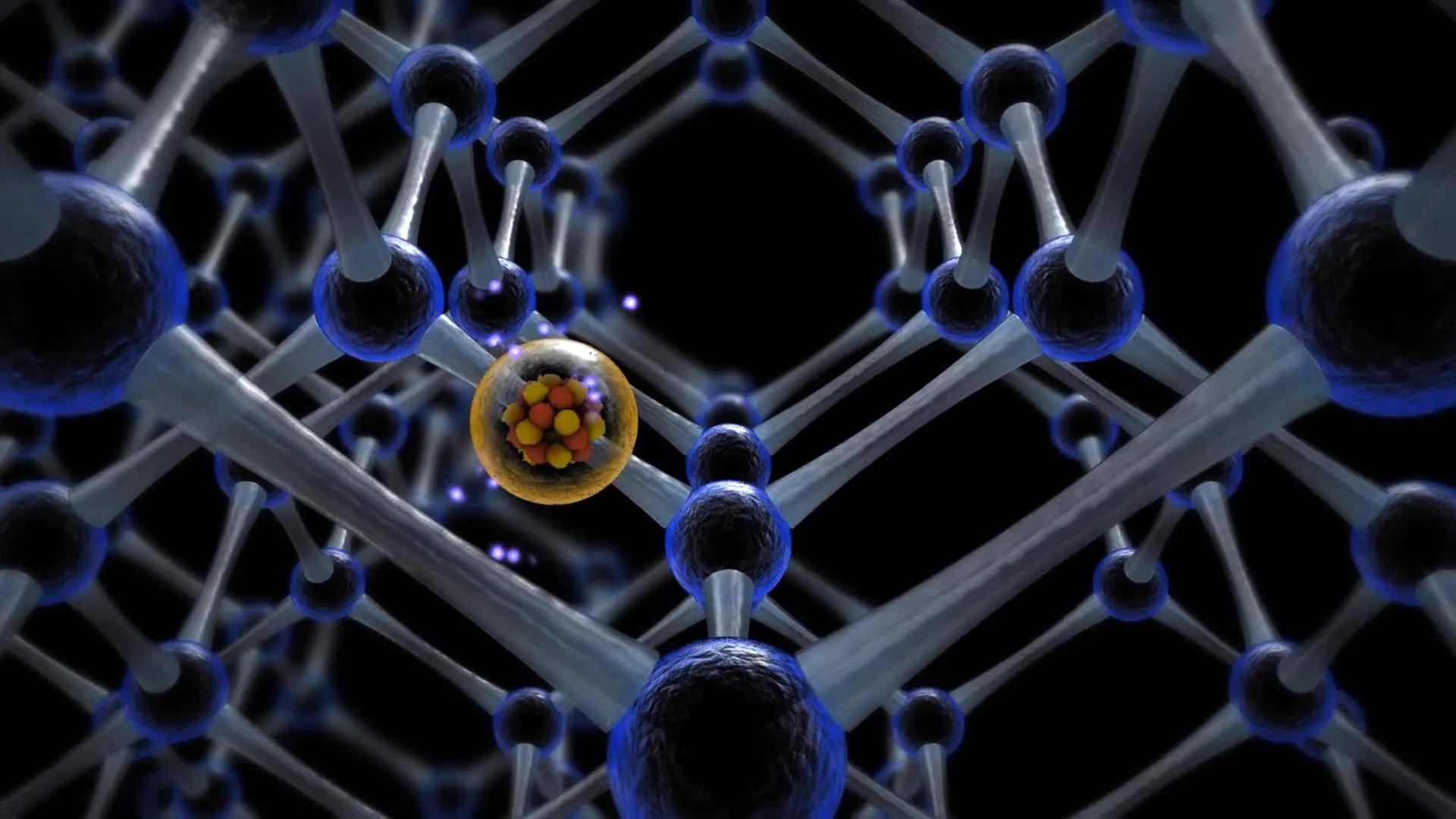
The core of the challenge lay in accurately modeling hundreds of interacting ‘qubits’ – the quantum mechanical equivalents of the bits that underpin classical computing. These qubits were meticulously arranged in various lattice structures, including squares, cubes, and diamonds. Unlike classical bits, which exist in a binary state of either 0 or 1, qubits possess the remarkable ability to exist in a superposition of multiple states simultaneously. This inherent quantum property, while responsible for the extraordinary capabilities of quantum systems, renders their behavior incredibly difficult to replicate on conventional, non-quantum computers. The difficulty is compounded by the phenomenon of quantum entanglement, where the fates of multiple qubits become inextricably linked, regardless of their physical separation. This interconnectedness means that qubits cannot be modeled in isolation; instead, the entire entangled system must be described by a single, overarching mathematical entity.
This overarching entity is known as the "wave function," a complex mathematical object that encapsulates all the information necessary to describe the quantum state of a system. However, the wave function’s size grows exponentially with the number of particles involved. For systems comprising hundreds of interacting qubits, this exponential growth results in a wave function so astronomically large that it simply cannot be stored or processed by even the most powerful classical computers. This challenge of managing immense wave functions is a persistent hurdle in quantum physics, yet such calculations are critical for predicting the behavior of vital quantum materials, including superconductors, which hold the key to energy-efficient technologies.
The researchers at CCQ and Boston University circumvented this seemingly insurmountable obstacle through the ingenious application of tensor networks. These advanced mathematical structures act as powerful compression tools, allowing the vast information contained within a wave function to be condensed into a more manageable form. Joseph Tindall, an associate research scientist at the CCQ and the lead author of the Science paper, likens this process to creating a "zip file for the wave function," where the intricate data is compressed into interconnected tables of numbers. This compression technique made it feasible to simulate the complex quantum system on classical hardware. Remarkably, Tindall was able to perform many of the initial calculations on a personal laptop, leveraging ITensor, a high-performance tensor network software library developed at the CCQ.
This pioneering work also highlights the evolving capabilities of ITensor in adapting tensor techniques for novel problem domains. In this specific instance, the researchers successfully modeled three-dimensional quantum dynamics by employing a 3D tensor network. Tindall acknowledges the complexity of these mathematical objects, stating, "This really is a bit of a frontier, because working with these objects – especially in three dimensions – is very untrodden. You need sophisticated codes and algorithms to deal with them; it’s a software engineering challenge in itself."
The simulations, while requiring sophisticated algorithms, often utilized relatively modest computing resources. For the early stages of their computations, Tindall employed a technique called belief propagation. This algorithm, originally developed in the 1980s, has recently been ingeniously adapted for quantum systems by researchers. Miles Stoudenmire, a co-author on the paper and a research scientist at the CCQ, explains the advantage of this approach: "It’s a little more approximate than some of the other methods, but it’s way cheaper, and we can run it much more directly on lots of harder problems." He contrasts this with older, more sophisticated methods that would have been incapable of even initiating calculations for such large, three-dimensional problems.
Despite the use of conventional hardware and an older algorithm, the accuracy of the results achieved state-of-the-art levels. The simulations produced solutions that were in strong agreement with theoretical predictions and performed exceptionally well on smaller, benchmark problems where the correct answers were already known. Most significantly, the outcomes of these classical simulations mirrored those previously obtained using a quantum computer, demonstrating that the same scientific insights could be gleaned without the need for specialized quantum hardware.
This breakthrough adds a crucial layer to the ongoing discourse surrounding the demarcation between classical and quantum computing capabilities, particularly in the realm of "quantum advantage." However, Tindall and Stoudenmire are keen to emphasize that these two fields are not in direct competition but rather exhibit a profound synergy. Classical simulations, like the one they have pioneered, can serve as invaluable tools for understanding the potential of quantum computers. Conversely, advancements in quantum hardware can inspire the development of novel classical computational methods.
Tindall elaborates on this symbiotic relationship: "The good side of the classical versus quantum computing debate is that there’s a lot of synergy between the kind of simulations we’re interested in and the codes we write and what can be realized on these quantum computers. That can help guide us, and it can also help guide quantum computing researchers, because, obviously, the barrier for entry for us to simulate certain things is a lot easier than for them, because we don’t have to build a quantum computer. I can just write some code and press ‘run’ on my personal computer."
Looking ahead, the researchers are already setting their sights on even more challenging simulations. Their next ambitious goal is to develop methods capable of modeling electrons that can move freely between different sites – a significantly more complex problem than simulating static qubits. These systems are intrinsically more difficult to simulate but are also directly relevant to understanding the behavior of real-world quantum materials. "They’re really, quantitatively, a lot harder problems," Stoudenmire states. "So that’s one of our next big bars that we want to clear." This continued pursuit underscores the dynamic and evolving nature of computational physics, where innovation on classical platforms continues to push the frontiers of scientific discovery.