anjir abdul
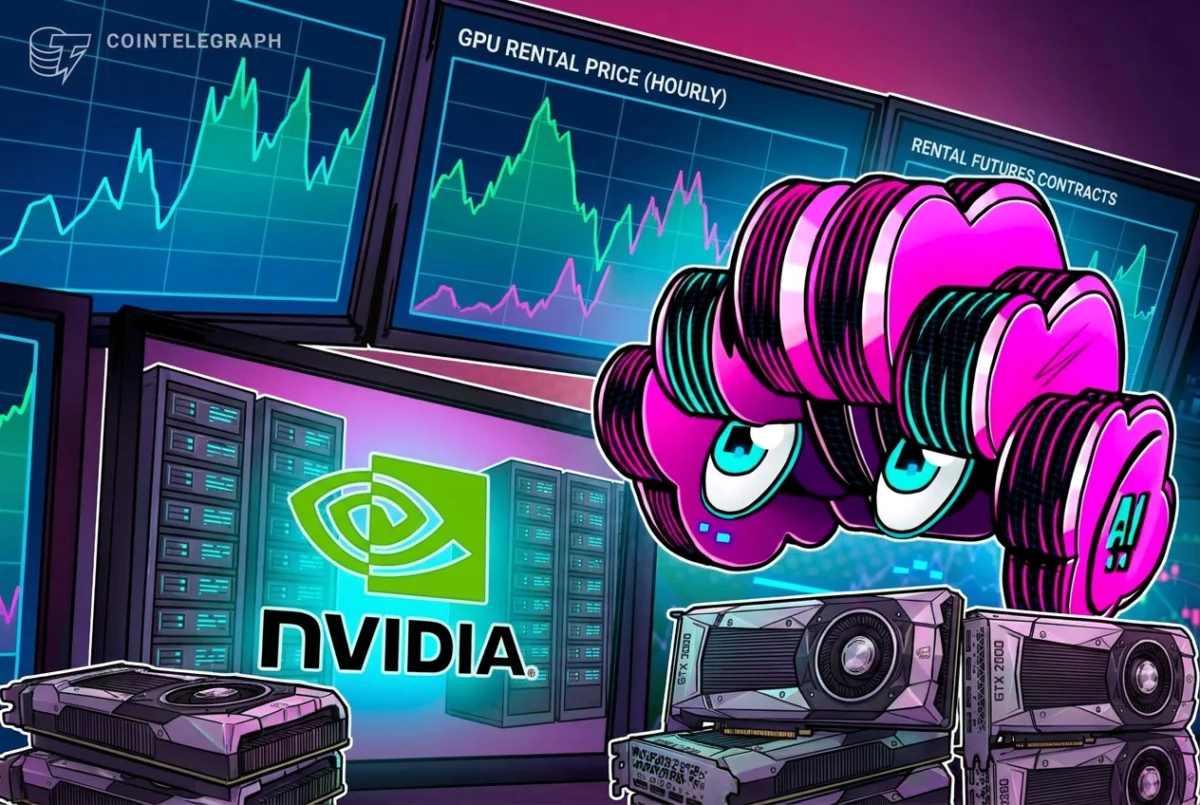
This innovative offering, known as the Super Intelligence Compute Index (SICI), is designed to provide unprecedented financial exposure to the rapidly expanding and economically crucial AI infrastructure sector. By indexing the rental costs of five foundational Nvidia GPUs – the H100, B200, H200, A100, and RTX 4090 chips – Injective is creating a transparent, accessible, and liquid market for a previously opaque segment of the global economy. The data underpinning SICI is meticulously compiled from various compute marketplaces by LO:TECH, a London-based market data firm renowned for its expertise, ensuring the index reflects real-world supply and demand dynamics with accuracy and reliability.
The strategic weighting within the SICI is a critical aspect of its design, reflecting the current landscape of AI compute power. The Nvidia H100, a powerhouse chip highly sought after for its unparalleled performance in AI training and large language model development, commands the largest weight at 40%. Following closely is the B200, representing 25% of the index, which is poised to become the next generation’s workhorse, indicating Injective’s forward-looking approach to market representation. The inclusion of H200, A100, and RTX 4090 further diversifies the index, covering a spectrum of high-demand GPUs used for various AI tasks, from inference to high-end gaming and professional visualization that often underpins smaller-scale AI development. This careful calibration ensures that SICI provides a comprehensive and representative benchmark for the overall cost of advanced AI computing resources.
To maintain relevance and responsiveness to market shifts, the SICI is updated hourly, employing a trailing seven-day average of rental prices. This methodological choice is deliberate, aimed at smoothing out short-term volatility and providing a more stable, yet dynamic, reflection of underlying market trends. Traders engaging with this market can take long or short positions, betting on whether the index will rise or fall, using USDC – a widely adopted stablecoin – as their margin collateral. The ability to utilize up to 10x leverage amplifies potential gains (and losses), attracting sophisticated traders and institutions looking to capitalize on or hedge against significant movements in the AI compute market.
The launch of the SICI marks a strategic expansion for Injective, building upon its prior introduction of a market tied exclusively to Nvidia H100 rental prices. This evolution from a single-GPU focus to a diversified five-chip index represents a maturation of Injective’s offering, providing a more robust and less volatile instrument for market participants. The diversified index offers a broader exposure to the AI compute market, mitigating the risk associated with relying on the performance of a single chip model. This strategic enhancement underscores Injective’s commitment to delivering sophisticated financial products that meet the complex needs of modern digital economies.
The genesis of this market lies in the unique operational dynamics of companies developing cutting-edge AI models. Rather than incurring the immense capital expenditure required to purchase Nvidia GPUs outright, these companies frequently opt to rent computing power from specialized cloud providers like CoreWeave and Nebius. This rental model offers flexibility and scalability, allowing AI developers to adjust their compute capacity as demand fluctuates. Consequently, the rental prices for these powerful GPUs are highly sensitive to market demand, rising when AI development surges and falling during periods of consolidation or technological shifts. Injective’s futures market directly addresses this variability, offering critical risk management tools.
For AI developers, the futures market serves as a vital hedging mechanism against the risk of escalating computing costs. By taking a long position on the SICI, a developer can lock in a future price for their compute needs, effectively protecting their project budgets from unforeseen price hikes. Conversely, GPU providers, who invest heavily in building and maintaining vast AI data centers, can utilize the market to hedge against declining rental revenues. By shorting the SICI, a provider can offset potential losses from a downturn in rental rates, thereby safeguarding their investment returns and ensuring financial stability. Beyond hedging, the market also opens avenues for speculative trading, allowing participants to express their views on the trajectory of AI innovation and its underlying infrastructure costs.
This groundbreaking launch arrives amidst a broader backdrop of intense scrutiny and financial re-evaluation within the burgeoning AI infrastructure sector. The sheer scale of investment required to build and operate GPU infrastructure has raised significant questions about the long-term viability and profitability of many companies in this space. Research firm Gartner issued a stark warning in October, projecting that over 80% of specialist AI cloud providers, often referred to as "neoclouds," could cease independent operations by 2030. Gartner’s analysis highlights the severe challenges these firms face in generating sufficient returns on their colossal investments, especially when competing with hyperscale cloud providers.
Elon Musk, a prominent figure with deep interests and investments in the AI ecosystem, echoed these concerns, emphasizing the precarious position of numerous neocloud providers. He cautioned that more than 200 such entities could face outright failure or consolidation, attributing this vulnerability to a growing reluctance among lenders to finance companies whose revenue models are heavily reliant on the unpredictable landscape of AI data center demand. Musk’s insights carry particular weight given his direct financial interests in the sector; his company, SpaceX, through its "Super Intelligence" business, reported a staggering $7.6 billion in third-quarter revenue, an 830% year-over-year increase, partly propelled by new cloud services agreements. This firsthand experience grants his warnings a layer of informed authority.
The financial pressures within the AI sector are not confined to smaller neoclouds; even major technology giants are actively restructuring their operations to contain costs, even as they pour billions into AI infrastructure. Bloomberg recently reported that Microsoft, a company that has forecasted an astonishing $175 billion in capital expenditures for 2026, is offering voluntary buyouts to approximately 60,000 eligible employees. This aggressive cost-cutting measure, implemented amidst unprecedented AI spending, underscores the immense financial strain and the imperative for efficiency even among the most well-resourced players. Similarly, Meta, which has already invested over $100 billion in AI initiatives, initiated significant workforce reductions, cutting 8,000 jobs in May as part of a broader restructuring effort aimed at streamlining operations and reducing costs. These actions by tech behemoths illustrate the dual challenge of massive investment requirements alongside intense pressure to optimize financial performance.
Injective’s SICI market therefore emerges as a timely and essential financial innovation within this complex environment. By offering sophisticated hedging tools, it provides a mechanism for both AI developers and GPU providers to manage the inherent volatility and financial risks associated with AI compute costs. This financial instrument not only facilitates better risk management but also introduces a new layer of transparency and price discovery to a critical, yet historically opaque, part of the digital economy.
Moreover, this launch positions Injective at the forefront of the burgeoning convergence between decentralized finance and artificial intelligence. It exemplifies the growing trend of bringing real-world assets (RWAs) and real-world data onto the blockchain, transforming previously illiquid or inaccessible markets into tradable financial instruments. This strategic direction aligns with Injective’s broader vision, as demonstrated by initiatives like its collaboration with BDACS to plan Korean won stablecoin settlement for tokenized assets. Such endeavors highlight Injective’s commitment to expanding the utility and reach of DeFi into diverse sectors of the global economy.
The technical and economic significance of Injective’s SICI cannot be overstated. It provides a robust, on-chain mechanism for continuous price discovery for a fundamental input in the AI revolution. This increased transparency can lead to more efficient capital allocation, better strategic planning for AI companies, and enhanced financial stability across the AI supply chain. Furthermore, by enabling participants to take leveraged positions, it attracts a wider array of market participants, from institutional investors seeking exposure to the AI boom to algorithmic traders looking to arbitrage price discrepancies. As the AI industry continues its exponential growth, financial instruments like the SICI will become indispensable for managing risk, optimizing resource allocation, and fostering continued innovation in this transformative field. Injective’s pioneering step not only enriches the DeFi ecosystem but also provides a crucial financial infrastructure layer for the artificial intelligence age.