Pradipta eManuel
The consumer data broker Radaris.com has been forcibly stripped of its domains, including the flagship radaris.com, and over a dozen other associated websites, following a protracted legal battle over privacy violations. The company, long known for its evasiveness in removing personal information from its extensive network of people-search services, faced a lawsuit alleging breaches of a New Jersey privacy law specifically designed to protect state law enforcement officials and their families. After persistent stonewalling and obfuscation from Radaris’s legal representatives, a judge ordered the transfer of these critical digital assets to the plaintiffs, marking a significant victory for data privacy advocates.
The legal action was initiated in February 2024 by Atlas Data Privacy Corp., a firm dedicated to pursuing data brokers accused of violating New Jersey’s Daniel’s Law. This statute empowers state law enforcement, government personnel, judges, and their immediate families to demand complete removal of their personal data from commercial data broker and people-search platforms. Crucially, the law imposes substantial fines of $1,000 per violation for companies that disregard these removal requests.
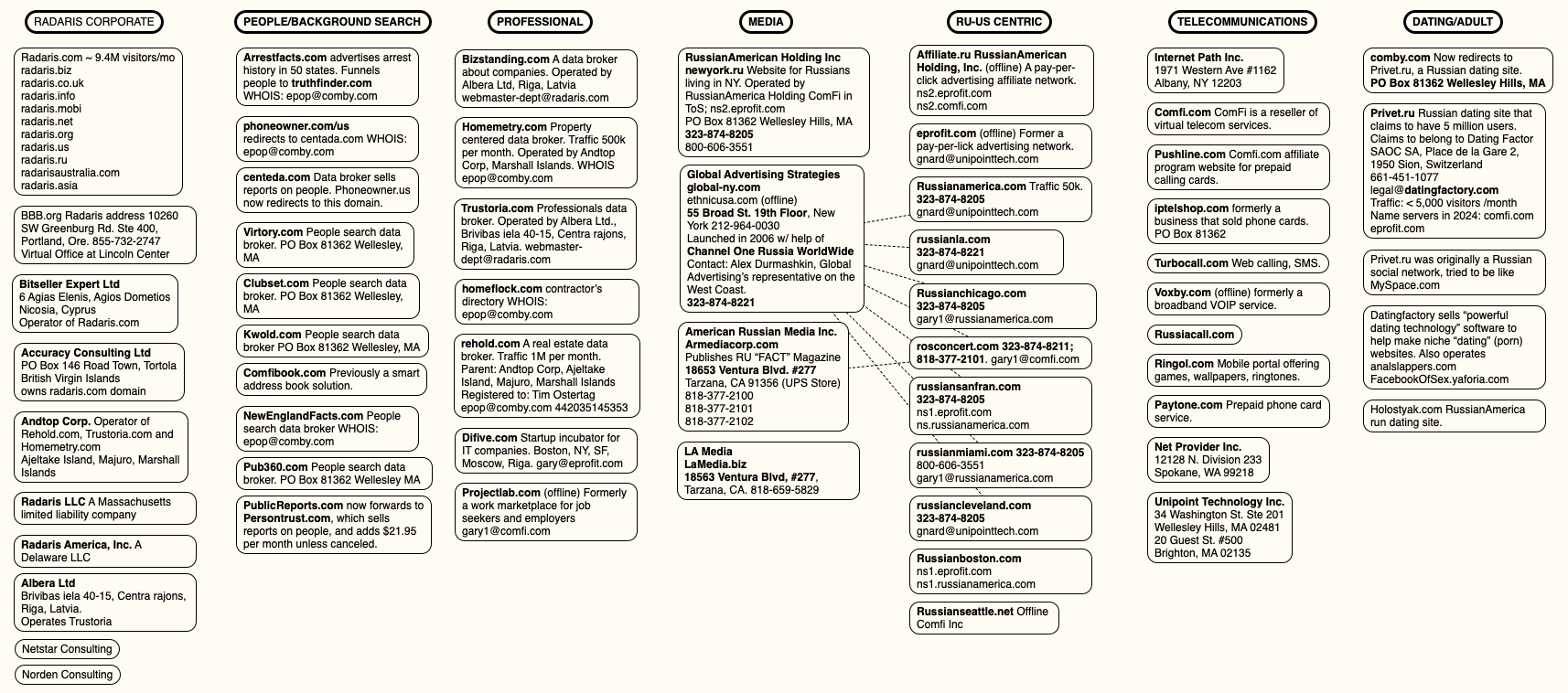
This development follows a series of investigative reports by KrebsOnSecurity that shed light on Radaris’s operations and its founders. In March 2024, KrebsOnSecurity published an in-depth examination of the Russian-born brothers, Igor and Dmitry Lubarsky (also known as Lybarsky), who are based in Massachusetts and are behind a vast array of people-search companies, as well as several Russian-language dating services and affiliate marketing programs. The Lubarsky brothers’ legal team responded with threats of defamation lawsuits, demanding the removal of the reporting and a public apology, asserting that the information was wildly inaccurate and that the true ownership lay with individuals in Ukraine.
KrebsOnSecurity stood by its reporting, further detailing how the Lubarsky brothers allegedly operated Radaris and other data broker entities using a fabricated CEO, "Gary Norden." Their attorney, Val Gurvits of the Boston Law Group, eventually admitted that this pseudonym was indeed invented and that multiple press releases had been issued quoting this fictitious CEO to solicit investments. This revelation added another layer of complexity to Radaris’s attempts to evade accountability.
Attorneys for Radaris, opting for a last-minute appearance, attempted to contest what appeared to be an inevitable default judgment. They argued that Atlas had failed to serve the true owners and operators of Radaris and its affiliated data broker companies. This tactic proved unsuccessful.
In response, Atlas re-filed the lawsuit in June 2025, significantly broadening the scope to include a larger number of Radaris-affiliated data brokers accused of violating Daniel’s Law. Matt Adkisson, president and CEO of Atlas, described Radaris’s strategy as a "tried-and-true playbook" of delaying legal proceedings and engaging in "shell games" regarding their country of origin and ownership. He characterized this period as an "island-hopping phase," where privacy policies were constantly altered, and new entities emerged from offshore jurisdictions like the Marshall Islands, the British Virgin Islands, and Seychelles. Adkisson highlighted the deceptive nature of these tactics, noting that when Radaris claimed to be managed by a new entity in the Marshall Islands, an investigator discovered that this newly formed company did not even exist yet.
The current legal team, including Raj Parikh, a partner at PEM Law in New Jersey, emphasized the deliberate strategy of attrition employed by Radaris and its associated entities. For years, this approach of procedural delays and legal maneuvering successfully deterred plaintiffs’ attorneys, who often grew weary of the prolonged legal battles, especially given the difficulty of recovering funds from foreign actors. However, Atlas and PEM Law were committed to dismantling the threat Radaris posed to public officials in New Jersey, dedicating the necessary resources to see the case through.
The judge’s decision on August 26th underscored the defendants’ repeated failure to appear and defend themselves despite ample opportunities. Val Gurvits, who had previously represented Radaris, stated the case had been reassigned to another attorney, Mr. Victor Worms. Worms, in turn, contended that the New Jersey court had transferred Radaris.com as part of a default judgment against "Radaris.com, which is not a legal entity." He indicated an intention to file a motion to vacate the judgment, arguing its voidness due to a non-existent entity being sued, and to pursue appeals on constitutional grounds, viewing the domain transfer as a violation of due process.
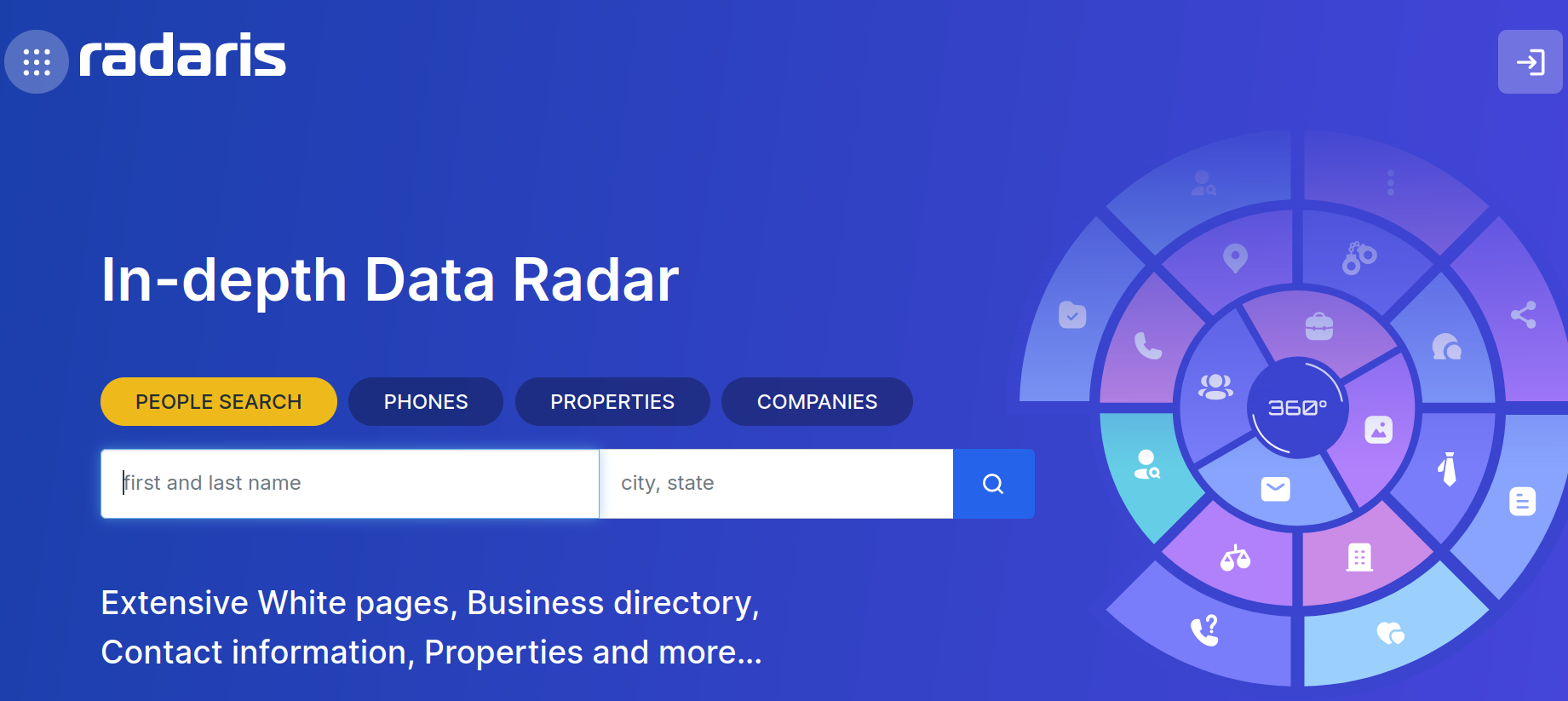
While radaris.com still appears in online searches for U.S. residents, it no longer offers comprehensive personal dossiers. The website now prominently displays a notice from Atlas detailing the court-ordered domain transfer and links to KrebsOnSecurity’s previous reporting.

Atlas has revealed that it has amassed over 10,000 emails and documents during the litigation, which reportedly corroborate KrebsOnSecurity’s findings regarding the ownership and operation of Radaris and its affiliated companies. These communications allegedly demonstrate that nominal legal entities such as Radaris America, Inc., Bitseller Expert Limited, Digital Orbit Corp, and others are centrally administered by a small group of individuals operating from identical mailboxes, sharing payment processing, and utilizing a single virtual office address.
A summary provided by Atlas indicates that these entities are collectively managed by a small group in the Boston area, with administrative, financial, and technical functions routed through a specific mail domain and its successors. The emails reportedly reveal that Radaris.com generates approximately $42,000 per month, while Veripages.com earns around $45,000 monthly through its partnership with the Lifetime Value Company, which owns brands like PeopleLooker and PeopleSmart. Furthermore, the Radaris family of websites is said to earn up to $25,000 monthly from a partnership with Onerep, a company that offers to remove personal information from people-search sites. This partnership is particularly noteworthy, given KrebsOnSecurity’s earlier report on Onerep’s founder, who allegedly launched and operated numerous people-search sites himself.
In total, the New Jersey court has transferred 14 domain names from the Radaris network to Atlas.
The Radaris companies still face potential fines totaling $1,000 per alleged violation of Daniel’s Law. However, the broader landscape of data privacy law is also in flux, with Daniel’s Law facing constitutional challenges from approximately 150 other consumer data broker firms being sued by Atlas. Many of these lawsuits have been moved to federal court, where the data broker industry argues that Daniel’s Law is overly broad and infringes upon First Amendment rights. The U.S. Court of Appeals for the Third Circuit has yet to rule on this challenge, and the case is widely expected to reach the Supreme Court.
In parallel, at least 14 other states have enacted laws similar to Daniel’s Law, with more considering such measures. However, a federal district court in August 2025 declared West Virginia’s version of Daniel’s Law unconstitutional.
Privacy expert Justin Sherman, author of the forthcoming book "The Middlemen," points to intense lobbying efforts by the technology industry as a significant impediment to comprehensive federal data privacy legislation in the U.S. Sherman notes that social media companies, big tech firms, cryptocurrency companies, and even AI proponents are actively opposing stricter data privacy laws, often framing such regulations as detrimental to economic growth and national interests.
Sherman argues that people-search companies will continue to flourish unless Congress enacts meaningful federal consumer privacy and data protection laws. He highlights that most state privacy laws exempt records considered "public" or "government" documents, such as voting registries, property filings, and criminal records, thereby creating loopholes. Even in states with age verification laws for adult content, there is no federal law governing how companies can use, share, or retain sensitive data like driver’s license information, as evidenced by the recent breach at IDScan.net, which exposed the driver’s license information of over 153 million Americans.
Sherman concludes that while the public may find laws like Daniel’s Law intuitive, the lack of comprehensive federal privacy legislation is not due to a lack of awareness. He states, "The average person can look at Daniel’s Law and have a perfectly normal reaction, which is that everyone should be covered, not just police and judges. But we don’t need more wake-up calls. We’ve had eight million wake-up calls already on the need for better privacy laws. The lack of comprehensive federal privacy law is not for a lack of knowledge, and anyone claiming otherwise is either not reading the news or kidding themselves.”