Faris Adani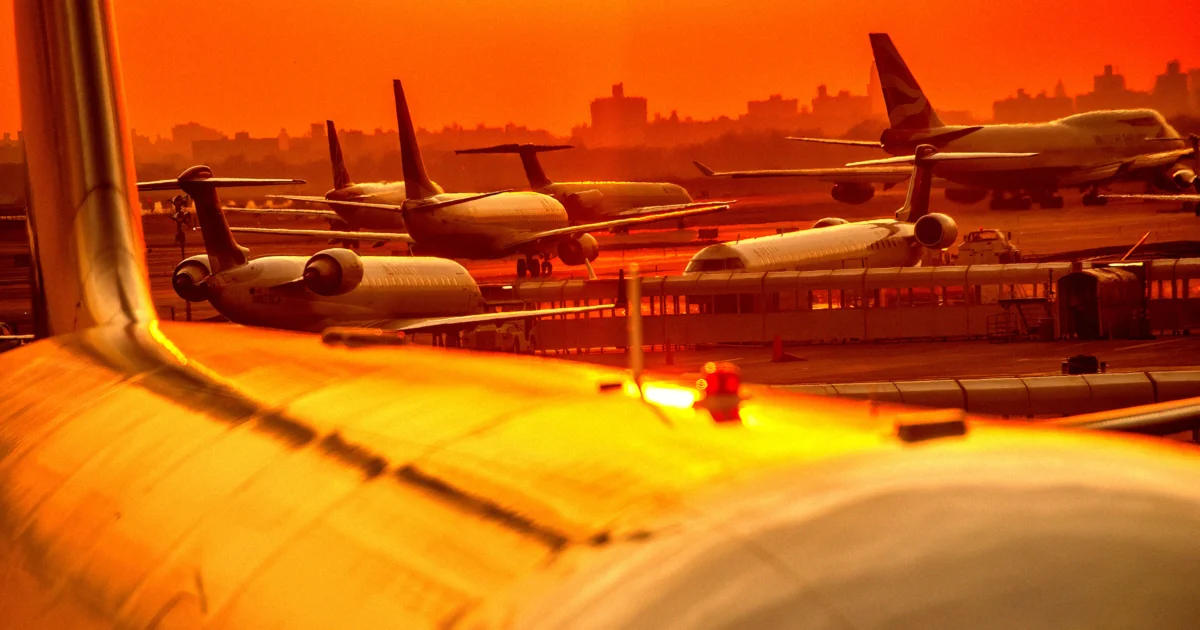
A cascade of disruptions swept across the Northeastern United States on a somber Monday afternoon, September 21, 2026, as the U.S. Federal Aviation Administration (FAA) issued a sweeping ground stop that paralyzed air travel across major hubs. Thousands of travelers found themselves stranded and frustrated as hundreds of flights were delayed or outright canceled across key metropolitan areas including New Jersey, Philadelphia, New York City, and Boston. This massive operational halt, impacting one of the world’s busiest air corridors, unfolded concurrently with the controversial "soft launch" of the Trump administration’s new artificial intelligence-powered air traffic control system, "Strategic Management of Airspace, Routes and Trajectories," or SMART. While early reports emphatically stated there was no immediate indication of a connection between the two incidents, the timing inevitably cast a long shadow of speculation over the nascent AI initiative.
The chaos began to unfurl around midday, with the ground stops appearing to propagate northward from Philadelphia. Reuters initially reported over 600 flights affected in Newark Liberty International Airport (EWR) and Philadelphia International Airport (PHL) alone, a figure that quickly escalated as the ripple effects spread to other critical gateways. John F. Kennedy International Airport (JFK) and LaGuardia Airport (LGA) in New York City, along with Boston Logan International Airport (BOS), soon joined the ranks of affected facilities, tallying hundreds more delays and dozens of aborted takeoffs. Passengers, many already at their gates or even on planes awaiting departure, were left in limbo, facing the disheartening reality of missed connections, canceled meetings, and disrupted travel plans. The scenes at these airports were familiar yet perpetually disheartening: crowded terminals, long lines snaking toward customer service desks, and an air thick with exasperation and uncertainty.
Initial reports from various sources painted a confusing picture regarding the precise cause of the unprecedented outage. Bloomberg TV cited a circuit malfunction at an air traffic control facility in Philadelphia, a critical piece of infrastructure responsible for guiding aircraft. Concurrently, Reuters reported an accidental clipping of a fiber optics cable in New Jersey, an event that could severely impact communication networks. Meanwhile, the BBC relayed warnings from Boston Logan International Airport, advising travelers of "extensive delays due to broad equipment issues across the north-east." An FAA spokesperson, speaking to CBS21, further clarified that the ground stop was attributable to "issues with some frequencies at Philadelphia TRACON," referring to the Terminal Radar Approach Control. TRACON facilities are vital nerve centers of air traffic management, utilizing radar systems to guide aircraft during the critical phases of ascent and descent, ensuring safe spacing and routing in and out of busy airports. The convergence of these disparate yet localized issues underscored the fragility and interconnectedness of the region’s air traffic control infrastructure. The immediate takeaway for many was clear: the system was a tangled mess, prone to cascading failures, and arguably ill-equipped for the demands of modern air travel.
This widespread operational failure gained a particularly ominous resonance due to its timing. Just days prior, the Trump administration had commenced the "soft launch" of its contentious AI air traffic control system, SMART. This acronym, standing for Strategic Management of Airspace, Routes and Trajectories, represents a bold, some might say audacious, leap into automating critical aspects of aviation safety. Bloomberg had detailed the federal government’s rollout plan, which began this very week in the heavily trafficked Washington D.C. region. The initial phase involved SMART doling out AI-generated recommendations to human flight traffic personnel, rather than taking full control. Specific East Coast airports slated for this initial deployment included Reagan National Airport (DCA) in Virginia and Baltimore/Washington International Thurgood Marshall Airport (BWI) in Maryland. However, the precise list of facilities that had officially "gone live" with the AI tool remained undisclosed at the time of the ground stop.
The introduction of SMART has been anything but smooth. Politico had previously highlighted the "controversial" nature of the system, noting significant pushback from various stakeholders. Air traffic controllers, who possess decades of invaluable experience and expertise, expressed deep reservations about relinquishing control or even heavily relying on an AI system. Their concerns ranged from the potential for "hallucinations" or unexpected errors by the AI, especially in complex or unforeseen scenarios, to the erosion of human judgment and the deskilling of their profession. Airlines, while generally supportive of modernization efforts, also voiced apprehension regarding the rigor of testing and the potential for new, unforeseen vulnerabilities in a system where safety is paramount. Aviation safety experts, too, have called for extreme caution, emphasizing that even the slightest miscalculation in air traffic management can have catastrophic consequences. The fear, often articulated, is that while AI excels at pattern recognition and optimization in stable environments, its ability to handle novel, high-stakes, or anomalous situations remains unproven and potentially dangerous without robust human oversight and fail-safes.
The FAA’s rationale for pursuing SMART, despite the opposition, stems from a long-standing and undeniable need for modernization. The existing air traffic control system across the United States is widely acknowledged to be in "dire straits." It relies on aging infrastructure, legacy hardware, and often decades-old software, making it increasingly difficult to maintain, upgrade, and scale to meet growing demand. Furthermore, the FAA has grappled for years with chronic staffing shortages among air traffic controllers, leading to burnout, mandatory overtime, and a constrained training pipeline. These factors, combined with ever-increasing air travel demand and the unpredictable challenges of weather, have contributed to persistent delays and inefficiencies that cost airlines billions and inconvenience millions of passengers annually. The promise of AI, therefore, is alluring: to process vast amounts of data, predict optimal flight paths, manage traffic flow more efficiently, and potentially alleviate the burden on human controllers.
Yet, the simultaneous occurrence of the East Coast ground stop and the SMART rollout immediately ignited public discussion and apprehension. Even though early reports were quick to clarify that "any connection between the massive ground stop and the SMART soft launch would be speculation at this point, and early reports don’t seem to indicate a connection between the two events," the psychological impact was undeniable. In an era where trust in new technologies, especially AI, can be fragile, such a high-profile disruption occurring alongside a critical AI deployment inevitably fuels public distrust and anxieties. For many, the coincidence was too stark to ignore, prompting questions about the resilience of the nation’s aviation infrastructure and the wisdom of integrating unproven AI into such a vital, safety-critical domain. The incident, regardless of its true cause, served as an immediate, albeit indirect, stress test of public confidence in the FAA’s modernization strategy.
The broader context of air traffic control challenges in the U.S. underscores the complexity of the situation. Beyond the technical glitches and staffing issues, the system operates within an intricate web of environmental factors, airline operations, and regulatory mandates. A single point of failure, whether a physical cable, a software bug, or even a human error, can rapidly propagate, leading to widespread chaos. The ground stop on September 21 served as a stark reminder of this vulnerability, illustrating how a localized "circuit malfunction" or a "clipped fiber optics cable" could trigger a domino effect across an entire region.
As the FAA scrambled to restore full functionality to the affected East Coast airports, the incident served as a potent, if accidental, case study in the delicate balance between innovation and reliability. The push for AI in air traffic control, championed by the Trump administration, represents a significant policy gamble aimed at addressing long-standing systemic issues. However, the events of Monday afternoon highlighted the immense challenges and inherent risks involved. The American public has yet to fully embrace a federal system where a "hallucinating, error-prone AI assistant" could play a direct role in critical infrastructure. The ground stop, even if purely coincidental, will undoubtedly intensify scrutiny on the SMART system and prompt deeper questions about the readiness of both the technology and the human-machine interface for such high-stakes applications. The path to modernizing air travel is fraught with complexity, and this week’s events served as a powerful, if uncomfortable, reminder of the stakes involved.