Imroatul Nasiyah
In an era defined by the relentless surge of artificial intelligence (AI) and the ever-expanding landscape of information and communication technologies (ICTs), the world is witnessing an unprecedented explosion in data production and processing. From the seemingly simple act of an internet search to the creation of stunning AI-generated imagery, the intricate workings of recommendation systems, the complex simulations that drive scientific discovery, and the powerful capabilities of large language models, all these advancements are inextricably linked to the monumental task of creating, transmitting, storing, and analyzing vast quantities of information. As AI’s integration deepens across every facet of our lives – permeating everyday routines, industrial processes, and scientific endeavors – the global demand for computing power and data storage continues its inexorable climb.
This escalating expansion, however, is accompanied by a significant and increasingly pressing challenge: the immense electricity consumption. Data centers, the very backbone of our digital world, already command staggering amounts of power, and projections indicate that their energy demands will burgeon substantially in the coming decades. Without substantial leaps in efficiency, the ICT sector risks becoming a dominant contributor to worldwide electricity consumption and a major source of carbon emissions. Consequently, the urgent pursuit of energy-efficient computing solutions has become paramount as the demand for digital services accelerates at an astonishing pace.
In a groundbreaking development, researchers at the University of Edinburgh have unveiled a novel theoretical framework poised to dramatically reduce the energy required to store and manipulate digital information, the fundamental "0"s and "1"s, within the next generation of magnetic memory technologies. This innovation holds the promise of fundamentally altering the energy footprint of computing.
At the core of any magnetic memory technology lies its capacity to switch magnetic states. This switching mechanism is the fundamental basis for altering and controlling the digital information encoded within. Traditionally, designing these magnetic switching processes, the very essence of data manipulation, has relied on conventional methods. However, the Edinburgh team has taken a radical departure, harnessing the power of Optimal Control Theory – a sophisticated mathematical discipline dedicated to identifying the most efficient pathways to achieve a desired objective.
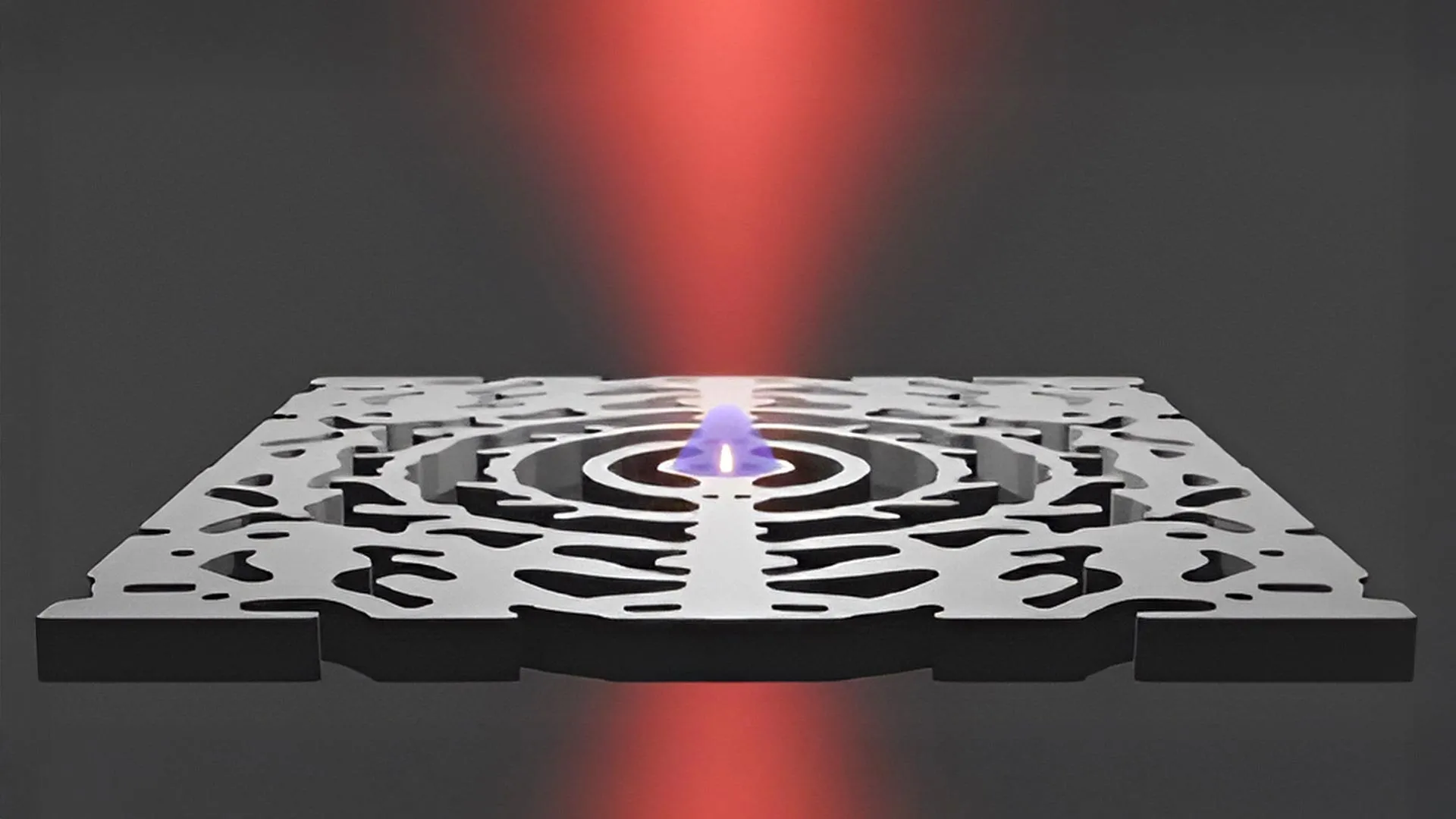
By applying this powerful theoretical lens, the research group has meticulously crafted a framework for designing exceptionally fast magnetic-field pulses. These pulses are engineered to precisely and efficiently switch magnetic states, thereby minimizing energy expenditure. Crucially, their calculations have incorporated realistic experimental constraints, lending a significant degree of practical relevance to their findings and making the approach directly applicable to the development of future magnetic memory devices.
The implications of this novel approach are profound. Computer simulations conducted by the team suggest that this new method could achieve energy reductions for magnetic switching that are several orders of magnitude lower than those offered by leading memory technologies currently in use or under active development. This includes established technologies like Dynamic Random-Access Memory (DRAM), as well as emerging advanced technologies such as Spin-Transfer Torque Magnetoresistive Random-Access Memory (STT-MRAM) and the even more cutting-edge Spin-Orbit Torque Magnetoresistive Random-Access Memory (SOT-MRAM).
Perhaps even more astonishing is the fact that the predicted energy requirements for future magnetic memory devices utilizing this framework bring them remarkably close to the Landauer limit. This theoretical limit, established by fundamental thermodynamic principles, defines the absolute minimum amount of energy necessary to process a single bit of information. Approaching this fundamental boundary, a physical constraint that cannot be surpassed, would represent a monumental stride forward in the ongoing quest to make computing as energy-efficient as humanly and physically possible.
The theoretical framework, detailed in the prestigious scientific journal Advanced Materials, extends beyond mere theoretical calculations. It provides concrete, practical guidance that could facilitate its eventual implementation. This includes recommendations for optimized device designs and sophisticated methods for delivering the precisely timed magnetic fields. These actionable insights are expected to significantly aid researchers in their efforts to experimentally validate this groundbreaking concept.
Dr. Elton Santos, a leading figure from the Institute for Condensed Matter Physics and Complex Systems at the University of Edinburgh and the principal investigator of this research, emphasized the critical importance of energy efficiency in the current technological landscape. "Every digital operation carries an energy cost," Dr. Santos stated. "And that cost becomes increasingly significant as AI and data-intensive technologies continue their rapid expansion. Our work unequivocally demonstrates that by meticulously designing the temporal evolution of a magnetic field, magnetization can be switched with a far greater degree of efficiency than is achievable with conventional methods."
Dr. Santos further elaborated on the far-reaching potential of their discovery. "While our initial theoretical development focused on magnetic field pulses, the underlying mathematical principles are remarkably versatile," he explained. "The same framework can be readily adapted to control electrical currents and even to manipulate ultrafast laser pulses, both of which represent some of the most advanced technologies being explored for future data storage solutions. This suggests that the innovative ideas developed here possess the capacity for applications that extend far beyond the specific systems we initially studied. It appears we may have stumbled upon the next paradigm shift in energy-efficient computing." This research signifies a pivotal moment, offering a tangible pathway to address the burgeoning energy demands of our increasingly digital world.