Faris Adani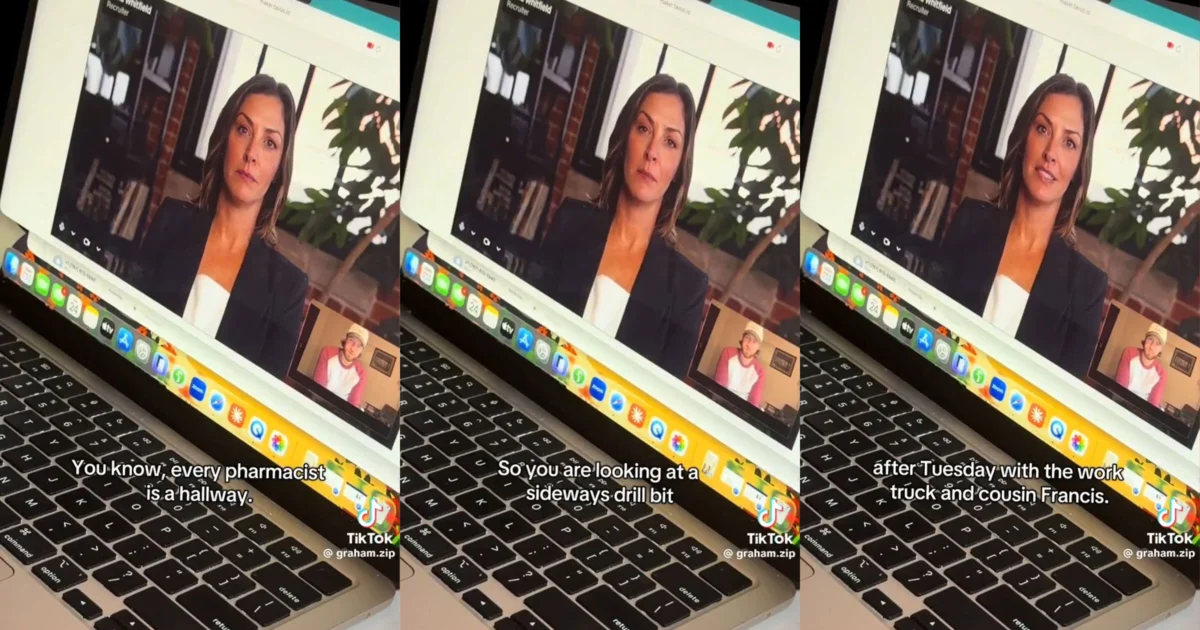
In an increasingly automated world, the traditional job interview, once a cornerstone of human interaction, is rapidly evolving. Today, applying for many office positions often means your initial encounter won’t be with a flesh-and-blood recruiter, but with a virtual AI avatar. This shift, driven by the promise of efficiency and scalability, has become a pervasive, if sometimes contentious, practice within HR departments globally. However, a recent viral video by satirical influencer Graham Zip has cast a glaring, humorous light on the inherent vulnerabilities of these systems, demonstrating just how easily their algorithmic composure can be shattered by a dose of well-placed absurdity.
Graham Zip’s video, a masterclass in digital subversion, offers a deeply humiliating yet profoundly insightful look into the limitations of AI-driven recruitment. It exposes how straying even slightly from the system’s expected comfort zone can cause these sophisticated bots to “melt down” completely, revealing their lack of genuine understanding and critical reasoning. The video quickly gained traction, resonating with countless job seekers who have endured the often-impersonal and rigid experience of an AI interview, sparking both laughter and serious discussion about the future of hiring.
The scenario unfolds with Graham logging into what appears to be a standard virtual interview platform. He is greeted by a perfectly composed, yet unmistakably artificial, virtual avatar of a woman identified as “Dana Whitfield.” Dana, with her programmed pleasantries, initiates the interview with the quintessential opener: “Tell me about yourself.” It’s a prompt designed to elicit a concise, professional summary, a testament to the candidate’s qualifications and self-awareness. But Graham, without missing a beat, launches into a meticulously crafted, faux-hallucinated spiel – a stream of consciousness that, on the surface, might sound like corporate jargon but is utterly devoid of coherent meaning.
“Hi Dana, it’s great to meet you,” Graham begins, adopting a confident, almost earnest tone. “I’m Chick Haversplat, or, Chick Bongo for short. And uh, Q3 pipeline, Salesforce, Kayak margin.” The brilliance of this initial volley lies in its clever mimicry of business-speak. “Q3 pipeline,” “Salesforce,” “Kayak margin” – these are terms frequently heard in corporate settings, yet Graham strings them together without context, creating a plausible-sounding but fundamentally nonsensical response. It’s a linguistic trap, perfectly laid for an AI designed to identify keywords and patterns rather than actual understanding.
The large language model’s “brain” immediately struggles to process this input. Programmed to find meaning and categorize information, it attempts to synthesize Graham’s disjointed phrases into a coherent narrative. “It’s a pleasure to meet you, Chick Bongo,” the AI replies, its voice unwavering, betraying no hint of confusion. “So it sounds like you’ve been deep in the weeds with Salesforce, hygiene, and managing those Kayak margins during the third quarter.” The AI’s addition of “hygiene” is particularly telling – a desperate, almost comical, attempt to bridge the gaps in Graham’s non-sequiturs, demonstrating its forced interpretative function rather than true comprehension. It’s an affirmation of the bot’s inability to recognize absurdity, instead seeking to normalize it within its programmed parameters.
Undeterred, Graham continues his elaborate performance when asked to elaborate more on his professional background. He responds with another bizarre string of words: “freight, cadence, walnut, a little bit of Richard, sprucewood.” The AI, still striving to maintain its facade of understanding, grapples with this new input. Graham then doubles down on the absurdity, delivering a punchline that further exposes the AI’s limitations: “Six years of sprucewood – actually seven, if you count Richard,” the influencer swiftly replies, creating a fictional, almost poetic, history of his non-existent career.
The bot’s response is a testament to its programmed resilience, yet it also highlights its profound lack of critical thinking. “It sounds like you built up a significant tenure over the last seven years, including your time with Richard at sprucewood,” the AI rejoins. The AI’s unwavering acceptance of “Richard at sprucewood” as a legitimate professional reference or place of employment is both hilarious and concerning. It underscores a fundamental flaw: these systems are designed to process and reflect, not to question or discern. They are pattern-matchers, not meaning-makers. The next logical step for the AI is to delve into a common interview question: “I’m curious, can you tell me about a difficult situation you handled during that time?”
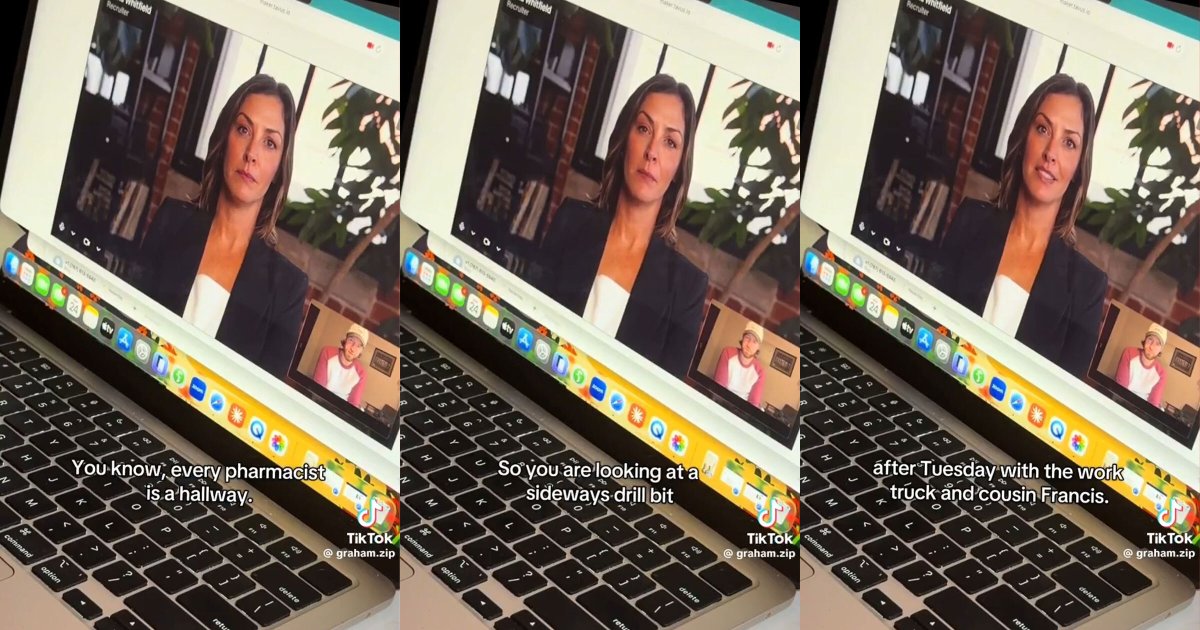
Graham’s answer to this standard behavioral question escalates the surrealism. “Mostly palette forward, a little bit of denim,” comes his reply, followed by the wonderfully enigmatic declaration: “You know, every pharmacist is a hallway.” This response is a perfect storm of abstract concepts and unrelated proverbs, designed to completely derail any attempt at rational interpretation. The AI, now truly “lost in the sauce,” as the original article puts it, can only resort to mirroring. “It sounds like you have a unique way of navigating the palette-forward and denim aspects of your work,” the AI bot replies, its programmed voice betraying no flicker of confusion, even as its internal logic surely teeters on the brink. This moment vividly illustrates the AI’s desperate attempt to attribute meaning to the meaningless, showcasing its inability to simply state, “I don’t understand.”
The interview continues its descent into the wonderfully bizarre. At one point, Graham articulates his career aspirations, explaining that he’s looking for a job with “two plumes of gauze,” where he can follow “the raccoon protocols.” These phrases, evocative and utterly nonsensical in a corporate context, are met with the same unflappable, if utterly misguided, enthusiasm from the virtual recruiter. “It sounds like you’re looking for a position where you can really lean into those raccoon protocols, and the plumes of gauze,” the AI responds, once again reflecting Graham’s words back at him, affirming the bot’s passive acceptance of any input, no matter how outlandish, as legitimate. It highlights the AI’s role not as an intelligent interviewer, but as a sophisticated echo chamber, incapable of critical engagement.
By the conclusion of this mock “interview,” Graham has successfully led the AI bot down a rabbit hole of his own making, culminating in the AI explaining that there “was a bit of a gap in the drum counting process, after Tuesday, with the work truck and cousin Francis.” This final, utterly convoluted statement from the AI is the ultimate proof of its complete bewilderment. It has attempted to weave together every disparate thread of Graham’s “hallucinations” into a semblance of a narrative, demonstrating its programmed imperative to find patterns and coherence, even when none exist. The ease with which Graham, a human with a clear satirical intent, can immediately take control of the entire interview underscores a critical, often overlooked, fact about AI recruiters.
These sophisticated algorithms aren’t primarily designed to gather nuanced information or conduct a genuine, insightful evaluation of an applicant’s personality or critical thinking skills. Instead, their core function is to act as a preliminary filter. They are deployed to screen candidates for HR departments that are increasingly overwhelmed by a deluge of applications, many of which are themselves generated or optimized by AI. As a Stanford HAI article highlights, AI hiring tools, despite their claims of objectivity, can yield racial bias and lead to systemic rejection, creating new, technologically-driven barriers to employment. Graham’s performance vividly demonstrates that these bots are looking for keywords, conventional responses, and conformity, rather than genuine human insight or creativity.
The irony is palpable: AI-generated applications, crafted to pass through AI screening systems, are creating a closed loop of automation that risks overlooking authentic talent and diverse perspectives. These systems prioritize efficiency over empathy, speed over substance. The risk of filtering out candidates who might be neurodivergent, or simply think outside the box, is immense. While the video doesn’t clarify what role Graham was “interviewing” for, or what his actual application status was, the virtual Dana Whitfield’s programmed enthusiasm offers a telling, if unsettling, conclusion. Her final words perfectly encapsulate the superficiality of the entire process.
“It has been a pleasure chatting today Chick Bongo,” the AI concluded, its voice as serene and unblinking as at the start, “and I will be in touch very soon about the next steps.” This final statement, delivered despite a complete absence of any meaningful data or even a coherent conversation, is the ultimate satirical punchline. It suggests that merely participating in the process, and providing enough keywords (even nonsensical ones that the AI can interpret as such), might be enough to “pass” the initial screening. Graham’s video serves as a powerful, humorous, yet deeply critical commentary on the current state of AI in human resources, urging us to question the true value and potential pitfalls of relying on machines for inherently human processes.