Faris Adani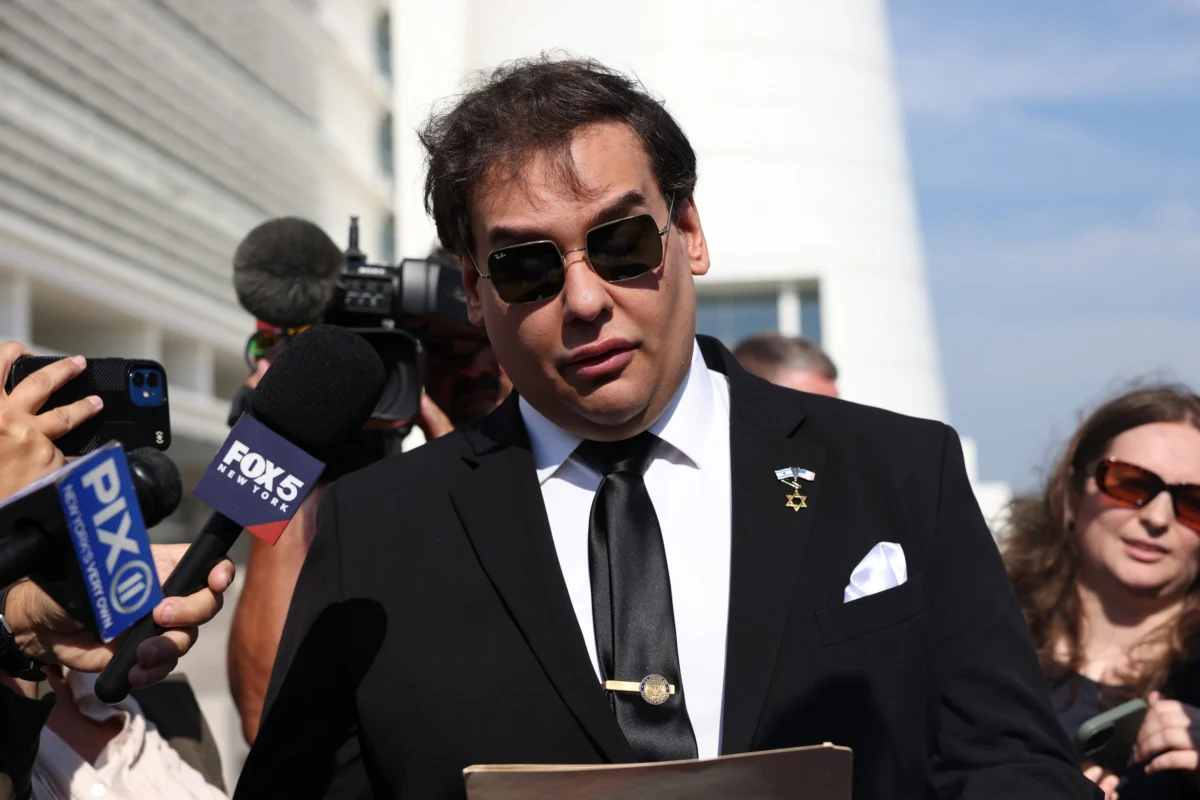
In an unprecedented move that perfectly encapsulates the chaotic and often absurd trajectory of his public life, former Republican congressman and undeniable meme icon George Santos has been handed the first-ever lifetime ban by Kalshi, the regulated prediction market platform. This landmark decision, reported by the New York Times, underscores the severity of Santos’s transgressions, which were deemed so blatant and deliberate that they merited the most extreme punitive action available to the platform. It’s a striking development, especially considering the frequent suspicions of insider trading that reportedly circulate within the prediction market sphere, yet Santos’s offenses transcended mere suspicion, manifesting as an almost theatrical display of market manipulation.
The core of Santos’s prohibited activities centered around a specific market on Kalshi: "Will George Santos attend President Donald Trump’s State of the Union address in February this year?" For a regulated prediction market like Kalshi, which is overseen by the Commodity Futures Trading Commission (CFTC), the integrity of its markets is paramount. One fundamental rule is that individuals capable of influencing the outcome of an event are expressly forbidden from trading in markets related to that event. Santos, as a former congressman and a prominent, albeit controversial, public figure, clearly fell into this category regarding his own attendance at such a high-profile event.
Despite this clear prohibition, Kalshi’s Compliance Department uncovered that Santos not only placed multiple bets on this particular market but also actively engaged in public statements designed to manipulate the price of the contracts. These statements, often disseminated through his preferred social media platform, X (formerly Twitter), were found to be "false or misleading." The audacity of his scheme was particularly evident in the days leading up to the State of the Union address. For instance, on February 4, 2026, Santos posted a video on X confidently declaring, "I’m going to be there for the State of Union in the gallery, guys." Just a short while later, in a follow-up tweet that cemented his reputation for dramatic reversals, he claimed he was stuck in an airport, lamenting, "FML," as he watched the address on television. This transparent attempt to first inflate the "Yes" contracts and then perhaps drive down their value (or hedge his own bets) was a clear breach of market ethics.
The Compliance Department’s investigation confirmed that Santos’s unsubtle, market-moving utterances were indeed successful in manipulating the price of the "Yes or No" contracts he had purchased. All told, his illicit scheme netted him a profit of nearly $18,000. This brazen act of self-dealing, leveraging his public platform to profit from an event he himself could influence, was a direct assault on the principles of fair and transparent trading that Kalshi is mandated to uphold.
The consequences for Santos have been swift and multifaceted. Kalshi, in issuing its first-ever lifetime ban, sent a clear message about its commitment to market integrity. Beyond being permanently barred from the platform, Santos was also hit with a substantial fine of $71,356. This amount was calculated to be more than four times the profit he illegally gained, serving as a punitive measure intended to deter similar conduct. Furthermore, Kalshi’s disciplinary action wasn’t the end of his troubles. The platform diligently flagged his suspicious betting activities to the Commodity Futures Trading Commission (CFTC), the federal agency responsible for regulating commodity futures and options markets, including prediction markets like Kalshi. The CFTC, after its own review, ordered Santos to disgorge all the profits he made from the scheme, which he agreed to do as part of a settlement reached in July. Adding insult to injury, the federal agency also slapped him with its own civil monetary penalty of $17,500, bringing his total financial penalty to nearly $90,000, in addition to forfeiting his ill-gotten gains.
For those familiar with George Santos’s remarkably eventful and often scandal-ridden public life, this latest escapade comes as little surprise. The 38-year-old former representative from New York’s 3rd congressional district has cultivated a notorious reputation as a fabulist, a master of deception, and a con artist whose embellishments and outright falsehoods have permeated every aspect of his biography. His political career, though meteoric in its rise, was equally spectacular in its collapse. He was famously expelled from Congress in December 2023, a historic event that marked only the sixth time in U.S. history a member was removed by their peers. This unprecedented expulsion followed a damning ethics investigation that uncovered a staggering web of lies regarding his professional background, educational history, family heritage (including false claims of being Jewish and having ancestors who survived the Holocaust), and even his financial dealings. He was found to have embezzled campaign funds, used donor money for personal expenses, and engaged in a variety of other financial misconducts.
His legal troubles extended beyond Congress. In 2024, Santos faced a federal indictment on multiple charges, including wire fraud, money laundering, theft of public funds, and making false statements to Congress. He subsequently pleaded guilty to charges including wire fraud and identity theft. In a twist that could only happen in the annals of George Santos’s story, his seven-year sentence was commuted last year by none other than former President Donald Trump. This commutation, granted by a president himself no stranger to controversy, added another layer of political intrigue and irony to Santos’s already extraordinary narrative.
Adding another layer of absurdity to this saga, Santos ironically once served as a paid ambassador for Polymarket, a major rival to Kalshi in the prediction market space. Polymarket, which operates with a different regulatory framework and often faces its own scrutiny, quickly severed ties with Santos, "dropping him like a hot potato," once news of the CFTC’s investigation into his suspicious Kalshi bets came to light. Even a platform known for its more liberal approach to market participation drew the line at Santos’s blatant self-dealing.
Despite the lifetime ban and the hefty fines, Santos’s characteristic bravado and defiant spirit appear entirely undiminished. In a reaction that was vintage George Santos, he took to X once more to address his predicament, tweeting: "Hey @Kalshi thanks for the lifetime ban from your gambling platform. Let’s see how much longer you guys are around for." This unrepentant and confrontational response perfectly encapsulates his public persona – a blend of self-aggrandizement, perceived victimhood, and a willingness to lash out, even when facing undeniable consequences for his own actions. It’s this audacious, almost theatrical quality that has transformed him from a disgraced politician into an enduring, if often ridiculed, meme icon.
This incident serves as a stark reminder of the unique challenges and opportunities presented by prediction markets. While platforms like Kalshi aim to leverage collective intelligence for price discovery on future events, they also attract individuals seeking to exploit loopholes or engage in outright manipulation. The case of George Santos, with its almost comical level of transparency in wrongdoing, highlights the critical role of regulatory bodies like the CFTC in safeguarding market integrity. In a world increasingly shaped by digital finance and novel trading instruments, robust oversight is essential to prevent such platforms from becoming havens for fraud and abuse. As the prediction market space continues to evolve, the saga of George Santos will undoubtedly stand as a cautionary tale – a testament to the fact that even in the most innovative financial frontiers, some fundamental rules of ethics and fair play remain universally applicable, and their violation will be met with the most severe of penalties.
More on prediction markets: Insider Trading on Polymarket Is Revealing Military Secrets