isnaini azizah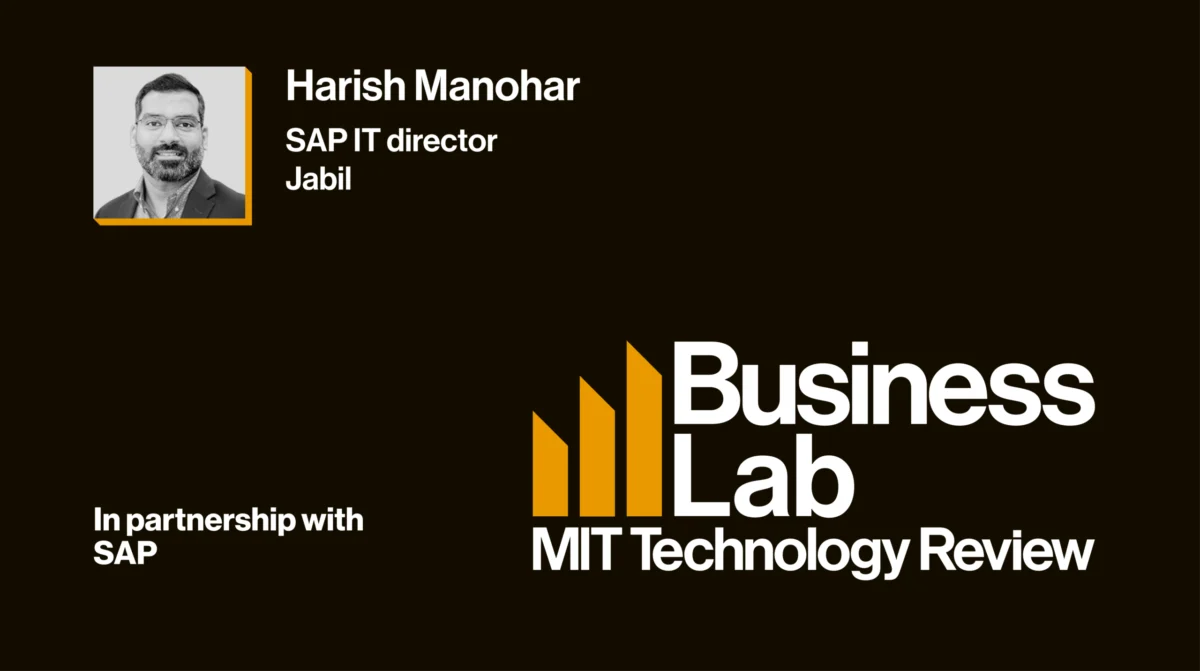
In today’s rapidly evolving business landscape, the technological infrastructure that underpins operations can quickly transform from a powerful asset into a significant liability. For global manufacturing giant Jabil, with its expansive network of over 100 sites spread across more than 30 countries, the key to navigating this complexity and unlocking future innovation, particularly in artificial intelligence, has been a steadfast commitment to integration and simplification. This strategic approach, as detailed by Harish Manohar, SAP IT Director at Jabil, prioritizes a "simplify-first, then-innovate" mindset. This philosophy recognizes that introducing new technologies without first addressing underlying complexities can inadvertently exacerbate risks. The overarching goal is to achieve process standardization, consolidate systems wherever feasible, and establish a robust, consistent data backbone across the entire organization. "Any innovation without simplification is going to add more complexity," Manohar emphasizes, underscoring the critical interdependency between these two imperatives.
This foundational principle fundamentally reshapes Jabil’s approach to modernization. Manohar articulates that "any modernization or transformation should add measurable business value." Consequently, the company’s focus is on creating end-to-end process connectivity across its intricate supply chain, building a scalable and consistent operational foundation that can be replicated across diverse regions. Integration, therefore, takes precedence because, as Manohar succinctly puts it, "the backbone of any contemporary or modern organization is data." Before organizations can effectively optimize, automate, or leverage AI, seamless data flow across all systems is an absolute prerequisite.
Achieving this seamless data flow across a global enterprise, however, presents substantial challenges. Jabil’s vast network of sites operates with varying degrees of process maturity, an array of legacy systems, and localized workflows. Furthermore, operating within regulated industries introduces additional compliance requirements. Consequently, standardizing processes and governance across different regions and business environments necessitates a delicate balance: implementing changes and improvements without disrupting ongoing operations.
The tangible benefits of this strategic integration extend beyond the technological realm to significantly impact the people utilizing these systems. Integrated workflows provide employees with shared data visibility, drastically reducing the need for manual data reconciliation. This shift empowers employees to move from the arduous task of data retrieval to the more impactful role of acting on actionable insights. For Jabil, a key objective is to enhance real-time visibility into supply chain events, thereby enabling more agile responses to disruptions and mitigating operational risks.
Looking ahead, this well-established foundation is poised to make AI and automation even more potent and scalable. With trusted data and integrated systems in place, Jabil is actively exploring advanced applications such as predictive supply chain insights, intelligent exception handling, and AI-driven planning and forecasting. Manohar’s key takeaway is unequivocal: "Simplicity at scale is a very competitive advantage." He stresses that all technology investments must demonstrably connect to tangible business value and bolster operational resilience.
This insightful discussion was produced in partnership with SAP.
Full Transcript Highlights:
Megan Tatum, host of Business Lab from MIT Technology Review, introduced the episode’s focus: enterprise technology integration and its role in enabling reliable operations at scale. She highlighted how consolidating tools and systems across the supply chain leads to earlier visibility, faster responses, and greater resilience. Harish Manohar, SAP IT Director at Jabil, joined the conversation, detailing Jabil’s journey of simplifying its technology landscape through SAP Integration Suite, connecting systems, retiring fragmented tools, and fostering consistent global operations.
Manohar provided an overview of Jabil, a global manufacturing company with over 100 sites in more than 30 countries, employing over 140,000 people and serving as a trusted partner to 400+ global brands. He explained how the company’s global footprint, coupled with years of operation, led to a proliferation of site-specific tools, manual workarounds, and spreadsheet-based processes. This "big technical debt" limited Jabil’s ability to identify issues early, coordinate responses consistently, and scale those responses globally. The resulting data silos delayed robust decision-making, making integration a critical strategic priority. The establishment of a single, trusted data backbone was deemed essential for faster, coordinated responses to disruptions, a crucial element in manufacturing.
When questioned about adopting new technologies without adding complexity, Manohar reiterated Jabil’s "simplify-first, then-innovate" mindset. He emphasized bringing more processes into SAP, standardizing them, and avoiding data silos. SAP’s Business Technology Platform (BTP) and Integration Suite have become central to their integration strategy, with a focus on API-driven, event-based integration. Jabil prioritizes reusing existing solutions and standardizing rather than adopting one-off tools for niche use cases. They also embrace SAP’s clean-core approach, aiming to minimize heavy customizations, especially as they transition to RISE, to enable a cleaner future state.
Modernization at Jabil, Manohar explained, is defined by measurable business value, not just system upgrades. Their approach centers on connecting end-to-end supply chain processes and standardizing global plant operations, leveraging SAP Signavio for business process management. Integration, he reiterated, came first because data is the backbone of any modern organization, and data must flow seamlessly before optimization, automation, or AI can be effectively applied. The goal is a scalable foundation for consistent growth and development across industries.
The challenges of rolling out such initiatives globally are significant, stemming from varying site maturity levels, legacy systems, localized processes, and diverse change management landscapes, compounded by regulated business environments. Standardization, however, provides consistent workflows, data flows, and governance, enabling faster rollouts of new technologies by reducing the need for extensive site-specific customizations. Jabil aims to shift from a site-by-site operational model to an enterprise-capability approach, targeting over 40 plants with shared, consistent processes.
The shift to a simplified landscape has profoundly impacted employee experience. Previously, employees across various roles (buyers, planners, analysts) juggled multiple tools, manual coordination, and data reconciliation, leading to delays in decision-making. Now, with integrated workflows and shared data visibility, employees spend less time chasing information and more time acting on insights. Technology is becoming an enabler of decision-making rather than an overhead.
Regarding ROI, Jabil views modernization and transformation through the lens of measurable business value, requiring a jointly approved business case with the business units. The most significant benefit realized is near real-time visibility across supply chain events, enabling faster responses to disruptions and exceptions, thereby significantly reducing operational risk. Unified workflows have been a game-changer, facilitating the early identification of missing materials and faster resolution across sites. Real-time analytics allow for instant supply chain adjustments, with AI playing a crucial role. Visibility, for Jabil, means enabling scenario modeling, proactive decision-making, and fostering business continuity.
With a strong integration foundation, Jabil is now poised to accelerate AI and automation adoption. They believe this foundation enables event-driven, real-time processes, robust decision-making, and scalable automation, all crucial for AI use cases. Key focus areas include predictive supply chain insights, intelligent exception handling, and AI-driven planning and forecasting. The aim is for AI to augment decision-making and deliver measurable value, moving beyond mere experimentation. Integration ensures AI has access to trusted data and the ability to act across multiple global systems.
For leaders grappling with tool sprawl, Manohar offers key lessons: prioritize integration as a foundation, not an afterthought. Advocate for simplification over adding numerous tools. Standardize processes and tools across the organization, ensuring business stakeholders understand the value of standardization. Build a single source of truth for data, moving away from locally siloed sources. Develop a scalable integration architecture designed for the next three to five years. Crucially, focus on outcomes—speed, visibility, resilience—rather than just technology deployment, fostering a partnership between IT and business focused on business value. "Simplicity at scale is a very competitive advantage," Manohar concludes, and technology investments must directly tie to business value and operational resilience.