Joko Widodo
The venture capital landscape continues to be electrified by the relentless advance of artificial intelligence, a trend dramatically underscored by this week’s top funding rounds. As August transitioned into September 2026, the focus of investment firmly landed on AI infrastructure, with two colossal multibillion-dollar deals setting a new benchmark for capital allocation in this critical sector. These rounds reflect not just confidence in AI’s future, but an urgent recognition of the foundational compute and data capabilities required to power the next generation of intelligent systems. This week’s robust activity reaffirms that despite broader economic fluctuations, investors are doubling down on technologies poised to redefine industries.
For those tracking the pulse of the startup ecosystem, especially the titans emerging from the U.S., our curated list of $100 million-plus venture deals – The Crunchbase Megadeals Board – remains an indispensable resource. This weekly feature serves as a vital snapshot, revealing where smart money is flowing and which innovations are capturing the most attention. Following last week’s impressive lineup of AI tools and assistants, this period pivoted decisively towards the foundational layers of AI, signaling a maturation in investment strategy where the underlying hardware and cloud architecture are seen as equally, if not more, crucial than the applications themselves.
AI infrastructure not only led but unequivocally dominated the largest venture rounds this week, claiming the top three spots and capturing the imagination of leading investors. Denver-based Crusoe, a company that has masterfully pivoted and scaled, spearheaded the charge with an astounding $3 billion financing. Hot on its heels was New York’s Fluidstack, securing a formidable $1.5 billion. Further illustrating the breadth of AI’s impact, AI inference specialist Gimlet Labs landed $300 million. Beyond AI’s direct gravitational pull, the list showcased a diverse tapestry of innovation, with significant fundings spanning critical sectors like cybersecurity, robotics, the evolving food industry, essential HR software, dynamic payments solutions, and specialized healthcare. This eclectic mix demonstrates a venture ecosystem that, while AI-centric, remains keenly aware of the opportunities across a multitude of high-growth industries.
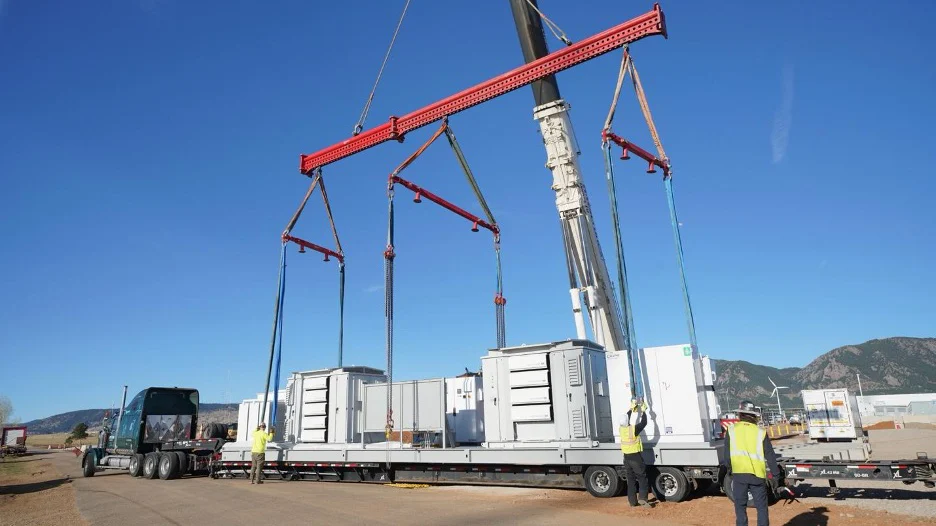
1. Crusoe, $3B, AI infrastructure: Denver-based Crusoe shattered expectations with a staggering $3 billion Series F funding round. This monumental investment was co-led by the astute Atreides Management and Valor Equity Partners, with significant participation from Mubadala Capital. Crusoe’s journey is a compelling narrative of strategic evolution. Originally founded on the innovative premise of harnessing otherwise wasted stranded natural gas to power energy-intensive cryptocurrency mining operations, the company has undergone a remarkable transformation. It has emerged as a formidable player in the AI cloud and data center domain, now providing essential compute resources to industry giants such as OpenAI, Microsoft, and Meta. This pivot was not merely a tactical shift but a profound reorientation towards a market with exponentially growing demand, leveraging its expertise in efficient, sustainable data center operations. The latest financing values Crusoe at an eye-watering $30 billion – a tripling of its valuation in less than a year, according to Crunchbase data. This rapid ascent underscores the intense investor appetite for companies that can deliver scalable, energy-efficient infrastructure critical for the insatiable demands of advanced AI models. With this latest injection, Crusoe’s total funding to date has soared to nearly $7.2 billion, cementing its position as a cornerstone of the global AI infrastructure landscape.
2. Fluidstack, $1.5B, AI infrastructure: New York-based Fluidstack secured a formidable $1.5 billion in a private equity round spearheaded by Jane Street Capital. This substantial raise catapults the AI infrastructure company’s total funding to just over $2.6 billion, highlighting the colossal capital required to compete in the burgeoning AI compute market. Fluidstack specializes in providing large-scale GPU and robust data center infrastructure, meticulously engineered to meet the demanding requirements of complex AI workloads. As the global race for AI supremacy intensifies, the demand for specialized hardware and scalable compute power has surged dramatically. Fluidstack has strategically positioned itself as one of a growing cohort of companies aggressively investing to address this soaring compute demand. Their ability to attract such a significant private equity investment from a firm like Jane Street Capital, known for its quantitative trading and technological prowess, speaks volumes about the perceived stability and high growth potential of the AI infrastructure sector. The financing values the company at an impressive $18 billion, reflecting the critical role it plays in enabling AI development and deployment on a massive scale.
3. (tied) Gimlet Labs, $300M, AI inference infrastructure: San Francisco-based Gimlet Labs joined the ranks of this week’s top funders with a substantial $300 million Series B round. The investment was led by the influential Andreessen Horowitz, a firm renowned for its early bets on transformative technologies, with additional participation from Sapphire Ventures, Menlo Ventures, Arm Holdings, and M12 – Microsoft’s Venture Fund. Gimlet Labs is at the forefront of innovation in the AI space, developing an advanced AI inference cloud designed to distribute workloads across a heterogeneous array of chips. This innovative approach is aimed at tackling one of the most pressing challenges in AI: making the increasingly compute-intensive process of running AI models faster, more efficient, and cost-effective. By intelligently routing inference tasks to the most suitable processing units, Gimlet seeks to optimize performance and resource utilization. The involvement of Arm Holdings, a global leader in semiconductor IP, is particularly noteworthy, suggesting a strategic alignment with future chip architectures crucial for AI. Having now raised $392 million to date, Gimlet Labs was valued at $3 billion in this latest round, according to Crunchbase, underscoring the market’s strong belief in its solution for scaling AI inference.
3. (tied) Upwind Security, $300M, cybersecurity: San Francisco-based Upwind Security also secured an impressive $300 million in new funding, demonstrating the vital importance of robust cybersecurity in an increasingly complex digital landscape. This round was co-led by two venture capital powerhouses, Bessemer Venture Partners and TCV, with additional backing from Salesforce Ventures, Greylock, Craft Ventures, and Cyberstarts. Upwind Security’s platform leverages real-time cloud runtime data to proactively identify threats and vulnerabilities within cloud environments. This positions the company at the nexus of two particularly well-funded and critical technological areas: cloud security and AI. As enterprises migrate more of their operations to the cloud, the attack surface expands, and traditional security measures often fall short. Upwind’s ability to provide dynamic, real-time protection in the cloud is a compelling value proposition. Furthermore, its integration with AI-driven analytics likely enhances its threat detection capabilities, addressing the sophisticated nature of modern cyber threats. With this latest infusion of capital, Upwind has raised a total of $730 million to date and was valued at $3.8 billion, reflecting the urgent need for advanced cloud security solutions in the market.
5. David, $250M, food and nutrition: New York-based high-protein food company David successfully raised a $250 million Series B round. This significant investment was co-led by Greenoaks and Valor Equity Partners, with additional participation from Iconiq Capital, Imaginary Ventures, and company co-founder Peter Rahal. David, initially recognized for its popular high-protein, low-calorie bars, has strategically diversified its product portfolio to encompass a broader range of protein-focused foods. This expansion directly addresses a sustained and growing consumer trend: the increasing gravitation towards products marketed around protein content and metabolic health benefits. As consumers become more health-conscious and seek functional foods that support their dietary goals, companies like David are well-positioned to capitalize on this demand. The market for alternative protein and health-focused nutrition continues to show robust growth, attracting substantial investment. With this round, David has now accumulated $335 million in total funding and was valued at $2.25 billion, underscoring the significant investor confidence in the future of innovative, health-oriented food brands.
6. HiBob, $166M, HR software: New York-based HiBob secured $166 million in a funding round led by Salesforce, with additional participation from Farallon Capital Management. HiBob’s flagship "Bob" platform offers a comprehensive suite of tools that integrate HR, payroll, benefits administration, and employee management functionalities into a single, cohesive system. In an era where workforce management is increasingly complex and data-driven, HiBob is strategically positioning its rich trove of workforce data as a foundational layer for enterprise AI applications. This forward-thinking approach aims to leverage AI to unlock deeper insights into employee performance, engagement, and talent management, ultimately optimizing human capital strategies for businesses. Salesforce’s lead investment is particularly noteworthy, hinting at potential strategic partnerships or future integrations, given Salesforce’s own extensive ecosystem of enterprise solutions. This latest deal elevates HiBob’s total funding to $740 million and values the company at $3.2 billion, reflecting the ongoing digital transformation within human resources and the growing role of AI in optimizing workforce productivity and experience.
7. Lyte AI, $165M, robotics and physical AI: Sunnyvale, California-based Lyte AI announced a $165 million Series C round, led by Maverick Silicon, with significant contributions from Fidelity Management And Research Company, Atreides Management, Key 1 Capital, and Ora Global. Founded by a team of former Apple engineers, Lyte AI is at the cutting edge of robotics and the burgeoning field of physical AI. The company specializes in developing proprietary custom silicon, advanced sensors, and sophisticated AI software designed to enhance robots’ ability to perceive, understand, and interact with their physical surroundings. This technology is fundamental to the rapid growth of the physical AI sector, which encompasses robots, autonomous vehicles, and other intelligent machines that operate in the real world. Lyte AI’s innovations address critical challenges in perception and decision-making for autonomous systems, enabling more dexterous, intelligent, and reliable robotic applications. Having now raised $272 million to date, Lyte AI was valued at $1.6 billion in this Series C round, according to Crunchbase, signifying strong investor belief in its foundational technology for the next generation of intelligent machines.
8. TabaPay, $155M, fintech and payments: Mountain View, California-based TabaPay secured $155 million in strategic growth financing, led by FTV Capital. The company plays a crucial role in the financial ecosystem by providing essential money-movement infrastructure, empowering banks and fintech companies to instantly disburse, collect, and transfer funds. In today’s fast-paced digital economy, the demand for real-time payments is paramount, and TabaPay’s infrastructure facilitates this critical capability, ensuring seamless and efficient financial transactions. The announcement of this funding round coincided with TabaPay’s declaration of its intent to acquire federally chartered Transact Bank. This strategic move is poised to significantly deepen TabaPay’s involvement in the payments infrastructure, potentially offering direct access to banking services, regulatory licenses, and an expanded suite of financial products. Such an acquisition could transform TabaPay from a pure infrastructure provider into a more comprehensive financial services platform, enhancing its competitive edge. This new round follows a previously undisclosed Series A funding in 2022, indicating a sustained growth trajectory and investor confidence in its pivotal role in modernizing payment systems.
9. Thyme Care, $125M, health care and oncology: Nashville, Tennessee-based Thyme Care successfully closed a $125 million Series E funding round, led by Morgan Health, the dedicated healthcare investment arm of JPMorgan Chase. Prominent backers in this round included CVS Health Ventures, Humana, and Andreessen Horowitz, among others. Thyme Care operates at the critical intersection of health plans, employers, and healthcare providers, focusing on coordinating cancer treatment and managing comprehensive oncology care. This model represents a significant step towards value-based specialty care, a paradigm shift in healthcare aimed at improving patient outcomes while simultaneously controlling costs. By ensuring integrated and personalized care pathways for cancer patients, Thyme Care addresses a major pain point in the healthcare system, which often struggles with fragmented and inefficient care delivery. The involvement of major health industry players like CVS Health and Humana, alongside a financial giant like JPMorgan Chase, underscores the strategic importance and potential impact of Thyme Care’s approach. With this latest investment, the company has now raised a total of $399 million and was valued at $2 billion, highlighting the substantial market opportunity for innovative, patient-centric oncology solutions.
10. HiddenLayer, $100M, AI cybersecurity: Austin-based HiddenLayer secured $100 million in a Series B funding round, led by Delta-v Capital. The round also saw participation from Ten Eleven Ventures, M12 (Microsoft’s Venture Fund), Booz Allen Ventures, and Morgan Stanley. HiddenLayer is at the forefront of a nascent but rapidly critical sector: AI cybersecurity. The company specializes in building security tools specifically designed to protect AI models, agents, and their underlying workflows from a myriad of attacks and vulnerabilities. As enterprises increasingly deploy AI systems into production environments, the unique security risks associated with these technologies – such as data poisoning, adversarial attacks, model inversion, and privacy breaches – are becoming starkly apparent. HiddenLayer’s solutions are tailored to defend against these sophisticated threats, ensuring the integrity, reliability, and trustworthiness of AI deployments. The urgency for such specialized cybersecurity solutions is growing exponentially, making this a high-priority investment area. Having raised $156.2 million to date, according to Crunchbase, HiddenLayer is well-positioned to become a key player in safeguarding the future of AI.
Methodology: This comprehensive roundup meticulously tracked the largest announced funding rounds within the Crunchbase database that were raised by U.S.-based companies during the period of August 29th to September 4th, 2026. While efforts are made to capture all significant announced rounds, a minor time lag may occur as some deals are reported slightly later in the week.
The week’s funding activities paint a clear picture: AI infrastructure is not just a burgeoning sector but a foundational imperative for the technological future. The multi-billion dollar hauls by Crusoe and Fluidstack are indicative of the enormous capital and strategic importance being placed on powering the AI revolution. Beyond the AI core, strong investments in cybersecurity, robotics, fintech, health tech, and innovative food demonstrate a vibrant, interconnected ecosystem where technological advancement continues to attract significant capital, promising further innovation and disruption across industries. As we move forward, the interplay between these sectors, particularly how AI permeates and enhances each, will undoubtedly shape the future of venture capital.
Stay up to date with recent funding rounds, acquisitions, and more with the Crunchbase Daily.