Faris Adani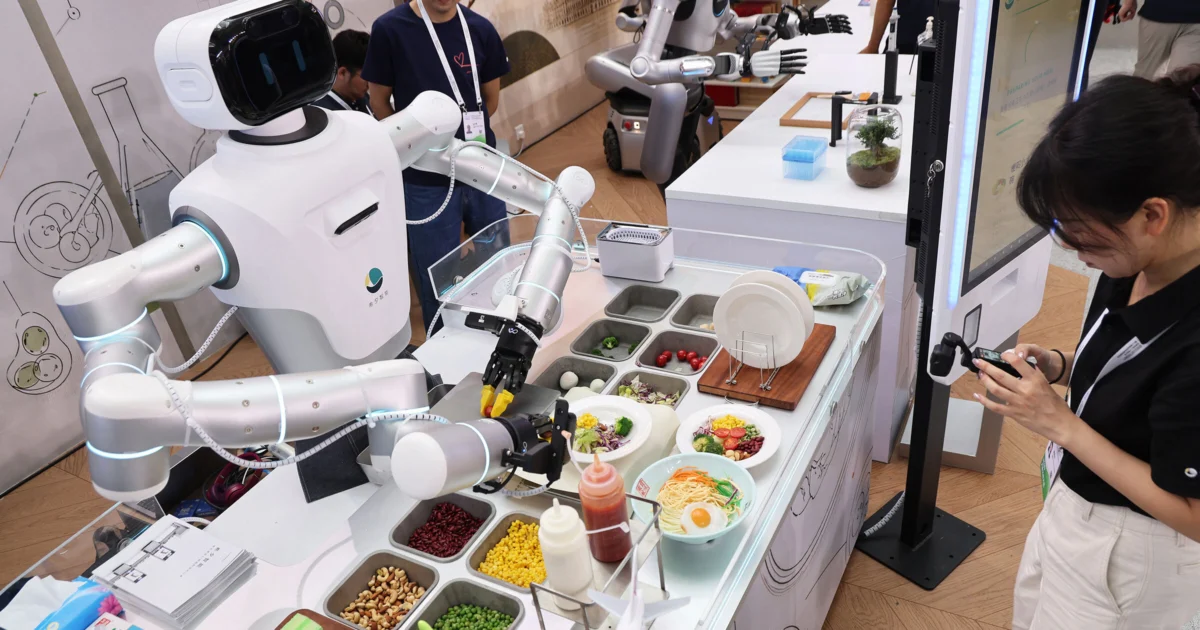
Beijing has become the epicenter of a gastronomic revolution, where the clatter of woks and the sizzle of oil are increasingly orchestrated not by human hands, but by sophisticated AI-powered robots. At the recent World Robotics Conference, Chinese companies showcased groundbreaking advancements aimed at achieving one of the most ambitious goals in applied robotics: fully automated cooking. This push underscores China’s aggressive national strategy to lead the world in artificial intelligence and automation, transforming not just industrial sectors but also the very fabric of daily life, starting with the kitchen.
The conference, a bustling nexus of innovation and technological prowess, saw several firms unveil their latest contributions to the burgeoning field of robotic gastronomy. Among the most prominent was Oak Deer Robotics, a company rapidly establishing itself as a pioneer in kitchen automation. Oak Deer introduced a suite of three revolutionary kitchen aids, each designed to push the boundaries of what robots can achieve in preparing meals. These innovations include the "CookingMuse," a cutting-edge multimodal cooking AI model, an advanced AI-integrated cooking robot apparatus, and "RobotCook," a fully-automated food cart featuring a compact humanoid chef.
The "CookingMuse" is particularly noteworthy, representing a significant leap in AI’s ability to understand and execute complex culinary tasks. Unlike simpler automated systems that merely follow pre-programmed instructions, a multimodal AI model can process diverse forms of data—such as visual cues from ingredients, tactile feedback from stirring, and even olfactory information (in advanced prototypes)—to adapt and refine its cooking process. This intelligence allows the robot to learn from experience, adjust parameters like heat and cooking time based on the real-time state of the food, and ultimately produce more consistent and higher-quality dishes. For the complex nuances of Chinese stir-fry, where timing, heat control, and precise ingredient handling are paramount, such an AI is indispensable.
During live demonstrations at the conference, Oak Deer’s basic cooking robot flawlessly executed two classic Chinese stir-fry dishes: tofu, and pork with green peppers. These demonstrations were not merely static displays but dynamic showcases of the robot’s capabilities, illustrating its dexterity and precision. The company’s robots are specifically engineered to master "Chinese stir-fry dishes," a testament to their specialized design. Central to their operation is a robust robotic wok capable of reaching temperatures up to 300 degrees Celsius, crucial for achieving the characteristic "wok hei" or smoky aroma synonymous with authentic Chinese stir-frying. An intricate ingredient dispensing system ensures accurate measurements, while a proprietary, "fully self-developed stir-frying algorithm" dictates the precise movements and timings required for perfect results. The ambition of Oak Deer Robotics is evident in its widespread deployment; according to China Entrepreneur Magazine, their cooking robots are already active in over 300 cities and 4,000 stores across China, signaling a rapid commercialization and acceptance of robotic culinary solutions.
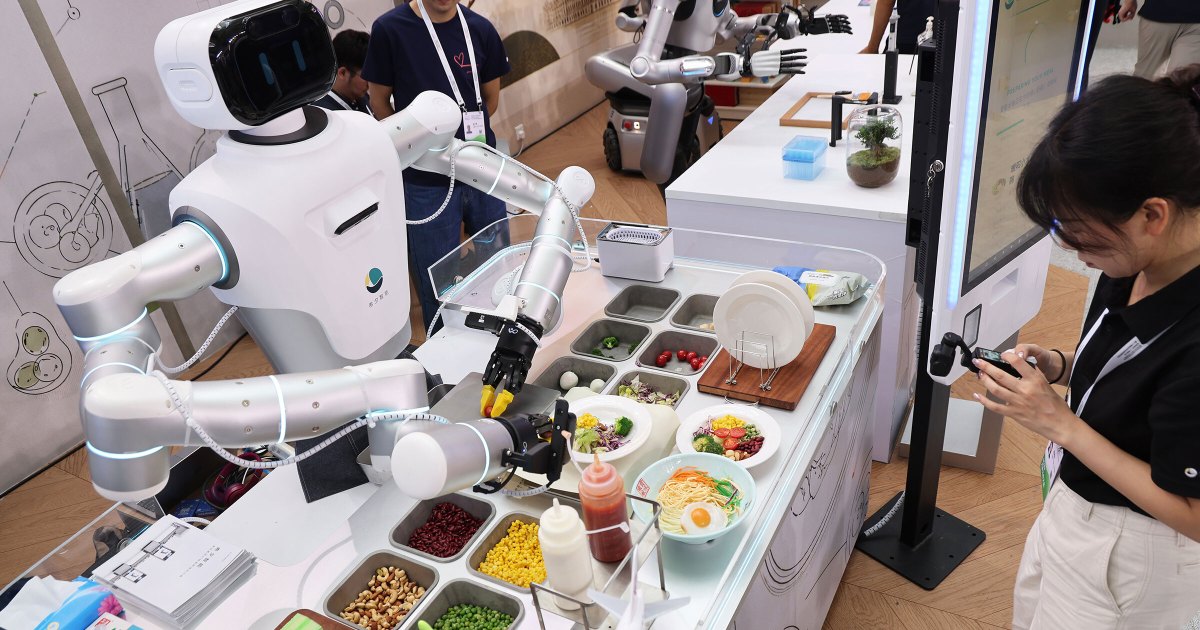
Beyond the realm of high-temperature cooking, other companies at the conference explored different facets of robotic food service. Hikrobots, for instance, showcased humanoid robots designed for basic fast-food restaurant service. Photographers from Reuters captured footage of these apron-clad humanoids meticulously prepping orders within the main expo center. These robots demonstrated the ability to gingerly place assorted foodstuffs into a bucket before transferring the bucket onto a serving tray. While their movements were noted as not "swift," they offered a compelling glimpse into a possible future for humanoid robotics in the service industry. This application, while less about the act of cooking itself, highlights the broader potential for automation to handle repetitive, precise tasks in commercial kitchens, freeing up human staff for more complex or customer-facing roles. The development of dexterous humanoid robots capable of interacting with various objects and environments is a critical step towards fully automated eateries.
The integration of robots into the food service landscape is not confined to conference halls and theoretical demonstrations. In a tangible stride towards commercial deployment, a robot-powered noodle shop named "Yujian Weilai" commenced trial operations in southwestern Beijing. Heralded by the Global Times as the city’s first fully-equipped robot noodle restaurant, this establishment offers a menu of three popular noodle dishes: mushroom zhajiang noodles, tomato beef brisket, and braised beef noodles. The operational model is a seamless blend of automation and efficiency. Robots take charge of the entire cooking process, from boiling the noodles to adding the broth, meat, and other toppings. A robotic arm then elegantly transfers the freshly prepared entrée to a delivery robot, which presumably transports it to the customer. While human intervention is still required for the initial preparation and loading of ingredients each day, the actual cooking and serving are almost entirely automated. Li Pengzhen, the restaurant’s general manager, articulated the core philosophy behind this venture: "What we are trying to do is turn the machine’s parameters into numbers, and use that to standardize every single bowl." This focus on standardization ensures unparalleled consistency in taste and quality, addressing a common challenge in large-scale food production.
These developments are not isolated incidents but rather integral components of China’s overarching national strategy to become a global leader in AI and robotics. The government has heavily invested in these sectors, viewing them as crucial for economic growth, technological sovereignty, and addressing demographic shifts. The vision extends beyond individual restaurants to encompass smart cities and intelligent industries, where automation and AI streamline operations across various domains. The rapid advances in robotic chef technology in Beijing reflect a concerted effort to leverage these national resources and strategic directives.
However, the path to a fully automated culinary world is not without its challenges. While specialized robots excel at specific tasks, creating a robot capable of preparing an endless variety of dishes with the same adaptability and creativity as a human chef remains a distant goal. Current limitations include the sheer diversity of ingredients, the complexity of adapting recipes on the fly, and the initial setup and maintenance costs of these sophisticated machines. Furthermore, issues such as ingredient replenishment, sanitation protocols, and the occasional need for human intervention in troubleshooting or menu adjustments still present hurdles. Public acceptance also plays a crucial role; while novelty may attract initial customers, long-term patronage will depend on the perceived quality, safety, and value of robot-prepared food.
Despite these challenges, the swift advances observed in Beijing signify a pivotal moment in the evolution of food technology. The trajectory points towards a future where automated kitchens could revolutionize the restaurant industry, leading to increased efficiency, reduced labor costs, and unparalleled consistency. This could foster the growth of "ghost kitchens" that operate purely on automation, serving vast populations with standardized, high-quality meals. Moreover, it opens doors for personalized nutrition, where robots could prepare meals tailored to individual dietary needs and preferences. While the romantic ideal of the human chef’s artistry may never be fully replicated, the precision, speed, and consistency offered by AI-powered robo-chefs are undeniable game-changers for large-scale food service.
In conclusion, the innovations showcased at the World Robotics Conference and the emergence of fully automated eateries like Yujian Weilai underscore China’s relentless pursuit of technological mastery in the culinary domain. The "swift advances" in Chinese robo-chefing are indeed "turning up the heat" in Beijing, not just for the chefs themselves, but for the global food industry, signaling a future where the art of cooking is increasingly intertwined with the science of robotics and artificial intelligence. This is more than just an engineering feat; it’s a glimpse into the future of how we eat, how food is prepared, and how technology continues to reshape the most fundamental aspects of human experience.