Joko Widodo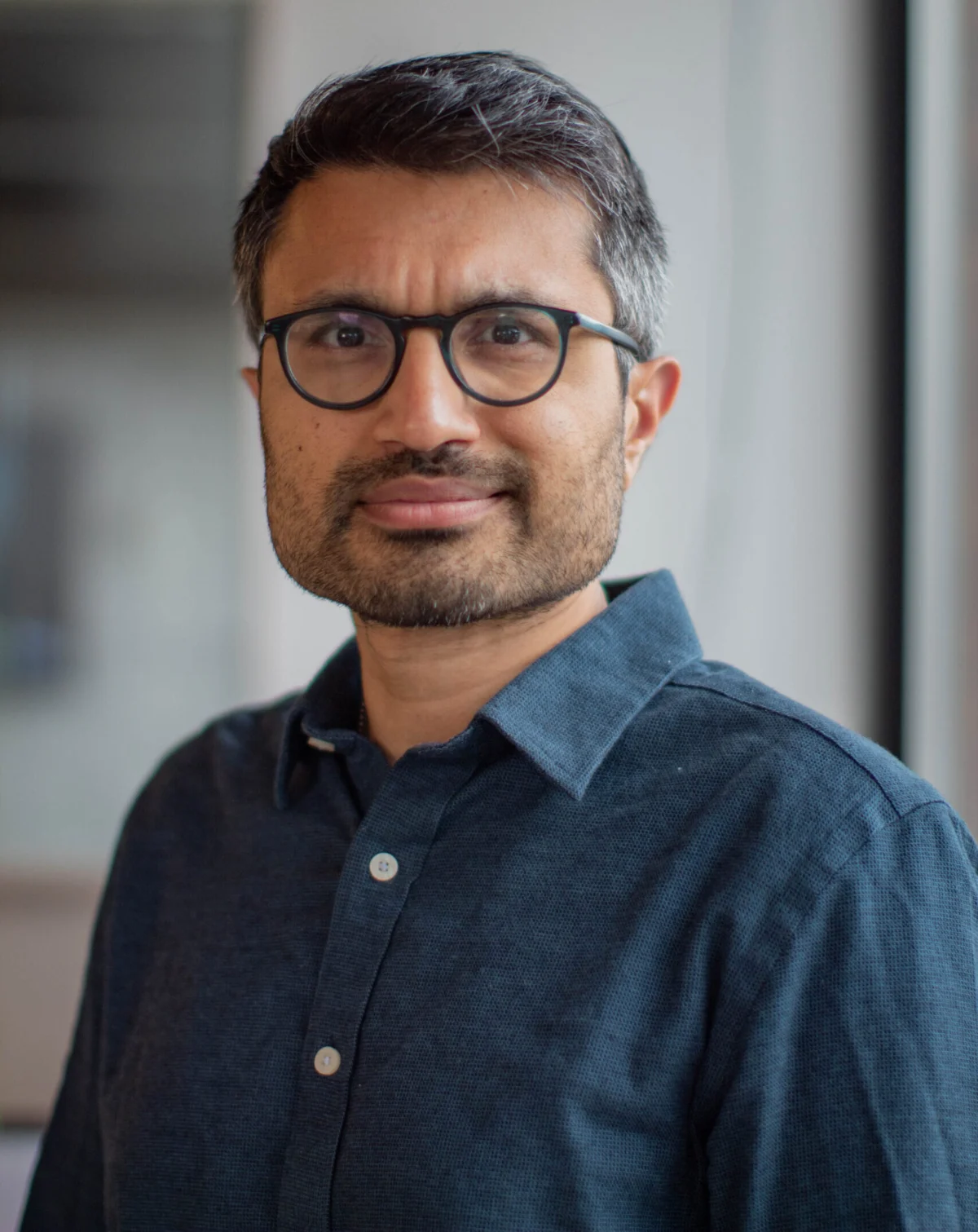
In an era increasingly dominated by deep tech and artificial intelligence, the narrative of successful startup founders often centers on computer science prodigies or seasoned engineers. Yet, a new wave of entrepreneurs is challenging this stereotype, proving that commercial vision, operational acumen, and a profound understanding of human systems – often honed through non-technical disciplines – can be just as crucial in building venture-backed giants. Ali Hussain, the visionary behind Tabs, a rapidly growing AI-powered fintech startup now valued at $400 million, embodies this shift, having navigated a remarkable journey from the nuanced world of humanities to the cutting edge of artificial intelligence.
Hussain’s foundational years were steeped in the gritty realities of entrepreneurship, long before he ever envisioned a tech company. He spent much of his childhood immersed in his family’s convenience store in St. Paul, Minnesota. These weren’t just idle hours; they were an immersive education in small business mechanics. From the meticulous task of packing cigarette cartons to observing his father tirelessly manage operations seven days a week, 365 days a year, Hussain absorbed the relentless dedication and multifaceted challenges inherent in running a business. His father, a first-generation immigrant from Karachi, Pakistan, had built his livelihood from the ground up, starting with a humble job at a 7-Eleven before realizing the American dream of owning his own corner store. This experience etched an indelible work ethic into Hussain, a deep understanding of customer needs, inventory management, and the sheer perseverance required to succeed.
However, his father, having lived the demanding life of a small business owner, harbored different aspirations for his son. In a pivotal conversation during Hussain’s high school years, a clear trade-off was laid out. “My dad didn’t want me to necessarily come back to the store,” Hussain recalls, reflecting on the profound influence of that moment. “He’s like, ‘Look, like this is what I did and built. Go use school as a mechanism to leave.’” This directive wasn’t about rejection but empowerment – a push to leverage education as a springboard for broader opportunities, to transcend the daily grind he knew so intimately.
Following his father’s guidance, Hussain embarked on an academic path that seemed a world away from tech. He secured a scholarship from the prestigious Telluride Association, which propelled him to Cornell University. There, rather than diving into coding or engineering, he found his intellectual passion in comparative politics and history, fields that demanded rigorous critical thinking, analytical prowess, and an ability to understand complex systems and human behaviors. These disciplines, though seemingly disparate from technology, cultivated a nuanced approach to problem-solving and an appreciation for the narratives that drive societies and economies – skills that would later prove invaluable in identifying market needs and building a compelling product vision.
His academic journey continued to ascend, culminating in a highly coveted Marshall Scholarship to the University of Oxford, where he intended to pursue a Ph.D. The allure of academia, with its deep intellectual dives and structured inquiry, was strong. Yet, just two months into his doctoral studies, a profound realization struck him. “I realized this is a terrible idea,” Hussain candidly admits. The structured, long-term career path of academia, with its demanding post-doctoral fellowships and competitive tenure tracks, felt incongruous with the inherent scrappiness and desire for immediate impact instilled by his upbringing. “I grew up… way too scrappy packing the cooler to survive through a postdoc and potentially a very structured 10-year career, which seemed very hard and long and not in my control.” The agency and direct control he had observed in his father’s entrepreneurial endeavors called to him more powerfully than the contemplative life of a scholar.
At 23, Hussain made the decisive pivot, resetting his trajectory. He took a chance on management consulting, joining The Boston Consulting Group (BCG) in the Midwest. This move was a strategic immersion, providing an intensive, accelerated crash course in the operational sinews of diverse businesses. He delved into spreadsheet modeling, financial analysis, market entry strategies, and corporate process optimization for Fortune 500 companies. BCG honed his analytical skills, introduced him to the language of business, and equipped him with a framework for dissecting complex problems. Yet, even within the high-stakes environment of consulting, the hierarchical corporate structure and advisory role lacked the direct ownership and creative freedom he craved. The agency he’d witnessed in his father’s store remained an unmet aspiration.
By 2015, the burgeoning tech scene beckoned. Hussain decided to embed himself directly into the startup world, making a significant leap and a considerable pay cut to join Latch – then a lean, 10-person seed-stage startup – as its very first operations hire. This was his "apprenticeship" in the wild west of early-stage tech. Over six transformative years, as Latch scaled from a handful of employees to a company generating tens of millions in revenue, Hussain became an instrumental force. He learned by doing, tackling everything from building out supply chains and customer support infrastructure to scaling sales operations and navigating complex fundraising rounds.
This period was a masterclass in building venture-backed companies from the ground up. He absorbed critical lessons: the imperative of pursuing large, addressable markets; the wisdom of surrounding oneself with diverse talent whose strengths complement one’s own; and the foresight required to build solutions aligned with major technological shifts. “Had I tried to do this directly out of Oxford or out of BCG, I think [it] would have been impossible,” Hussain told Crunchbase News. He elaborated on a common barrier for non-traditional founders: “One of the things that often keeps many non-traditional founders out is… the ability to access capital, but also understand the playbook of how to build, how to design around a real problem, and build a team.” Latch provided that indispensable playbook.
In 2023, armed with this hard-won knowledge and an acute sense of opportunity, Ali Hussain applied these principles to launch Tabs. He recognized that the world was on the cusp of a profound technological shift with the rapid ascent of artificial intelligence. While many saw AI primarily through a technical lens, Hussain, with his humanities background and operational insights, identified a critical, underserved commercial application: automating the often-cumbersome, error-prone, and time-consuming processes of finance and accounting for businesses.
Tabs was conceived as an AI platform designed to automate revenue recognition, billing, and collections – functions critical to any company’s financial health, yet traditionally manual and inefficient. Hussain understood his strengths lay in commercial vision, market strategy, and operational execution, not in writing complex algorithms. This self-awareness, a hallmark of effective leadership, led him to seek a deeply technical co-founder. He partnered with Deepak Bapat, an engineer with profound expertise, to balance his own background. “I came from the humanities,” Hussain noted. “Tabs is a deeply technical and complex problem to solve, and so having someone who could augment my vision… was a very important part.” This complementary founding team – vision married with deep technical capability – proved to be a powerful magnet for investors.
The credibility Hussain had meticulously built during his "apprentice" years at Latch, combined with his clear articulation of Tabs’s market opportunity and his co-founder’s technical prowess, quickly attracted significant investment. Tabs rapidly secured a $4 million pre-seed round, co-led by Primary Venture Partners and One Way Ventures. This initial vote of confidence was just the beginning. The startup’s innovative approach to leveraging AI to solve tangible financial pain points resonated deeply. Since its founding, Tabs has grown at an astonishing pace, expanding its team to approximately 180 employees and raising an impressive total of $92 million in capital. Its last valuation soared to $400 million, a testament to its strong product-market fit and the insatiable demand for intelligent automation in finance. The company has sustained triple- to quadruple-year-over-year revenue growth, indicating not just rapid expansion but also robust customer adoption and a scalable business model.
To Hussain, his non-traditional background isn’t a limitation but a distinct strategic advantage. It fosters a unique brand of resilience essential for navigating the inherent volatility and uncertainty of early-stage entrepreneurship. His journey, marked by deliberate pivots and a willingness to embrace new learning curves, instilled an adaptability that many with more linear career paths might lack. “I think a lot of non-traditional folks… have to embrace a ton of volatility, even ahead of being a founder, to make the sacrifices to learn,” Hussain explained. This resilience, born from diverse experiences and a willingness to step outside conventional boundaries, allows founders to approach challenges with fresh perspectives, to question established norms, and to innovate in ways that more entrenched players might overlook.
Ali Hussain’s story is a compelling narrative for the modern age of entrepreneurship. It underscores that while technical skills are undeniably crucial, they are not the sole determinant of success in the tech world. The ability to think critically, understand human needs, communicate effectively, build strong teams, and execute with unwavering operational discipline – qualities often nurtured in the humanities and through diverse life experiences – are equally, if not more, vital. In a world increasingly shaped by AI, the human touch, guided by vision and resilience, remains the ultimate catalyst for groundbreaking innovation. Hussain’s journey from packing cigarette cartons in a St. Paul convenience store to building a $400 million AI fintech startup is a powerful testament to this evolving truth.