Joko Widodo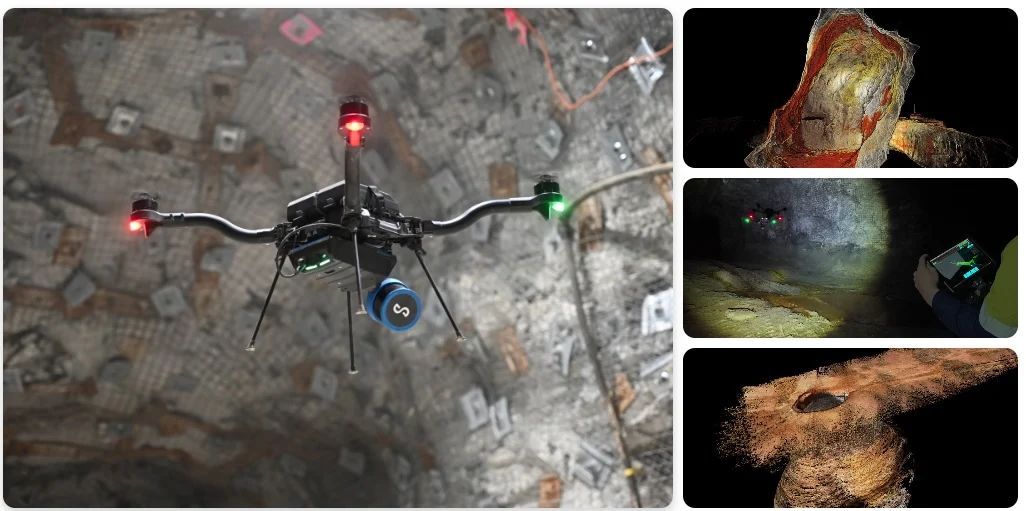
$27M to Help Recycling Plants See What’s in Trash: Greyparrot’s Vision for Circularity
For decades, the global recycling industry has grappled with inherent inefficiencies, largely due to a lack of precise data on the composition of waste streams. Facilities have relied on labor-intensive manual sorting, optical sensors with limited capabilities, and often, educated guesswork to understand what materials flow through their systems. This archaic approach leads to significant material loss, contamination, and a failure to meet increasingly stringent recycling targets and Extended Producer Responsibility (EPR) regulations, which place the onus of managing post-consumer waste on manufacturers. London-based startup Greyparrot is at the forefront of changing this paradigm, announcing a substantial £20.3 million ($27 million) Series B funding round last month, led by technology investor Omar Mir, to bring unparalleled transparency and efficiency to waste management.
Greyparrot’s innovative solution involves deploying advanced AI-powered camera systems directly above conveyor belts in recycling plants. These systems utilize sophisticated computer vision technology to identify, classify, and track every single discarded item—be it a plastic bottle, a carton, or a metallic wrapper—in real-time. This real-time data collection transforms every piece of waste into valuable intelligence, moving beyond mere sampling to comprehensive, granular analysis. The immediate benefits for recycling operators are multifold: enhanced recovery of valuable materials, significantly improved sorting efficiency, and a robust mechanism for complying with evolving global recycling regulations. With its systems already deployed in over 20 countries, Greyparrot proudly reports having analyzed more than 1 trillion waste objects, demonstrating the scalability and impact of its technology. Industry giants like Waste Management and Veolia are among its growing customer base, testament to the critical need for Greyparrot’s data-driven approach.
Beyond operational improvements, the data gathered by Greyparrot’s systems feeds into its Deepnest platform, providing crucial insights for consumer brands. Major players such as Unilever, L’Oréal, and Kenvue leverage Deepnest to gain a holistic understanding of their packaging’s end-of-life journey. This feedback loop is invaluable for informing sustainable packaging redesigns, evaluating the effectiveness of recycling infrastructure, and ensuring compliance with EPR schemes prevalent in regions like Canada and the EU. The fresh capital infusion will strategically fuel Greyparrot’s expansion across North America and Europe, aligning with its ambitious goal to prevent over 1 million tons of waste from reaching landfills by 2030. This investment highlights a broader, surging investor interest in "Physical AI"—the application of artificial intelligence in tangible, real-world environments rather than purely digital ones. Crunchbase data indicates a remarkable growth in this sector, with nearly $47.3 billion raised in the first half of 2026, marking an almost 80% year-over-year increase, as startups increasingly deploy AI in critical 3D environments like factories and recycling plants. This trend signifies a mature understanding of AI’s potential to optimize, automate, and revolutionize physical infrastructure, promising a more sustainable and efficient future.
$17M to Help Robots Navigate Where GPS Can’t: Emesent’s Autonomous Exploration
While AI is making recycling smarter, another frontier for physical AI is literally going underground, addressing the critical challenge of navigation in environments where traditional GPS signals are non-existent or unreliable. Australian startup Emesent, with its recent $17 million funding round, is leading the charge in enabling robots to autonomously explore and map hazardous, GPS-denied locations such as mines, tunnels, and complex industrial sites. This funding comprises a $10 million equity round from investors including Main Sequence Technologies, QIC Ventures, Orion Resource Partners, Hostplus, and NGS Super, complemented by a $7 million venture debt facility from Australia’s National Reconstruction Fund Corp. The capital is earmarked for scaling manufacturing operations and advancing its AI autonomy and cloud mapping platforms.
Emesent gained prominence through its flagship product, Hovermap, a cutting-edge LiDAR scanning payload designed to be mounted on drones, ground vehicles, or backpacks. Hovermap’s ability to generate detailed 3D maps of subterranean and challenging environments has been a game-changer for safety and efficiency in sectors like mining. However, Emesent’s strategic focus is increasingly shifting towards software-driven autonomy. Its Cortex AI platform empowers robots to navigate independently in GPS-deprived settings, mitigating risks for human workers and opening up new possibilities for data collection. Complementing this, the Aura cloud platform provides robust capabilities for processing and analyzing the vast amounts of spatial data generated by these autonomous explorations.

The company’s technology is already operational at over 200 mine sites globally, significantly improving safety by allowing robots to inspect unstable areas and enhance operational efficiency through precise mapping. Emesent is now strategically expanding its reach into the defense, critical infrastructure, and construction sectors, where the need for autonomous navigation and detailed spatial intelligence in hazardous or complex environments is equally pressing. Emesent’s successful raise further exemplifies the escalating interest and investment in physical AI. As industries worldwide confront pressing issues like labor shortages, increasing operational complexities, and the imperative to ensure worker safety, startups that seamlessly integrate robotics, computer vision, and advanced autonomy are attracting substantial capital. These innovations are crucial for automating tasks that are inherently difficult, dirty, or dangerous for humans. The broader robotics investment landscape has seen unprecedented growth, with global funding reaching an annual record of $15 billion in 2025, a figure that has already been surpassed partway through 2026, according to Crunchbase data. This surge underscores a collective recognition of robotics and AI’s pivotal role in transforming industrial operations and safety protocols globally.
$12.25M for AI That Treats Congestion with Sound: SoundHealth’s Therapeutic Innovation
Having explored AI’s impact on dirty work like waste sorting and hazardous navigation, the spotlight now shifts to its application in a deeply personal domain: human health and well-being. San Francisco-based medtech startup SoundHealth is pioneering a novel, non-invasive approach to treating congestion and improving sleep, securing an oversubscribed $12.25 million Series A round led by Shangbay Capital. This investment signals strong confidence in SoundHealth’s unique proposition: leveraging AI and acoustic resonance therapy to address common yet debilitating health issues without the reliance on pharmaceutical drugs.
SoundHealth develops FDA-cleared, non-invasive devices that utilize a sophisticated blend of AI and acoustic science. Its flagship product, the Sonu band, represents a significant leap in personalized therapy. The device is engineered to generate personalized sound waves, meticulously tailored to a user’s unique facial anatomy. These specific acoustic frequencies work to gently open nasal passages, alleviating congestion and facilitating easier breathing. Building on this success, SoundHealth’s newer Spatial Sleep device aims to optimize sleep quality by helping users fall asleep faster and achieve more sustained rest. The underlying principle involves creating a therapeutic sound environment that promotes relaxation and physiological conditions conducive to better sleep.
This significant funding round arrives amidst a robust trend of increasing investor support for AI-powered medical devices that harmoniously blend cutting-edge software with regulated hardware. Crunchbase data highlights this burgeoning sector, revealing that companies at the intersection of AI and medical devices collectively raised over $629 million in the first half of this year, representing a substantial 33% increase year-over-year. This growth underscores the potential of AI to revolutionize diagnostics, treatment, and patient care by offering personalized, efficient, and often less invasive alternatives. SoundHealth’s approach taps into the growing demand for drug-free interventions and personalized healthcare solutions, promising improved quality of life for millions suffering from chronic congestion and sleep disorders. The integration of AI allows for adaptive and precise therapy, moving beyond one-size-fits-all solutions to deliver truly individualized treatment, marking a new era for therapeutic medical devices.
$3.85M to Turn Unrecyclable Trash Into Fuel: Forge Industries’ Circular Economy Solution
The theme of waste management continues with Forge Industries, a Nashville, Tennessee-based startup addressing the critical challenge of materials deemed "unrecyclable." While Greyparrot focuses on optimizing the sorting and recovery of recyclable waste, Forge Industries is tackling the more intractable problem of converting hard-to-recycle plastics and other waste streams into a valuable resource: industrial fuel. Last month, the company announced a $3.85 million funding round, co-led by 8090 Industries and Next Phase Capital, aimed at commercializing its innovative waste-to-fuel technology.
Forge Industries’ core innovation lies in its proprietary process that transforms materials traditionally destined for landfills or incineration—such as contaminated plastics, multi-layer packaging, and other mixed wastes—into an engineered fuel. This fuel is designed to be a direct replacement for coal in energy-intensive heavy industries like cement and steel production. A key advantage of Forge’s solution is that its engineered fuel can be integrated into existing factory equipment without requiring costly modifications, significantly lowering the barrier to adoption for industrial clients seeking to decarbonize their operations. The fresh capital will be instrumental in funding the construction of Forge Industries’ first commercial U.S. biofuel facility, strategically located outside Las Vegas, marking a critical step towards large-scale implementation of its technology.

This investment aligns with the broader cleantech sector, which has seen steady, albeit not record-breaking, venture investment in recent years. Crunchbase data indicates that approximately $15 billion was channeled into cleantech-, EV-, and sustainability-focused companies in the first half of 2026. This trajectory suggests that 2026’s total funding is on track to slightly surpass the 2025 tally, which represented the lowest funding in several years. Forge Industries’ approach offers a dual benefit: it addresses the growing global problem of waste accumulation by diverting significant volumes from landfills, and it provides a more sustainable, lower-carbon alternative to fossil fuels for hard-to-abate industrial sectors. By valorizing waste and contributing to industrial decarbonization, Forge Industries positions itself as a vital player in the circular economy, demonstrating how innovative technology can transform environmental liabilities into valuable assets, promoting both waste reduction and cleaner energy production.
$3.5M to Predict Construction Projects Before They’re Announced: Cascade’s Predictive Edge
In the highly competitive world of architecture, engineering, and construction (AEC), securing new projects often hinges on early intelligence and a proactive approach. Traditionally, firms react to public requests for proposals (RFPs), often missing out on opportunities that are shaped months before public announcement. New York-based startup Cascade is poised to revolutionize this landscape, having raised $3.5 million in seed funding last month from prominent investors including Andreessen Horowitz’s a16z speedrun accelerator, Ada Ventures, and Blitzscaling Ventures. Cascade’s mission is to provide AEC firms with an unparalleled competitive advantage by using AI to predict construction projects long before they enter the public domain.
Cascade’s innovative AI platform moves beyond conventional methods of searching public bid databases. Instead, it employs sophisticated algorithms to analyze a vast array of "signals" that precede public project announcements. These signals include, but are not limited to, bond filings, property transactions, capital budgets, and detailed meeting minutes from various public and private entities. By sifting through and interpreting these subtle indicators, Cascade’s technology can identify nascent projects while they are still in their conceptual or planning stages. This predictive capability allows AEC firms to discover opportunities much earlier than their competitors, enabling them to engage with potential clients, influence project specifications, and strategically position themselves to win bids. This proactive approach transforms the business development process, shifting it from reactive bidding to strategic foresight.
The investment in Cascade reflects a positive trend in real estate-related startup funding, which has seen a rebound in recent quarters. Crunchbase data indicates that the sector emerged as a notable bright spot for seed funding in the first half of 2026. This resurgence in Proptech investment is driven by a recognition that technology, particularly AI, can significantly optimize various aspects of the real estate and construction value chain. Other seed-funded Proptech startups this year have focused on diverse areas, from streamlining complex planning and building processes to democratizing real estate investing and enhancing energy efficiency in buildings. Cascade’s predictive analytics platform is a prime example of how AI can bring unprecedented intelligence and efficiency to a traditionally opaque and fragmented industry, empowering firms to not only spot opportunities earlier but also to devise more effective strategies for securing them, thereby reshaping the competitive dynamics of the construction market.
These five diverse startup deals collectively paint a compelling picture of AI’s pervasive and transformative impact across various, often unexpected, sectors. From the tangible world of waste management and subterranean exploration to the intricate domains of human health and construction planning, AI is emerging as the pivotal technology driving innovation, efficiency, and sustainability. The significant investments in these companies underscore a growing confidence among venture capitalists in AI’s capacity to solve real-world problems, ushering in an era where intelligence is not just artificial, but deeply integrated into the fabric of our physical and operational environments.