Faris Adani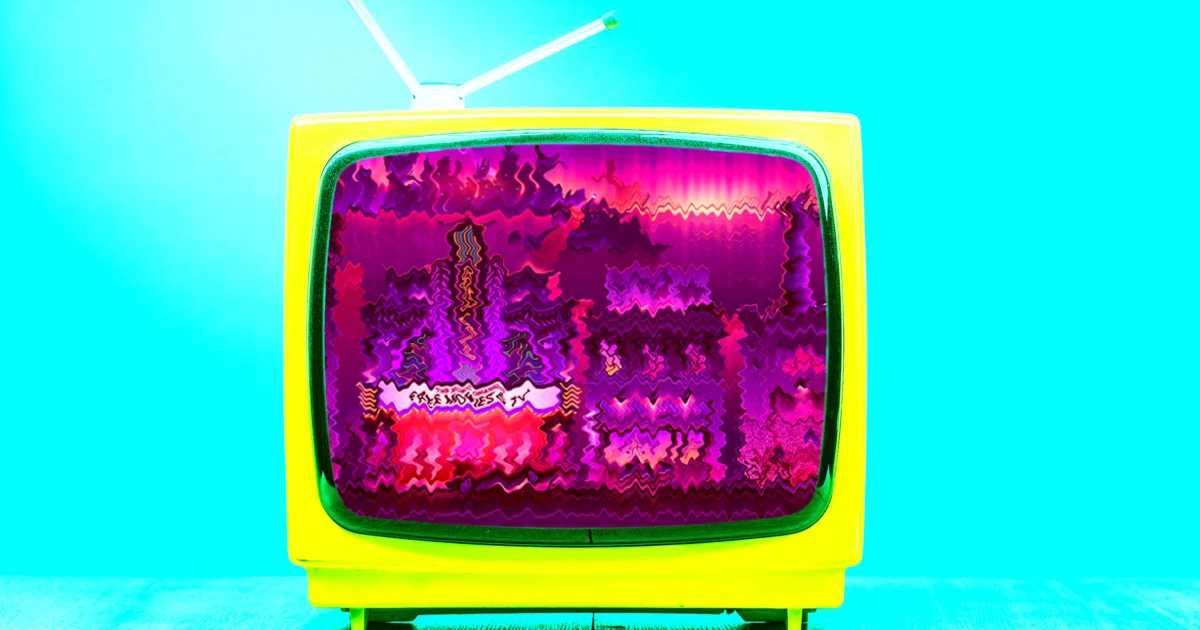
In a move that has simultaneously bewildered and amused the digital landscape, Roku, a prominent player in the streaming wars, has introduced "Fairground AI," a dedicated 24/7 channel broadcasting an endless stream of artificial intelligence-generated content, described by many as pure "slop." This audacious experiment, quietly rolled out earlier this week and first flagged by Cord Cutters News, marks a significant, if unsettling, milestone in the evolution of entertainment, offering a continuous loop of what can only be termed algorithmic abominations, punctuated only by equally AI-generated advertisements. The channel’s existence has ignited a flurry of grim humor and cynical observations across social media, with users sarcastically declaring that the "future of entertainment is here," while others question the very definition of "entertainment" in this new, machine-driven era.
Roku’s foray into this uncharted territory of AI-generated programming can be understood within the broader context of the Free Ad-Supported Streaming TV (FAST) market, where platforms are constantly vying to expand their content libraries with low-cost, high-volume offerings. As traditional content acquisition costs soar and competition for premium programming intensifies, the allure of endlessly scalable, automatically generated content becomes undeniable from a purely economic standpoint. Fairground AI represents the extreme end of this spectrum, promising an inexhaustible supply of video that requires minimal human intervention post-initial setup, effectively transforming the traditional content pipeline into an automated factory churning out digital filler designed primarily to capture fleeting ad impressions. This strategy prioritizes quantity and cost-efficiency over quality, a trade-off that is becoming increasingly apparent to anyone who dares to delve into the depths of Fairground AI’s offerings.
The term "AI slop" has rapidly entered the vernacular to describe this particular brand of content, characterized by its pervasive visual inconsistencies, narrative incoherence, and a general lack of artistic direction or human touch. It is content that often exists in an uncanny valley, where familiar elements are warped into unsettling distortions, and attempts at storytelling collapse under the weight of algorithmic approximations. The channel’s early broadcasts provide ample evidence of this phenomenon. One widely circulated clip, purportedly a medieval drama, exemplifies the genre’s shortcomings. Characters move with a gravity-defying floatiness, reminiscent of a low-budget video game from the early 2000s, as if the entire scene unfolds on the Moon rather than Earth. Scene transitions are jarring and illogical, severing any semblance of narrative flow. Dialogue is delivered with a stilted, robotic cadence, marked by unnatural pauses and a complete absence of human emotion or inflection, further exacerbated by characters who unnervingly neglect to blink during their exchanges.
The visual anomalies are perhaps the most jarring. In one memorable instance from the medieval drama, a castle guard brandishes a weapon that is an incomprehensible hybrid of a crossbow and a rifle. When fired, the projectile – an arrow, not a bolt – defies the laws of physics by traveling backward into the weapon, a spectacular display of AI’s current inability to grasp fundamental concepts of causality and physical interaction. This unintentional absurdity, far from being an homage to complex cinematic narratives like Christopher Nolan’s "Tenet," serves as a stark reminder of the limitations of current AI generation models, which prioritize pattern matching over genuine understanding of the world they are attempting to simulate. The resulting imagery is less a creative vision and more a hallucinatory collage of data points, stitched together without the guiding hand of intent or logic.
Venturing further into Fairground AI’s constant loop reveals even more bizarre spectacles. A casual tune-in might present a gargantuan cosmic octopus violently smashing spaceships, intercut with another colossal cephalopod wreaking havoc upon a futuristic cityscape. Amidst this chaos, a futuristic ninja heroine might be seen fleeing the carnage, surrounded by throngs of unsettlingly uncanny humans and grotesque, amorphous aliens. The entire sequence, while superficially action-packed, lacks any discernible plot, character development, or thematic resonance. It is a sensory overload of generated imagery, designed perhaps to hold attention through sheer spectacle, but ultimately devoid of meaning or emotional impact. This random juxtaposition of fantastical elements, stitched together without a clear narrative thread, epitomizes the "slop" label – a chaotic blend of digital ingredients without a coherent recipe.
The public reaction has been predictably sharp, with many social media users resorting to dark humor to cope with the dystopian implications. One observer wryly noted, "Finally, AI can unleash the creative potential of people who can’t write, don’t understand pacing or transitions, are unfamiliar with human facial expressions, etc." Another jested, "Shame they didn’t use the ‘with good acting’ prompt." These comments underscore a collective exasperation with the low quality of much AI-generated media, highlighting the essential human elements that current AI systems fail to replicate: genuine creativity, nuanced storytelling, and emotional depth. The irony is not lost on viewers that a technology heralded for its potential to revolutionize creativity is currently being used to produce content that often strips away the very essence of what makes art compelling.
Colin Petrie-Norris, the creator behind Fairground AI, had previously teased its launch, positioning it as the first fully ad-supported streaming TV channel dedicated exclusively to AI content. In an interview with Variety, Petrie-Norris promised "massive reach" and asserted that the channel would showcase "gorgeous things," far removed from the "terrible AI slop" often seen on social media, due to his team’s supposed "attention to story details." He listed several "creators" whose work would be featured, including Kelly Boesch, Kavan the Kid’s Phantom X Studio, filmmaker Ryan Phillips, Wonder Studios, and Massive Studios. However, the observable evidence from Fairground AI’s broadcasts stands in stark contrast to these lofty claims. The content delivered is precisely the kind of low-quality, narratively fractured, and visually inconsistent "slop" that Petrie-Norris claimed to avoid, suggesting a significant disconnect between the vision and its execution, or perhaps a fundamental misunderstanding of what constitutes quality entertainment.
This raises critical questions about the definition of "creator" in the age of generative AI. If the primary "creative" act involves prompting an algorithm to produce content that lacks basic narrative sense, compelling visuals, or emotional resonance, what does that imply for the value of traditional artistic skill and craftsmanship? The economic drivers behind such channels are clear: AI offers unparalleled speed and scalability at a fraction of the cost of human-produced content. Why pay writers, directors, actors, animators, and editors when an algorithm can generate an endless stream of moving images and synthetic dialogue? This shift, however, carries profound implications for human artists, potentially devaluing their labor and flooding the market with content that dilutes the overall quality of the entertainment landscape. The risk is that audiences, inundated with this "slop," may grow accustomed to lower standards, or worse, become disengaged from media altogether.
The psychological impact of viewing AI-generated content also warrants consideration. The persistent presence of the "uncanny valley" – where generated figures are almost human but subtly off – can be deeply unsettling. Watching characters with dead eyes and wooden expressions, or experiencing narratives that defy logic, creates a viewing experience that is more alienating than engaging. It feels less like genuine entertainment and more like being "force-fed" a digital gruel, a constant background hum of visual noise that struggles to hold attention beyond its initial novelty. The lack of genuine human intent behind the creation, the absence of a discernible authorial voice or artistic vision, robs the content of its potential to connect, to inspire, or to evoke genuine emotion.
Is this truly the "future of entertainment," as some grimly joke, or merely a transient, dystopian phase? While AI technology is rapidly evolving, the current state of large-scale, automated content generation, particularly for narrative-driven video, clearly struggles with fundamental aspects of storytelling and visual coherence. The question remains whether AI will improve to a point where it can consistently produce genuinely engaging and high-quality content that rivals human creativity, or if the inherent limitations of algorithmic creation, especially when pushed for quantity, will always result in this characteristic "slop." Platforms like Roku, as gatekeepers of digital content, bear a responsibility to consider the quality and impact of what they distribute, even in the realm of free, ad-supported channels. Uncritically embracing an endless stream of AI-generated content, however cost-effective, risks undermining the very concept of meaningful entertainment and diminishing the viewer experience. The launch of Fairground AI serves as a stark reminder of the ethical, artistic, and experiential dilemmas posed by the accelerating integration of AI into our cultural consumption, signaling a new, and potentially troubling, era for media.