Imroatul Nasiyah
The burgeoning space economy is sparking visions of a single entity dominating the cosmic landscape as the architect of its infrastructure – the railroad, the power grid, and the cloud provider all rolled into one. This tantalizing prospect has fueled immense excitement surrounding the highly anticipated initial public offering (IPO) of SpaceX. Investors are no longer merely betting on the prowess of rockets; they are placing their faith in the development of an entire orbital ecosystem.
Among the most audacious and technically demanding concepts riding this wave of enthusiasm are orbital data centers, a notion that borders on science fiction. While SpaceX is a prominent contender in this arena, it is far from alone in its pursuit of building these extraterrestrial computing hubs. The allure of such a venture is undeniably potent: imagine data centers launched into orbit, where abundant solar energy liberates them from the terrestrial constraints of land availability, water resources, and reliance on local power grids. As artificial intelligence continues its exponential surge in computational demand, companies are touting orbital data centers as a solution to the escalating environmental and infrastructural pressures faced by Earth-based computing facilities. Furthermore, terrestrial data centers often encounter public backlash due to their significant land use, immense energy and water consumption, and local environmental impact.
However, the leap from launching satellites to operating industrial-scale computing infrastructure in the unforgiving vacuum of space is monumental. Space presents a unique set of formidable challenges. The pervasive threat of radiation can inflict significant damage on delicate electronics. The sheer volume of heat generated by these powerful computing systems poses a substantial thermal management problem, proving surprisingly difficult to dissipate in orbit. Moreover, the cost of repairs in space is astronomically high, and every kilogram launched into orbit incurs a substantial financial penalty.
As engineering professors specializing in data center design and space systems engineering, we understand the intricate considerations required from both disciplines to bring such a vision to fruition.
The Pillars of an Earth-Based Data Center
To grasp the complexities of an orbital data center, it’s crucial to first dissect the components of its terrestrial counterpart. These facilities, increasingly visible in our communities, are the backbone of cloud computing, video streaming, online banking, scientific research, and the rapidly expanding realm of artificial intelligence. Yet, a data center is far more than just a room filled with servers.
Reliable operation hinges on several critical elements. The first is an unfailing supply of electric power. Servers, networking equipment, and storage devices are voracious consumers of electricity, and this demand is projected to skyrocket with the continued advancement of AI.
The second indispensable element is cooling. Nearly all the electrical energy consumed by servers is ultimately converted into heat. If this heat is not efficiently and reliably removed, equipment performance degrades, failure rates increase, and the entire data center can grind to a halt. Cooling systems typically encompass air handling units, chillers, cooling towers, pumps, and, increasingly, sophisticated liquid-cooling technologies. In many cases, cooling represents the second-largest energy expenditure within a data center, surpassed only by the computing hardware itself.
The third pillar is the physical infrastructure. This includes the land, buildings, structural integrity, robust backup power systems, essential water management, comprehensive communication networks, and accessible maintenance provisions. Crucially, data centers must be strategically located near users and major network backbones to ensure the rapid delivery of digital services. In essence, Earth-based data centers are intricate electrical and thermal infrastructure systems meticulously engineered around powerful computing hardware.
The Orbital Data Center: A Leap into the Void
So, what would it truly take to construct these data centers in space, and what makes this prospect so compelling for companies?
Similar to their terrestrial counterparts, orbital data centers would require immense power. In space, this power would be primarily derived from solar panels. While the Sun shines continuously in space, unimpeded by clouds, the Earth itself can cast shadows, leading to periods of reduced solar input depending on the orbit. Furthermore, even the most advanced solar cells available today can convert only about half of the sunlight they receive into usable electricity.
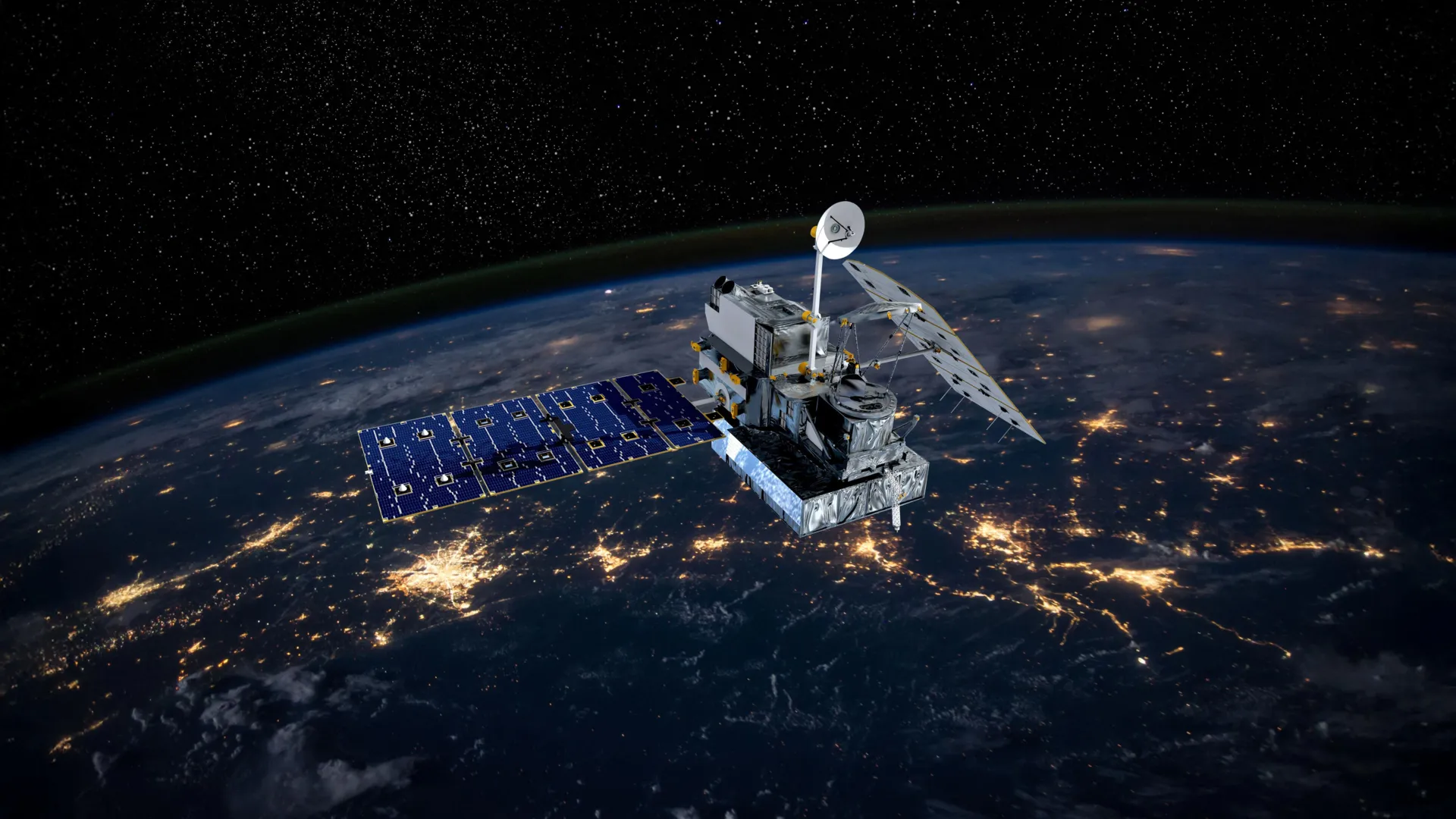
Space also offers a potential advantage in cooling. The frigid background of space, hovering around minus 455 degrees Fahrenheit (minus 270 degrees Celsius), presents an opportunity for waste heat to dissipate into the void via radiators, thereby cooling the electronics. In theory, this could eliminate the need for bulky and water-intensive cooling infrastructure common on Earth. However, these thermal radiators would necessitate a significant surface area, in addition to the space required for solar panels. In the absence of an atmosphere for convective cooling, heat must be radiated as infrared energy, a relatively slow process. Consequently, dissipating 10 megawatts of waste heat might require radiator surfaces comparable in size to two football fields.
Space-based data centers could potentially circumvent some of the local conflicts associated with large-scale terrestrial data center development. Many communities express concerns regarding land use, energy and water demands, noise pollution, and environmental impact, often leading to resistance against new data center projects. An orbital system would avoid competition for local land and water resources and would not generate neighborhood noise or require local zoning approvals in the same manner.
However, space is already experiencing increasing congestion, and the deployment of thousands of large orbital data centers would exacerbate this issue. Orbital debris and micrometeorites pose significant hazards, capable of puncturing a space data center and, in the event of a catastrophic collision, creating even more dangerous space debris. The sheer frequency of space launches required to transport all the necessary equipment into orbit could also become a point of contention for some communities. SpaceX has already faced protests at its launch complex in Boca Chica, Texas, from local activists concerned about the environmental impact of its rocket testing and launches.
The vast amounts of data to be transmitted between Earth and these orbital data centers, as well as between the data centers themselves, would rely on radio waves or laser communication systems. While satellite constellations like Starlink and Amazon’s Project Kuiper have demonstrated the feasibility of such communication, the volume of data transfer to and from space would be unprecedented.
Additional Hurdles on the Path to Orbit
These orbital data centers, along with their solar panels and radiator systems, could not be launched as single units and would require assembly in space. This undertaking would necessitate the development of novel equipment for in-space servicing, assembly, and manufacturing (ISAM).
Another critical challenge lies in the refresh cycle of computing hardware. Data center servers are not designed for perpetual operation. On Earth, operators typically replace or upgrade hardware every three to five years to capitalize on advancements in chip technology, evolving workloads, and the natural aging of equipment. Component failures also necessitate replacements. These refresh and repair processes are relatively straightforward on Earth, where technicians can physically access and swap out servers.
In space, however, refreshing and repairing hardware becomes significantly more complex and expensive. Hardware launched into orbit may be difficult or prohibitively costly to upgrade. If the computing platform cannot be updated, or if too many components fail, it could become obsolete long before the surrounding orbital infrastructure reaches its end of life. In a field characterized by rapid performance improvements and ever-increasing computational demand, this obsolescence hurdle could present a substantial economic and operational challenge.
Finally, the inherent harshness of space cannot be overstated. These data centers would operate in a near-vacuum, constantly bombarded by radiation. Depending on their orbit, they would experience rapid temperature fluctuations, transitioning from intense heat in sunlight to extreme cold in Earth’s shadow multiple times a day. These, and numerous other factors, are critical issues that must be addressed.
Do Orbital Data Centers Still Make Sense?
Despite these formidable challenges, companies are actively progressing with the design and development of space-based data centers. SpaceX has recently unveiled the design for its AI1 Compute Satellite, envisioned as an orbital data center spacecraft. However, it’s important to note that this satellite is estimated to be 100 to 1,000 times less capable than current Earth-based data centers.
Not every computing task is suited for an orbital environment. Many data center applications depend heavily on low latency and close proximity to users on Earth. Financial transactions, interactive AI services, and most cloud-based applications are acutely sensitive to delays.
More feasible early applications are likely to be those that are less latency-sensitive and more intrinsically linked to space operations. This could include processing Earth observation data from satellites, handling military or intelligence data, conducting scientific computing related to space missions, or providing specialized computing for other space assets. In essence, the first truly viable space data centers may serve a niche market of space-based customers before they are capable of competing with mainstream cloud data centers on Earth.