Faris Adani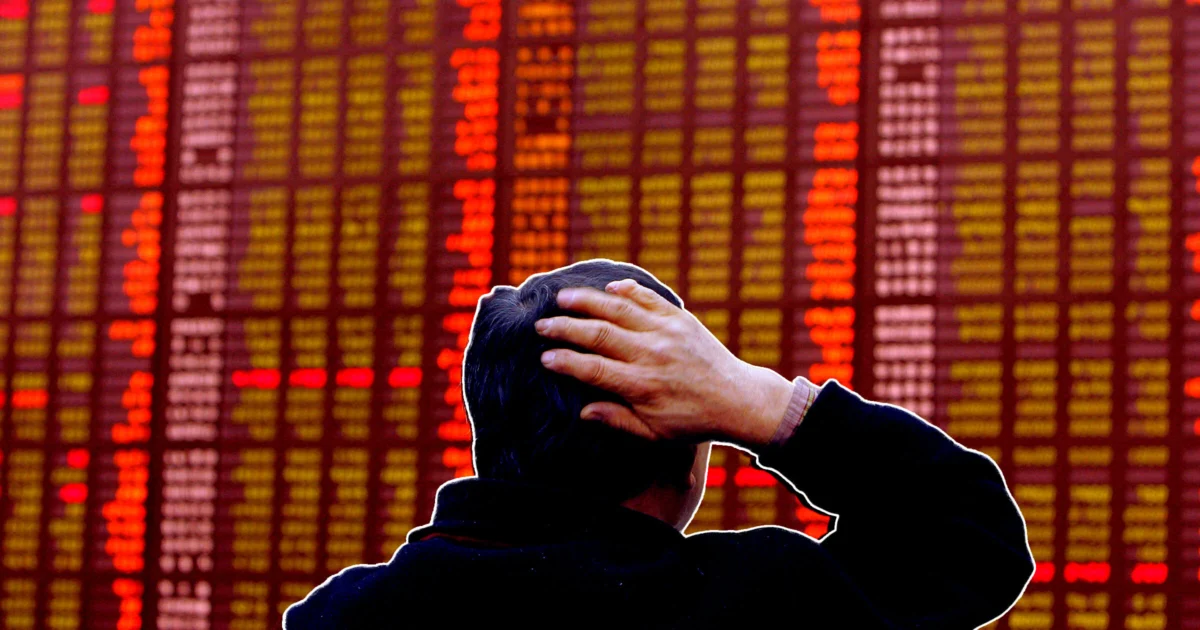
In a dramatic turn of events that has sent shockwaves through East Asian financial markets, South Korea is grappling with what appears to be the initial stages of a significant downturn in its stock market, widely attributed to the bursting of the much-touted Artificial Intelligence (AI) bubble. Unlike the seemingly unperturbed markets in the US and Europe, where AI-driven valuations continue to soar, Seoul has witnessed an unprecedented panic, forcing authorities into emergency action to prevent a full-blown financial crisis. The Korea Composite Stock Price Index (KOSPI), the nation’s benchmark index, has plummeted by over 40 percent from its June highs, a stark indicator of the deep-seated apprehension among investors.
The catalyst for this sharp decline was the underwhelming reaction to the quarterly earnings report from SK Hynix, a global titan in the semiconductor industry and a crucial player in the AI hardware ecosystem. Despite reporting a staggering sixfold increase in quarterly earnings, the chipmaker failed to impress investors, signaling that even phenomenal growth was insufficient to meet the hyper-inflated expectations surrounding AI-related stocks. This reaction underscored a critical divergence: while the company’s performance was objectively strong, market sentiment had far outpaced fundamental realities, setting the stage for a painful correction.
The fallout was swift and severe. Over two tumultuous days, July 28 and 29, the Korean Exchange experienced widespread panic that triggered not one, but two "circuit breakers" on the KOSPI. These automated kill switches are designed to halt regular trading for 30 minutes, providing a crucial cooling-off period for panic-stricken traders to reassess their positions and for market mechanisms to stabilize. The activation of two consecutive circuit breakers on the KOSPI is an unprecedented event in the Korean Exchange’s history, marking only the 14th and 15th such activations since its inception. This historical context underscores the extraordinary nature of the current market turbulence.
Compounding the crisis, the tech-heavy Korea Securities Dealers Automated Quotations (KOSDAQ) index also saw circuit breakers tripped on two consecutive days. This marks only the third time in the KOSDAQ’s history that such a sequence has occurred, with previous instances recorded during the global financial crisis of 2008 and the initial market shock of the COVID-19 pandemic in 2020. The invocation of these extreme measures draws chilling parallels to periods of profound economic uncertainty, sending a clear signal about the severity of the current market instability.
The "AI bubble" phenomenon has been a subject of intense debate among economists and financial analysts globally. It describes a situation where the valuations of companies perceived to be at the forefront of AI development—particularly those involved in semiconductor manufacturing, software, and data infrastructure—have soared to levels that many consider unsustainable, detached from their underlying earnings potential. While the transformative power of AI is widely acknowledged, the rapid and speculative influx of capital has led to concerns of an asset bubble akin to the dot-com era. In South Korea, a nation deeply embedded in the global technology supply chain, particularly semiconductors, the market’s sensitivity to shifts in tech sentiment is amplified. The country’s economy is heavily reliant on exports, with technology giants like Samsung and SK Hynix forming the backbone of its industrial prowess. This makes its stock market particularly susceptible to the boom-and-bust cycles of global technological trends.
In response to the escalating crisis, the South Korean government has moved with urgent intent, scrambling to implement a series of cooling measures aimed at restoring stability and preventing an all-out financial meltdown. One of the initial steps taken was the ban on new listings of single-stock leveraged Exchange Traded Funds (ETFs). These financial products, known for their high-risk, high-reward nature, allow investors to amplify gains or losses by betting on the performance of a single stock, often using borrowed capital. While attractive during bull markets, their inherent volatility makes them significant contributors to market instability during downturns. The government identified these leveraged ETFs as a factor exacerbating the panic, as retail investors, who constitute a significant portion of the South Korean market, often flock to such instruments. However, the initial ban proved insufficient to stem the tide of billions of dollars fleeing the Korean stock market, necessitating further action.
Following the persistent market turmoil, government officials, including Finance Minister Koo Yun Cheol, convened an emergency meeting to discuss additional, more comprehensive measures. "We’ve already put in place a package of measures, but if it’s needed we’ll introduce additional steps to help normalize the market," Minister Koo Yun Cheol informed lawmakers, as reported by Bloomberg. The scope of potential interventions could include stricter short-selling regulations, increased market surveillance, targeted liquidity provisions, or even direct market stabilization funds. The goal is to instill confidence, curb speculative trading, and prevent a domino effect that could impact the broader economy.
The crisis has also quickly become a political flashpoint. Korea’s conservative People Power Party seized the opportunity to critique the incumbent government’s handling of the financial panic. Lawmaker Lee Jongwook, in a scathing assessment, declared that the "country has turned into a casino." This strong rhetoric highlights the deep public concern and the political ramifications of market instability, especially in a nation where personal investment in stocks is widespread. Such criticism not only puts pressure on the government to act decisively but also risks further eroding public confidence in the market’s integrity and regulatory oversight. The sentiment of the market being a "casino" speaks to a perceived lack of stability and fairness, which can deter both domestic and foreign investment.
The broader implications for South Korea extend beyond mere stock market figures. A prolonged downturn could severely impact consumer confidence, dampen corporate investment, and potentially slow economic growth. South Korea’s robust and innovative economy has long been a global leader in technology, manufacturing, and cultural exports. A crisis of this magnitude threatens to undermine years of progress and could have ripple effects on global supply chains, particularly in the critical semiconductor sector. International investors, observing the volatility, might reconsider their exposure to Korean assets, leading to further capital outflows and a weakening of the Korean Won.
As authorities navigate this treacherous landscape, the challenge lies in striking a delicate balance: intervening effectively without stifling legitimate market activity or creating moral hazard. The memory of past financial crises, both domestic and global, looms large, guiding the urgency of the government’s response. The coming weeks will be crucial in determining whether the implemented measures can successfully stabilize the market, restore investor confidence, and ultimately prevent the AI bubble from inflicting lasting damage on South Korea’s economic fabric. The world watches closely, as South Korea’s experience may well serve as a potent warning for other economies heavily invested in the AI frontier, underscoring the inherent risks of speculative enthusiasm detached from fundamental value.