anjir abdul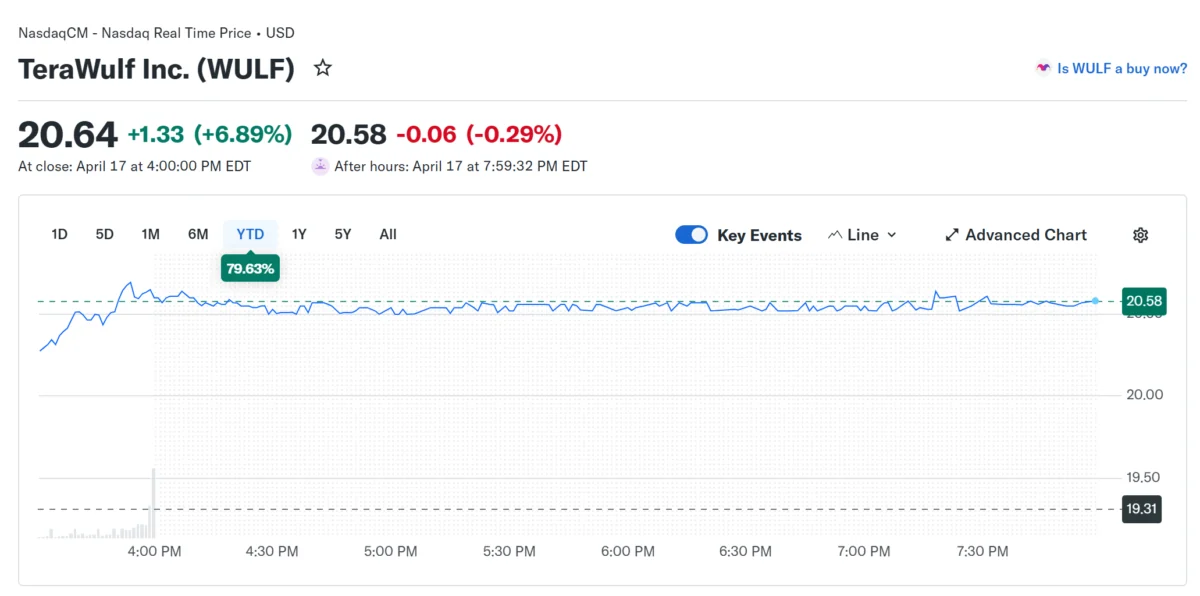
US aluminum giant Alcoa is reportedly nearing a landmark deal to offload its long-idle Massena East smelter in upstate New York to New York Digital Investment Group (NYDIG), a prominent Bitcoin mining firm. This transaction, signaling a significant shift in the utility of industrial infrastructure, underscores a growing trend where legacy manufacturing sites are being repurposed for the demands of the digital age.
Alcoa, a company with a storied history deeply intertwined with America’s industrial might, has been in advanced discussions with NYDIG. CEO Bill Oplinger indicated that the company expects the transaction to conclude "in the middle part of this year," as reported by Bloomberg. The Massena East smelter, strategically situated along the St. Lawrence River, has been dormant since 2014. Its shutdown was a direct consequence of soaring energy costs and intense global competition within the aluminum market, which rendered its operations economically unviable at the time. For a decade, the site, once a bustling hub of heavy industry, stood as a stark reminder of shifting economic landscapes and the challenges faced by traditional manufacturing in the face of globalization and evolving energy markets.
The appeal of such a site to a Bitcoin mining and data center operator like NYDIG is multifaceted and profound. Aluminum smelters, by their very nature, are constructed for relentless, 24/7 heavy industrial operations. This means they come equipped with robust, pre-existing electrical infrastructure, including substations, high-capacity transmission lines, and direct, powerful grid connections. For digital infrastructure firms, which require immense and stable power supplies, securing similar infrastructure from scratch can be an arduous, multi-year process fraught with regulatory hurdles, extensive capital expenditure, and significant delays in permitting and construction. The ability to acquire a site with these critical components already in place represents a substantial advantage, drastically cutting down on development timelines and initial investment.
Furthermore, the Massena East location benefits immensely from access to hydropower supplied by the New York Power Authority. Hydropower is a particularly attractive energy source for energy-intensive computing firms due to its typically lower cost compared to fossil fuels and its significantly reduced carbon footprint. As environmental, social, and governance (ESG) considerations become increasingly important for institutional investors and public perception, securing a reliable source of lower-carbon energy offers a distinct competitive edge for Bitcoin miners and data centers. The combination of pre-built heavy industrial infrastructure and clean, affordable energy makes Massena East a prime target for a new era of digital industry.
This potential sale is part of a broader, transformative trend sweeping across the United States, where retired industrial sites are finding new life as hubs for digital infrastructure. The economic landscape is rapidly evolving, moving from traditional manufacturing to a service and technology-driven economy, and these dormant facilities are perfectly positioned to bridge that gap. Earlier this year, this trend was exemplified when Century Aluminum sold its Hawesville smelter in Kentucky to TeraWulf for $200 million. TeraWulf, a prominent Bitcoin mining company, explicitly stated its plans to convert the site into a high-performance computing (HPC) and artificial intelligence (AI) facility, rather than reactivating it for traditional industrial use. This repurposing injects new economic vitality into communities often left struggling after the departure of legacy industries, creating new jobs and tax revenues in sectors that are at the forefront of technological innovation.

NYDIG, a subsidiary of the financial services firm Stone Ridge, has been aggressively expanding its footprint within the Bitcoin mining infrastructure sector. Known for providing institutional Bitcoin products and services, NYDIG’s investment in mining operations aligns with its mission to facilitate broad access to Bitcoin. The firm already holds a strategic stake in Coinmint, which currently operates mining hardware at the same Massena campus under a long-term lease, suggesting a familiar and advantageous operational environment. Last year, in another strategic move, Crusoe Energy, known for its digital flare mitigation operations that convert wasted natural gas into energy for Bitcoin mining, agreed to sell its Bitcoin mining business to NYDIG. These acquisitions demonstrate NYDIG’s commitment to consolidating and growing its position as a major player in the institutional Bitcoin mining space, leveraging its financial backing and expertise to scale operations efficiently.
NYDIG’s renewed push into Bitcoin mining comes at a fascinating juncture, as many other miners are increasingly diversifying their revenue streams by pivoting towards AI and cloud computing services. The Bitcoin mining industry, while robust, faces inherent challenges such as shrinking margins due due to events like the Bitcoin halving, increasing network difficulty, and market volatility. These pressures are compelling miners to explore additional revenue opportunities. The infrastructure built for Bitcoin mining – powerful data centers, robust electrical grids, and advanced cooling systems – is remarkably adaptable for other high-performance computing tasks, particularly those required by AI.
Several major Bitcoin miners have already begun to make this strategic pivot. Earlier this year, MARA Holdings, one of the largest publicly traded Bitcoin miners, acquired a 64% stake in the French infrastructure company Exaion. This move provided MARA with a significant foothold in AI services, allowing it to leverage its existing infrastructure and expertise in managing large-scale data centers for a broader range of computational services. Other notable miners, including Hive Blockchain Technologies, Hut 8, TeraWulf, and Iren (formerly Iris Energy), are actively repurposing or planning to repurpose portions of their mining facilities into data centers capable of handling AI workloads. Some companies, such as CoreWeave, have gone even further, fully transitioning their business model from crypto mining to exclusively focus on AI-focused infrastructure, demonstrating the significant potential and demand in this burgeoning sector.
This convergence between Bitcoin mining and AI infrastructure is not merely opportunistic; it represents a logical evolution. Both activities demand immense computational power and stable, cost-effective energy. The specialized hardware and operational expertise developed for crypto mining, particularly in managing high-density computing environments and optimizing energy usage, are highly transferable to the needs of AI and machine learning. As the demand for AI computing resources continues to skyrocket, propelled by advancements in large language models and other sophisticated algorithms, these repurposed facilities are poised to become critical components of the global digital infrastructure, supporting the next wave of technological innovation.
The potential sale of Alcoa’s Massena East smelter to NYDIG is more than just a real estate transaction; it symbolizes a profound shift in industrial economics and technological adoption. It highlights the creative repurposing of legacy assets to meet the demands of emerging industries, bringing new life and economic activity to regions previously impacted by industrial decline. For Alcoa, it represents the divestment of a non-core asset and a strategic optimization of its portfolio. For NYDIG, it signifies a calculated expansion of its Bitcoin mining capabilities, leveraging existing infrastructure for efficient, lower-carbon operations. And for the broader economy, it showcases the dynamic interplay between traditional industry, digital finance, and the relentless march of technological progress, where the infrastructure of yesterday is laying the groundwork for the innovations of tomorrow. This trend is expected to continue, as the insatiable demand for computing power, driven by cryptocurrencies and artificial intelligence, transforms the industrial landscape across the globe.