isnaini azizah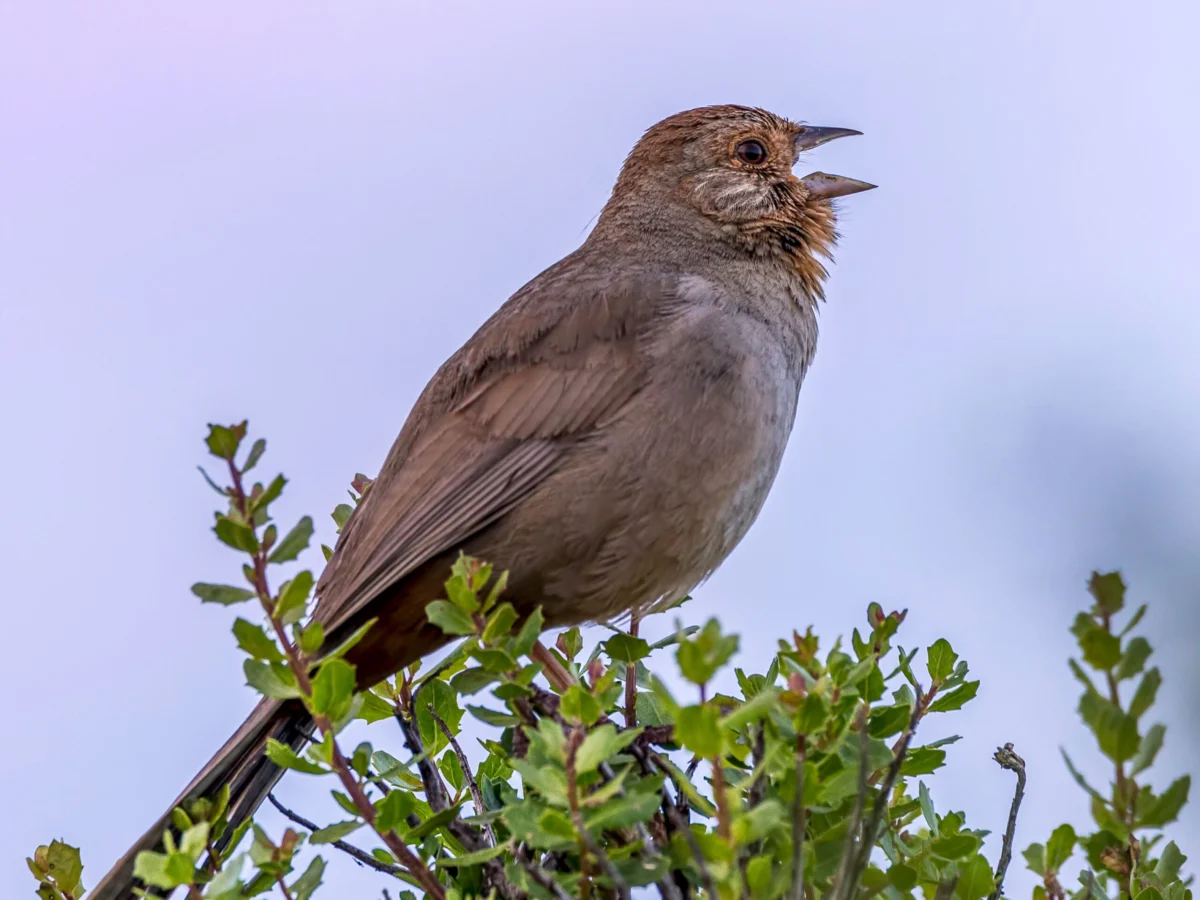
When the COVID-19 pandemic began, Jennifer Phillips, a researcher studying the impact of human-generated noise on wildlife, found herself contemplating the songs of sparrows. The world had abruptly fallen silent as car traffic dwindled, air travel collapsed, and cities, usually a cacophony of engines and horns, became eerily quiet. This unprecedented stillness offered a stark contrast to the years Phillips had spent documenting how "anthropogenic noise" – the racket of human activity – disrupts animal life. Her research, and that of her colleagues, consistently shows that most animals find this noise detrimental. Animals rely heavily on their auditory senses for survival, constantly listening for predators or potential mates. As human civilization has expanded with sprawling cities, industrial operations, and extensive road networks, the ambient noise level has risen, making it increasingly difficult for animals to communicate and perceive their surroundings.
Phillips and her team had conducted extensive studies in San Francisco’s Presidio, a park bisected by two major highways. Recordings from the 1950s revealed white-crowned sparrows singing complex, lower-pitched melodies in distinct "dialects." However, by the 2010s, the explosion of traffic noise had forced the birds to adapt. They began singing faster and at a higher pitch to be heard, leading to the decline or extinction of their quieter dialects. Phillips described this as birds "screaming at the top of their lungs," unable to discern lower frequencies amidst the traffic din. This urban clamor not only made communication difficult but also had physiological effects on the birds, leading to thinner bodies and increased stress. Their mating calls became less effective, as female birds often found high-pitched, loud calls indicative of unhealthy males. Furthermore, the inability to hear warning cries increased inter-bird conflict and led to species unable to adapt to the urban din simply abandoning their habitats, resulting in a significant loss of biodiversity.
The sudden quiet of the pandemic prompted Phillips to investigate the Presidio birds again. She found the park had become seven decibels quieter, a significant reduction comparable to the difference between a home’s ambient noise and a whisper. Remarkably, the white-crowned sparrows’ songs had transformed. They were singing more softly, with a richer range of frequencies, their songs now audible twice as far. Their mating calls became more "sultry," as Phillips put it, allowing for more effective communication without the need for excessive volume. This dramatic reversal, akin to time being rewound and damage repaired, underscored Phillips’s growing conviction: anthropogenic noise is a critical form of pollution that demands immediate attention. The relentless noise of our industrial society impacts all life on Earth, and solutions like electrification and thoughtful urban design offer promising avenues for mitigation. The Presidio’s transformation proved that noise can vanish rapidly, if only we learn to reduce its generation.
Many forms of pollution are readily apparent to humans – toxic spills, factory emissions, plastic waste. Even light pollution, while less tangible, has entered public consciousness due to its impact on stargazing and migratory birds. Noise, however, primarily from transportation, has taken longer to register. Its invisibility, lacking the visual cues of smokestacks or polluted waterways, allowed it to become a pervasive, unnoticed background hum.

While early studies in the 1970s and 80s hinted at the negative effects of noise on animals, the field truly expanded in the 2000s with advancements in digital recording and analysis technology. Biologist Hans Slabbekoorn’s work with doves in Leiden provided a critical early insight. He noticed his own difficulty in recording the birds’ coos due to background noise, leading him to question how the doves themselves were affected. By measuring ambient sound levels, he observed that birds in noisier areas of Leiden sang at higher pitches than those in quieter residential zones.
Over the subsequent two decades, research on noise pollution exploded. Scientists identified several consistent negative impacts on animals. Beyond disrupting communication, noise induces stress, leading to reduced body weight and mating receptivity. Birds nesting near roads experienced lower reproductive rates, with species like eastern bluebirds producing fewer fledglings. Extreme noise, such as from airport operations, could cause hearing loss, while a general inability to hear approaching predators made animals more vulnerable to attack. Some animals, in a state of perpetual high alert, developed aggressive behaviors.
Even in seemingly quiet rural areas, highways significantly impacted wildlife. Biologist Fraser Shilling recorded noise levels up to 60 decibels half a mile from rural highways, a level that can induce fight-or-flight responses in skittish animals. At these levels, the presence of sensitive species like bobcats declined sharply, and above 65 decibels, most wildlife was excluded. The problem extends to industrial sites as well; loud compressors at natural gas wells can generate noise levels comparable to subway trains, impacting wildlife even at considerable distances.
Initially, proving that noise alone was the cause of animal distress was challenging, as other factors like vehicle collisions could also be at play. However, controlled experiments provided conclusive evidence. Jesse Barber and his team conducted a "phantom road" experiment in the Boise foothills, where they played highway noise for four days and then observed the impact on migratory birds. During the noisy periods, nearly a third of the birds left the area, and those that remained ate less, failing to gain the necessary weight for their migratory journeys.
Further research, including a study led by David Luther, demonstrated that noise directly alters animal communication from a young age. White-crowned sparrow nestlings raised in a lab with traffic noise alongside recordings of adult songs learned only higher, faster, and more stressed-out songs, unlike those raised in quiet conditions who learned the complex, sweeter melodies.

Humans, too, are susceptible to the negative effects of anthropogenic noise. While we cannot ethically conduct lab experiments on humans in the same way, extensive research shows that noise, particularly traffic noise, is linked to sleep disturbances, elevated blood pressure, increased heart disease, and higher stress levels. A large Danish study of nurses revealed a correlation between increased noise exposure and higher mortality rates, as well as increased risks of various cancers, psychiatric problems, and strokes. Children are also affected, with studies showing that those in noisier schools perform worse on cognitive assessments. Gail Patricelli, a professor at UC Davis, notes that while humans believe they are accustomed to noise, they are not as resilient as they perceive.
Despite the negative impacts, there’s a trade-off. Humans tolerate urban noise for the benefits of cities, and similarly, some animal species have adapted to or even benefit from noisy environments. Biologist Clinton Francis observed that while most species avoided noisy gas wells, certain hummingbirds and finches thrived, nesting more frequently in these areas. This is likely because the noise acts as a "predator shield," masking the birds’ presence from predators, which can account for a significant percentage of egg failure. Even urban environments can offer such advantages; a Eurasian eagle-owl named Flaco, who escaped into New York City, found the abundant, naive prey a significant compensation for the noise pollution, despite owls typically being vulnerable to such disturbances.
However, these benefits do not outweigh the overall negative impacts. While some species adapt, most are driven away, leading to a decline in biodiversity. Luther emphasizes that this creates a "nightmare for diversity."
Fortunately, unlike many other pollutants, noise can be addressed relatively quickly. The village of Alverna in the Netherlands successfully reduced noise from a major road by subtly redesigning it: lowering the road surface, incorporating sound-absorbing wedges, planting trees, and reducing the speed limit. These cumulative changes resulted in a significant decrease in noise levels.
This case illustrates that solutions to noise pollution are often practical and not overly complex. Simple measures like building noise walls along highways can significantly reduce sound levels, especially in areas crucial for wildlife. In ecologically sensitive regions, berms (small hills) can be constructed, and overpasses and underpasses can facilitate safe animal movement. For industrial noise, requiring companies to build sound barriers around equipment like gas well compressors, especially when prompted by human complaints or lawsuits, could offer relief to wildlife.

Cities can also become quieter. Amstelveen, a suburb of Amsterdam, is enclosing a major highway in a tunnel, transforming the surface into a park. While such ambitious projects can be expensive, Shilling argues that the cost is often framed as prohibitively high due to low expectations for environmental solutions, rather than a genuine inability to afford them.
More affordable and politically feasible solutions exist. Reducing urban speed limits, as Paris has done, can noticeably decrease noise levels. Planting more trees and vegetation along roads and within cities not only absorbs sound but also enhances urban aesthetics, a measure that residents generally welcome.
The widespread adoption of electric vehicles (EVs) also holds significant potential for reducing noise pollution. EVs are considerably quieter than their gasoline-powered counterparts, particularly in slower urban traffic. The electrification of other noisy equipment, such as leaf blowers and lawn mowers, further contributes to a quieter urban environment. As we transition to a more electrified future, the goal is to transform our roaring civilization into one that purrs, offering a much-needed respite for both wildlife and ourselves.