anjir abdul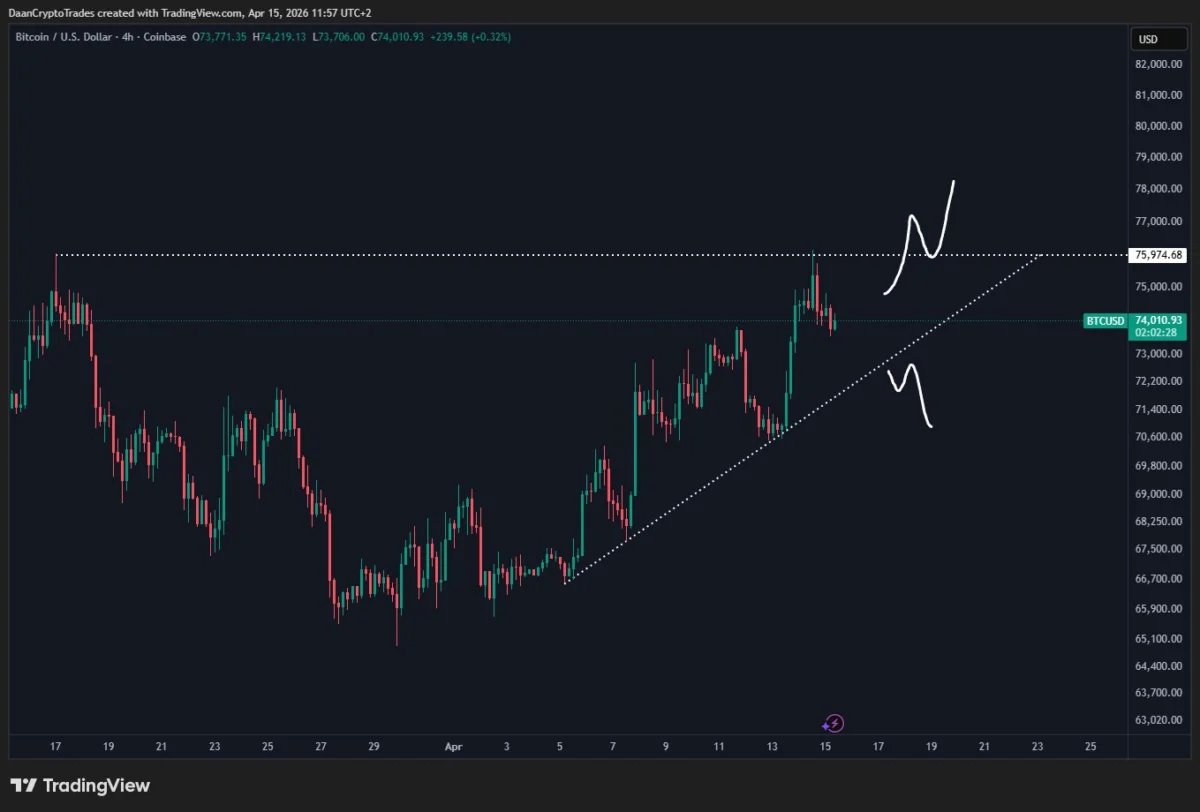
The cryptocurrency market, often a barometer of global sentiment and risk appetite, initially caught a bid from the improving geopolitical climate. Data from TradingView highlighted declining BTC price volatility, a stark contrast to its rapid ascent to $76,000 just hours prior. This earlier rally had been fueled by a more subdued-than-expected Producer Price Index (PPI) inflation report, which temporarily assuaged fears of persistent inflationary pressures and provided a tailwind for risk assets, including Bitcoin. However, as the initial euphoria settled, BTC/USD entered a phase of consolidation, suggesting that while the immediate geopolitical headlines offered relief, underlying concerns and technical resistance levels were prompting caution among traders.

Simultaneously, traditional equity markets continued their exuberant recovery. The S&P 500, a key benchmark for US stocks, notably reclaimed its yearly open level on Monday and subsequently climbed to local highs of 6,988, coming within a mere 15 points of establishing new all-time records. This robust performance was largely attributed to a perceived de-escalation in the US-Iran conflict. President Donald Trump, in a post on Truth Social, explicitly stated that China had committed not to supply weapons to Iran. He further commented on the strategic importance of the Strait of Hormuz, a critical global oil gateway, asserting, "China is very happy that I am permanently opening the Strait of Hormuz. I am doing it for them, also – And the World. This situation will never happen again. They have agreed not to send weapons to Iran." This declaration significantly eased market anxieties surrounding potential disruptions to global oil supplies, leading to a notable drop in WTI crude oil prices below $90, marking a new April low for the commodity.
Despite the apparent market relief and President Trump’s optimistic pronouncements, leading trading companies like QCP Capital urged caution, suggesting that the current rebound might be more superficial than genuinely transformative. In their latest "Market Color" update, QCP Capital observed, "Equities recovered, oil sold off, and crypto caught a bid. But the more important signal was what failed to confirm the move." They elaborated on their skepticism, pointing out that long-end yields barely budged, gold steadfastly held its levels, and the bond market—which typically front-runs an inflation relief trade more aggressively—did not follow through with significant movements. "When oil drops and the 10-year barely twitches, rates are telling you this is a reduction in headline risk, not a genuine resolution," QCP Capital concluded, highlighting a crucial distinction between temporary market calm and a fundamental shift in geopolitical or economic conditions.

The core of QCP Capital’s concern centered on Iran’s ongoing uranium enrichment program, a long-standing sticking point that remains far from resolved. They emphasized, "The reason is enrichment. Iran is at 60% enriched uranium, while the US wants levels below 20%. That gap does not close with a framework headline. It closes with a concession Tehran has not signalled it is prepared to make." This significant disparity in enrichment levels underscores the deep-seated nature of the conflict, which extends far beyond immediate military actions or blockades. QCP Capital reminded investors that previous ceasefires in the region have often lasted only weeks, while the critical issue of Iran’s uranium enrichment has remained unresolved since 2015. "Markets are trading the former, but the latter still sits at the core of the risk," they warned, suggesting that the current market optimism might be prematurely discounting the profound and enduring challenges posed by Iran’s nuclear ambitions.
Within the crypto sphere, Bitcoin traders largely echoed this skepticism, preserving their earlier cautious stance regarding market strength. Trader Jelle, for instance, described Bitcoin’s recent trip to $76,000 as an "equal high" that "barely went above" February’s peak. He noted, "Liquidity games still in play. $BTC technically tagged those previous highs – but I’m viewing this as an equal high rather than a sweep, barely went above it. Keep an eye out for a real sweep above there; that’ll likely catch a lot of traders off guard." Jelle maintained a downward bias for Bitcoin, albeit with the caveat that shorts might not have an easy ride from current levels, indicating potential for whipsaw movements.

Fellow analyst Daan Crypto Trades likewise predicted that BTC/USD was rapidly approaching a "decision time." He observed, "Price tapped the $76K high from March and is consolidating in this area currently. Low timeframe grind higher since the start of April which has been making some marginally higher highs and lows." This technical observation suggests that while Bitcoin has been trending upwards on shorter timeframes, it is encountering significant resistance at prior highs, necessitating a decisive move in either direction. The four-hour chart, often favored by active traders, further illustrated this period of consolidation and indecision.
QCP Capital’s analysis extended to the crypto options market, noting that while price action was "grinding higher," options markets were "not confirming a clean breakout." This divergence between spot price movements and derivatives market sentiment often signals underlying caution, as options traders, who bet on future price movements, might not be as convinced of a sustained rally.

Bringing the analysis back to the broader macro environment, QCP Capital reiterated that the fundamental economic regime had not shifted. "The Fed is still boxed in, sitting near zero net cuts for the year after the oil shock repriced the easing path, while liquidity conditions remain tight," they concluded. This perspective suggests that while geopolitical tensions might have momentarily eased, the Federal Reserve’s restrictive monetary policy stance and the prevailing tight liquidity conditions continue to exert downward pressure on risk assets. The firm summarized the situation succinctly: "This is a geopolitical relief rally, not a macro regime shift. Last week’s trade was to fade the blockade. This week’s question is whether investors should fade the relief." This provocative question encapsulates the current market dilemma, prompting investors to consider whether the recent surge in optimism is a sustainable trend or merely a fleeting reaction to temporary de-escalation, liable to reverse if the underlying geopolitical and macro issues remain unresolved. The coming days and weeks will be critical in determining whether Bitcoin can decisively break its consolidation and if traditional markets can sustain their exuberant rebound in the face of persistent global uncertainties.